
Why Selling Your Used Mobile Home is Easier Than You Think
If you’re ready to sell your used mobile home, you’re part of a growing market. The manufactured housing market is projected to grow at 5.8% annually through 2032, creating strong demand for affordable housing options. The process differs from selling a traditional house, but with the right preparation, you can steer it successfully. The key is understanding whether your home is classified as personal property (like a car) or real property (attached to land you own). Your biggest decision upfront is whether to sell with or without the land. Mobile homes can depreciate, but land typically appreciates, so selling them separately can sometimes yield higher returns. The good news: there’s strong buyer demand. With traditional home prices soaring, your used mobile home offers an affordable path to homeownership for many.
Step 1: Legal Prep – Is Your Home Personal or Real Property?
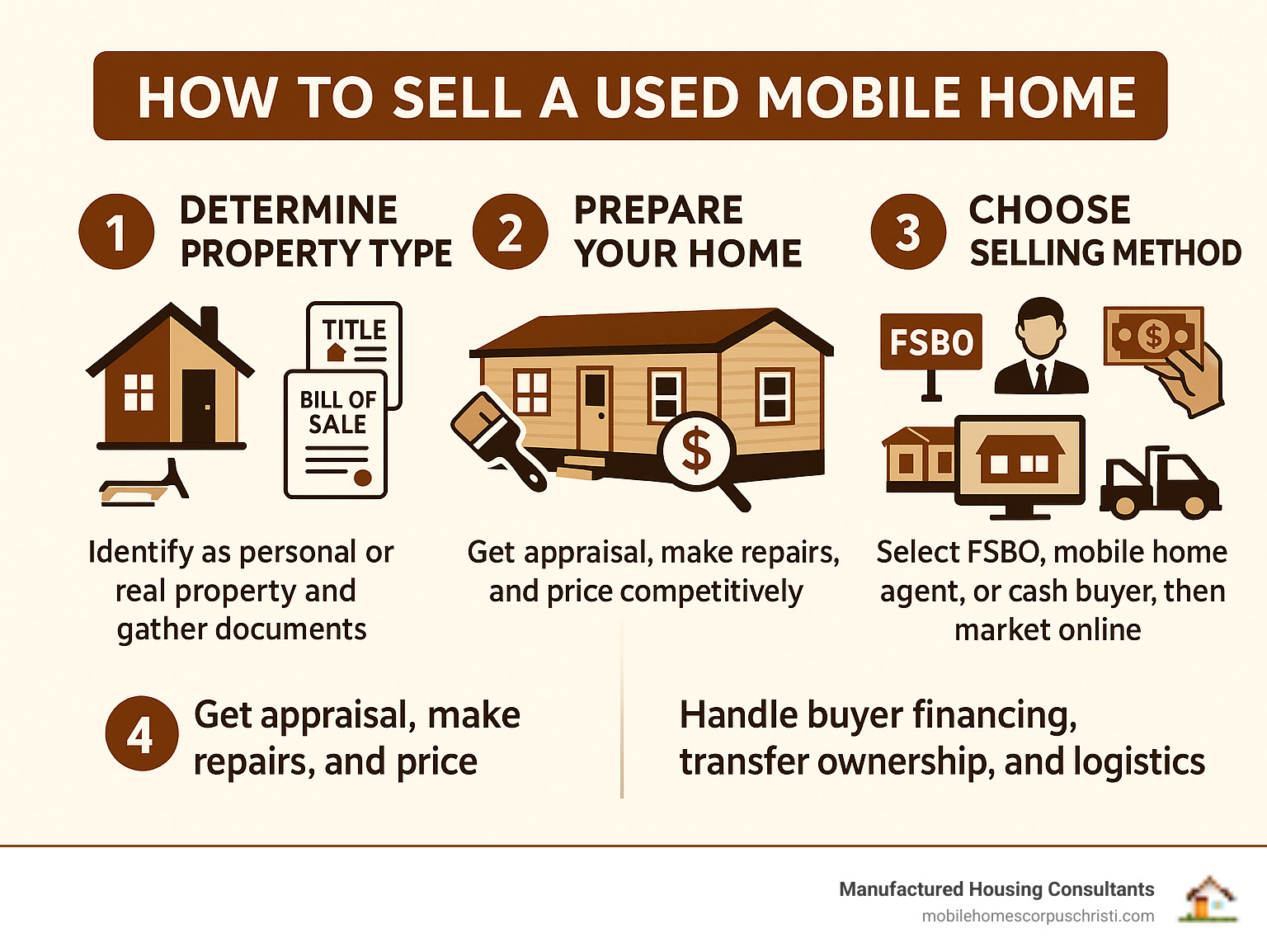
Before you can sell your used mobile home, you must determine its legal classification: personal property or real property. This distinction is crucial and affects the entire sales process, from paperwork to financing options.
Personal property (also called “chattel”) means your home is treated like a vehicle. It has a VIN and is registered with the DMV. This is common if your home is in a mobile home park where you pay lot rent.
Real property is when your mobile home is permanently attached to land that you own. In this case, it’s sold with a deed, just like a traditional house.
Why does this matter? The classification determines the paperwork and financing options available to buyers. Selling a home as personal property is like selling a car, while selling it as real property is like selling a house.
A key decision is whether to sell your used mobile home with or without the land. While mobile homes can depreciate, land usually appreciates. Selling them separately can sometimes bring a higher total return, but it can also make finding a buyer harder, as they’ll need to arrange and pay for moving the home, which can lower its value.
For more details on how manufactured homes are classified, check out this helpful guide to titling manufactured homes as real property. To understand what buyers are looking for, our guide on What to Look For When Buying a Used Mobile Home offers valuable insights.
Essential Documentation for the Sale
Having your paperwork organized shows buyers you’re serious and helps the sale proceed smoothly.
- Title or Deed: The most important document. You’ll have a DMV-issued title for personal property or a property deed for real property. If you’ve lost your title, you can request a replacement from the DMV.
- Bill of Sale: This document formally transfers ownership and should detail the sale price, date, and what’s included in the deal.
- Proof of Paid Taxes: Shows that all property or personal property taxes are up to date.
- Certificate of Occupancy: May be required in your area, especially after major renovations or if the home is being moved.
- Maintenance and Upgrade Receipts: While not legally required, these documents help justify your asking price by showing proof of improvements.
- Park Rules and Lease Agreement: If your home is in a mobile home community, the buyer needs to understand the lease terms and community rules. The park management will likely need to approve the new buyer.
Converting to Real Property: The De-Titling Process
If you own the land your mobile home sits on, consider “de-titling” it to reclassify it as real property. This can significantly increase its resale value and open up more financing options for buyers, such as conventional mortgages or FHA and VA loans, which often have better terms than chattel loans. The process involves retiring the DMV title and obtaining a warranty deed that legally ties the home to the land. You’ll typically need help from a title company or attorney, and the exact steps vary by state. Generally, you’ll need to prove land ownership, have the home on a permanent foundation, get the right permits, and pay any required fees.
Step 2: Pre-Sale Prep – Pricing and Improvements
Now that you’ve sorted out the legal paperwork, it’s time to get your home ready to shine! Think of this stage as preparing for the most important first date your home will ever have.
Before listing, consider a professional appraisal and home inspection. An appraisal gives you an unbiased valuation, taking the guesswork out of pricing. An inspection can reveal hidden issues before buyers find them, giving you a chance to make repairs and avoid last-minute negotiations. This upfront assessment also helps you identify value-add opportunities, so you can focus your time and money for maximum impact.
How to Price Your Used Mobile Home for a Profitable Sale
Getting the price right is a balancing act. Price too high, and your home sits on the market. Price too low, and you lose money.
Start with market research by looking at comparable sales (“comps”) in your area. For the most accurate valuation, invest in a professional appraisal from someone who specializes in manufactured homes.
Several key factors will determine what buyers are willing to pay:
- Age and Condition: A well-maintained newer home will always command a higher price.
- Size: Double-wides and triple-wides are generally more valuable than single-wides.
- Upgrades and Renovations: Improvements to kitchens, bathrooms, flooring, or energy efficiency can significantly boost your value.
- Location: A home in a desirable park or on private land in a sought-after area is worth more.
- Land Inclusion: A home sold with the land it sits on is typically more valuable than one without.
According to the U.S. Census Bureau, the average price for a new manufactured home was around $121,600 in 2024. While this is for new homes, it provides a useful market baseline. Price your home competitively, but leave some room for negotiation. To better understand your local market, check out our guide to Explore the Market for Used Mobile Homes.
Smart Repairs and Staging to Maximize Appeal
First impressions can make or break a sale. You don’t need a massive budget to make your home irresistible. Strategic improvements and smart staging can work magic.
- Boost Curb Appeal: Power wash the exterior, clean the windows, and tidy the yard. A fresh coat of paint on the front door is a cheap but effective touch.
- Landscape: Fresh mulch, trimmed bushes, and a few potted plants create an inviting atmosphere.
- Repair or Replace Skirting: Damaged skirting can make a home look neglected. Upgrading to a better material like stone or brick can dramatically improve its look.
- Paint the Interior: A fresh coat of neutral paint makes rooms feel larger, brighter, and cleaner.
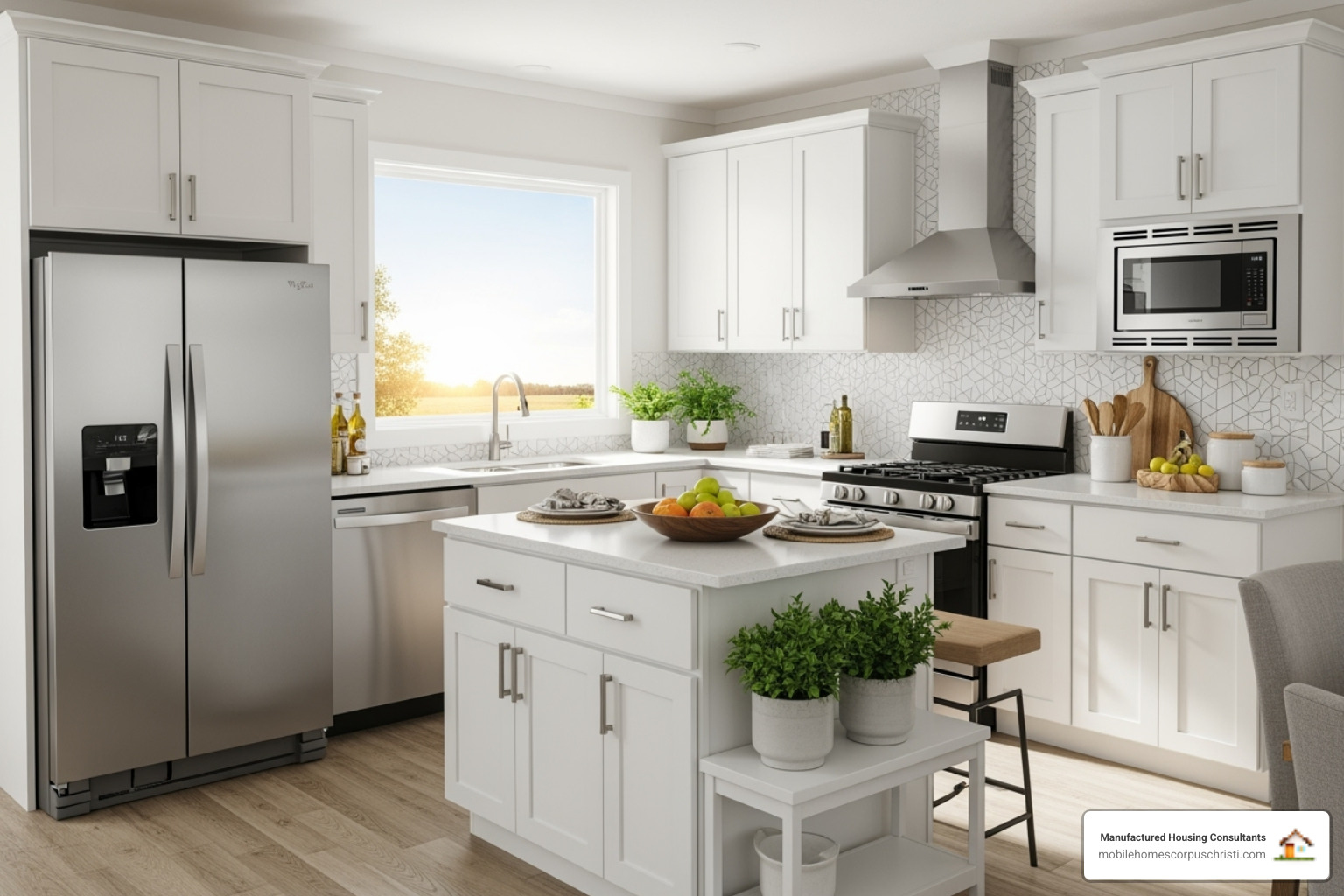
- Update Fixtures: New light fixtures and cabinet hardware are inexpensive updates that make a big impact.
- Deep Clean: Go beyond your regular routine. Scrub baseboards, clean inside cabinets, and have carpets professionally cleaned.
- Declutter and Depersonalize: Remove personal photos and excess items so buyers can envision themselves living in the space.
- Fix Minor Issues: Address leaky faucets, sticky doors, and loose handles. These small problems can create a negative impression.
- Highlight Outdoor Spaces: If you have a deck or porch, make sure it’s clean and inviting.
A clean, well-maintained home sells faster and for more money. For more insights from a buyer’s perspective, read our article on the Pros and Cons of Buying a Mobile Home.
Step 3: The Sale – Marketing, Showings, and Negotiations
You’ve done the legal and physical prep – now it’s time for the fun part: finding that perfect buyer! This stage is where your mobile home shines and you start to connect with its next owner.

A compelling online listing is non-negotiable, as most buyers start their search online. Your listing is your home’s digital storefront. Use high-quality photos taken in natural light to showcase clean, decluttered rooms. Write a detailed, honest description highlighting your home’s best features and recent upgrades. A well-presented mobile home will stand out.
Choosing How You’ll Sell Your Used Mobile Home
You have a few main paths you can take, each with its own pros and cons. Your choice depends on whether your priority is speed, profit, or convenience.
| Selling Option | Pros – | –
| For Sale By Owner (FSBO) | No agent commission, full control over the process. | Requires significant time, effort, and marketing knowledge. You handle all paperwork and negotiations. |
| Real Estate/Mobile Home Agent | Expert guidance, wider market reach, handles negotiations and paperwork. | You’ll pay a commission, typically 5-6% of the sale price. |
| Cash Buyer/Investor | Fast, simple, as-is sale with no need for repairs. | You’ll likely receive a lower offer than the market value. |
Marketing Your Home and Screening Buyers
Market your home on platforms like Zillow, Facebook Marketplace, and specialized sites like MHVillage. Don’t forget local classifieds and community bulletin boards. When you receive offers, screen potential buyers carefully. Verify their financing or proof of funds before accepting an offer. Be prepared to negotiate, but know your bottom line. Understanding common buyer mistakes can also give you an edge. Learn more by reading our guide on Common Mobile Home Buyer Mistakes to be aware of.
Navigating Showings and Open Houses
Be flexible with scheduling and ensure your home is clean and tidy for every showing. Open the blinds to let in natural light and consider using subtle air fresheners. It’s best to leave during showings so potential buyers feel comfortable exploring and speaking openly with their agent. Prepare a small flyer with key details about the home that visitors can take with them.