
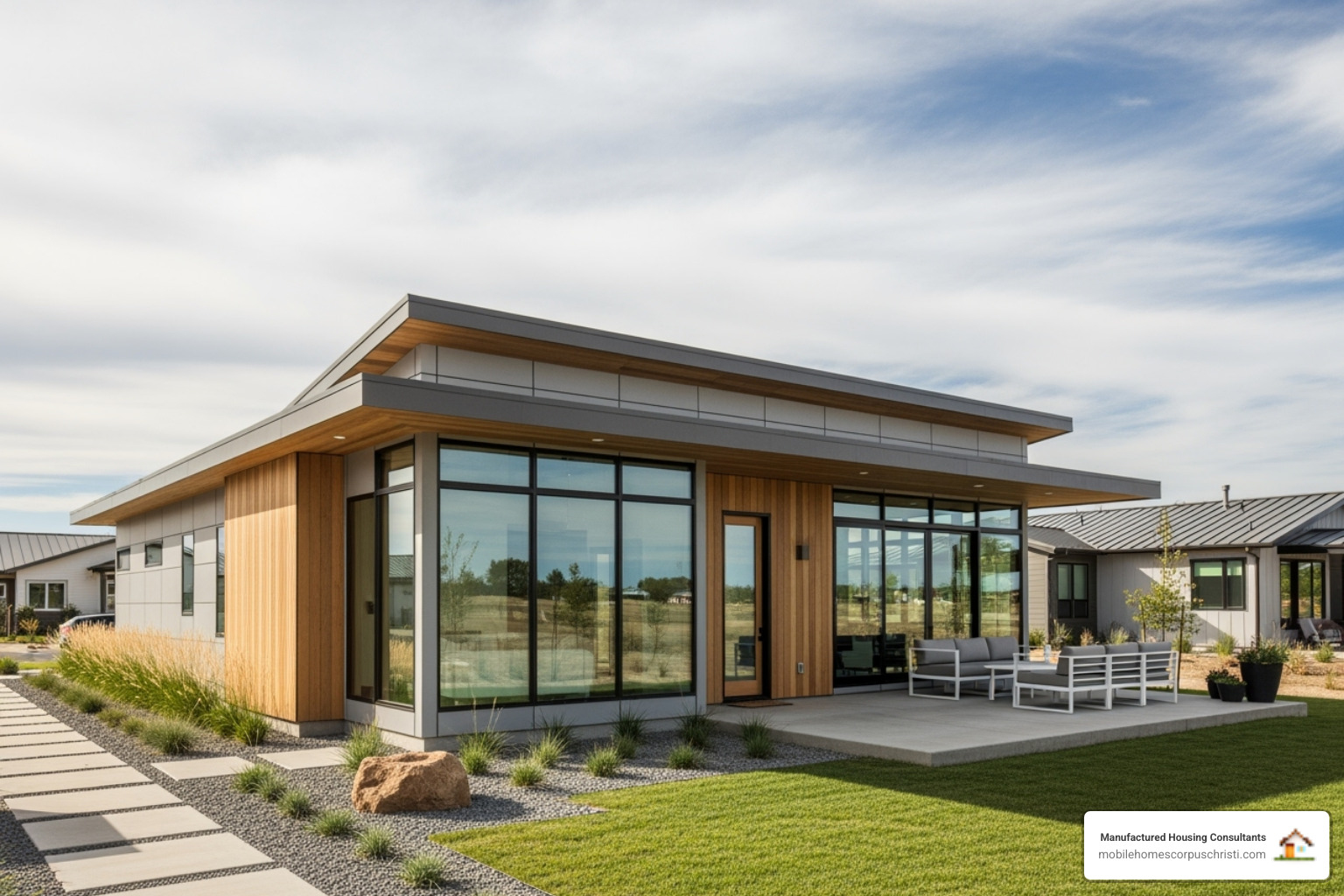
Why Modern Prefab Houses Are Changing the Game for Homebuyers
Modern prefab houses offer a faster, more affordable, and sustainable path to homeownership than traditional site-built homes. Here’s a look at their key advantages:
- Speed: Complete construction in 3-6 months vs. 8-12+ months for traditional builds.
- Cost: Typically $170,000-$500,000, often with a lower cost per square foot.
- Quality: Built in controlled factory environments with rigorous quality control.
- Customization: Extensive options for layouts, finishes, and features.
- Sustainability: Less than 10% construction waste vs. 25%+ for site-built homes.
- Energy Efficiency: Tightly sealed construction can reduce heating and cooling costs by up to 80%.
With the cost of a new custom home in the U.S. ranging from $121,099 to $502,765 in 2023, traditional construction faces challenges like labor shortages, weather delays, and material waste. Modern prefab houses are a solution, representing a fundamental shift in homebuilding.
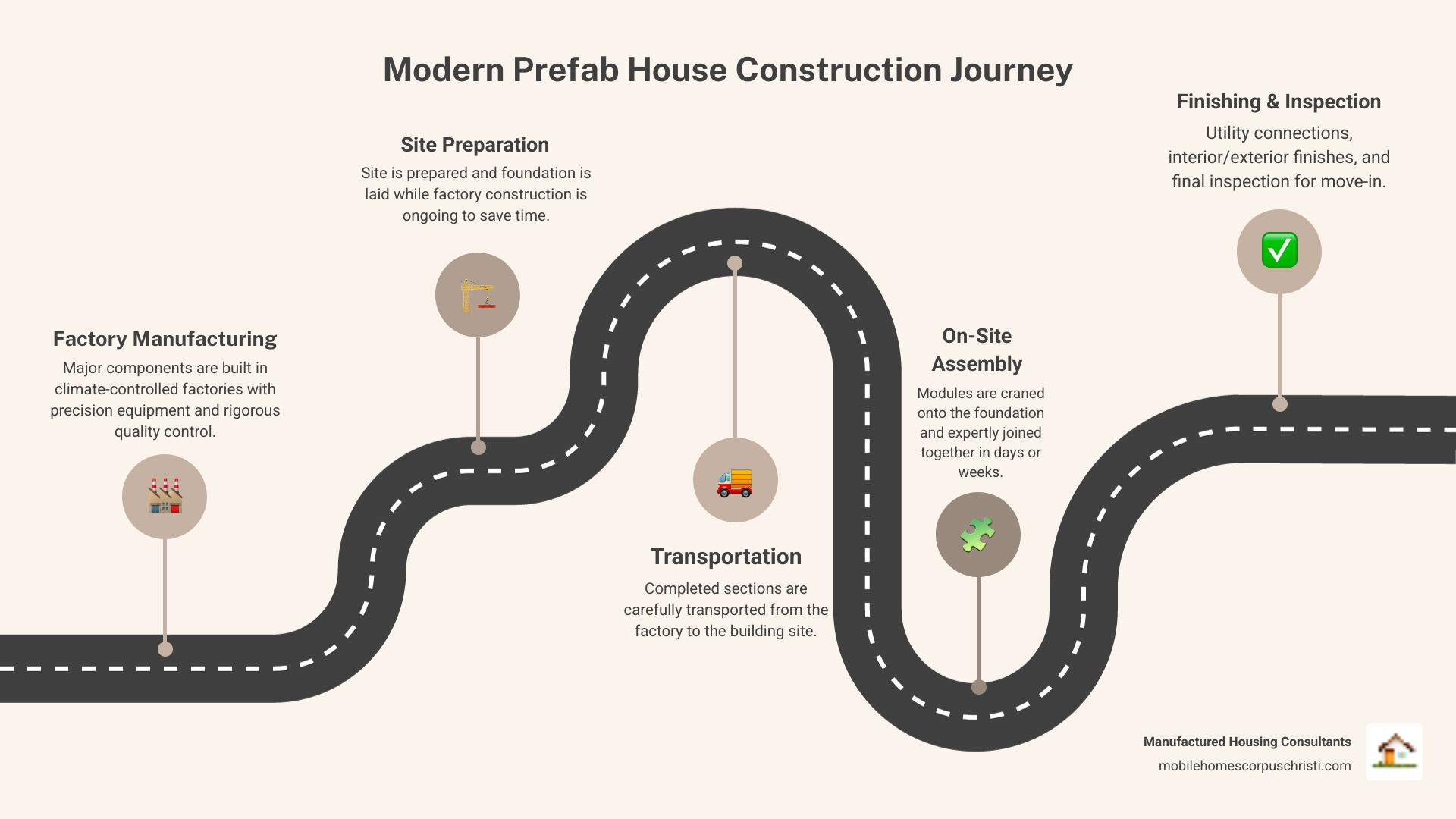
These are not the boxy trailers of the past. Today’s prefab homes blend architectural innovation with factory precision to deliver custom-quality design at accessible prices. Major components are built in climate-controlled factories, which eliminates weather delays, reduces waste, and ensures consistent quality. Once complete, sections are transported to your site and assembled in days or weeks, not months.
For families priced out of traditional markets, prefab construction offers a legitimate path forward. With lower upfront costs, faster timelines, and specialized financing, homeownership becomes achievable.
The Prefab Advantage: Why Go Factory-Built?
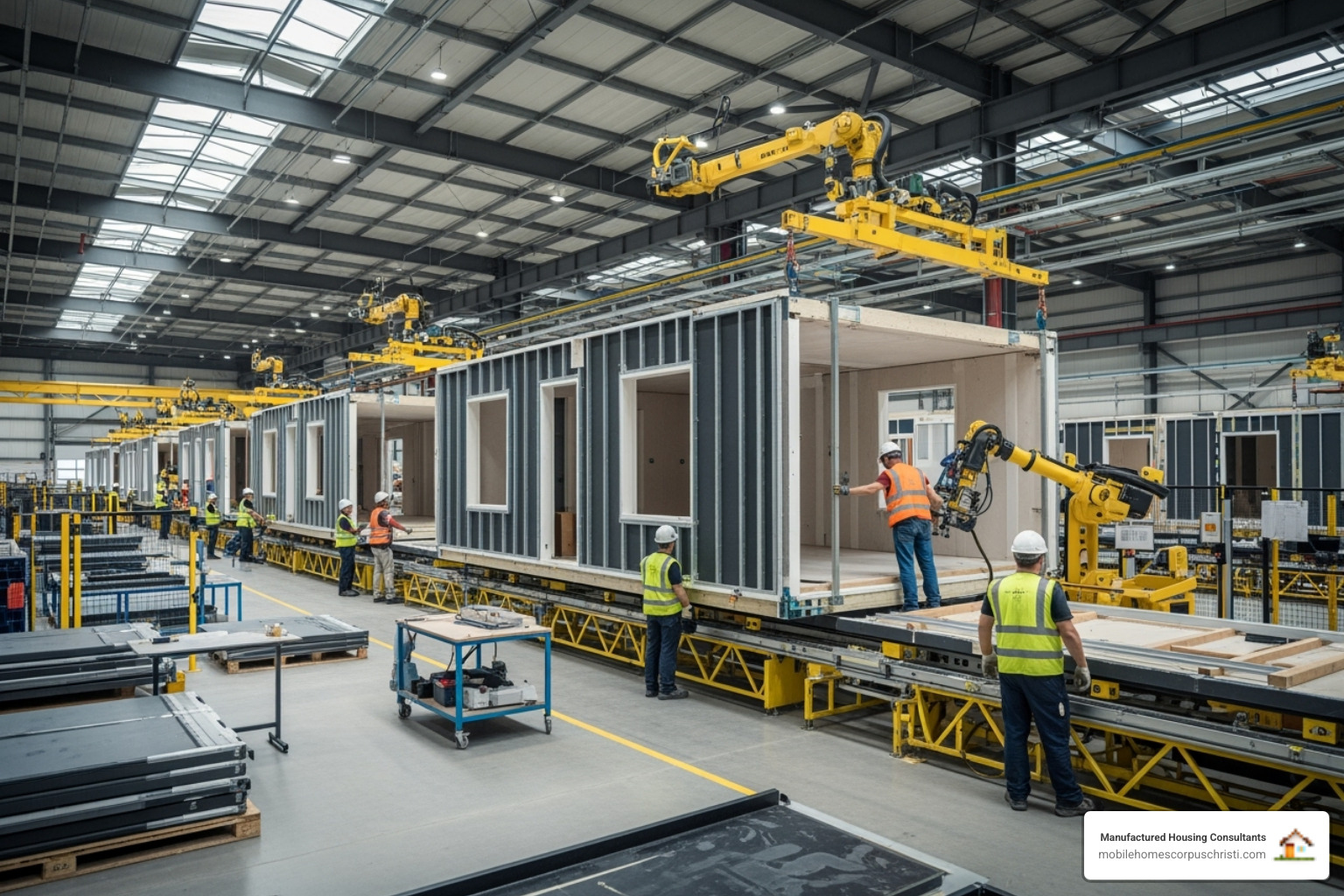
Shifting construction from a muddy site to a clean factory floor makes homes better, faster, and more affordable. When major components of modern prefab houses are manufactured off-site, you gain advantages that traditional construction can’t match.
Faster Construction Timelines
According to NAHB estimates, modern prefab houses can be completed in a fraction of the time traditional builds require—often in as little as three months. While a conventional home build can take eight to twelve months, prefab moves much faster due to parallel processing. Your home’s modules are built in the factory while your site crew simultaneously prepares the foundation and utilities.
Factory efficiency also eliminates weather delays. Rain, snow, and extreme heat don’t stop the indoor assembly line, where skilled tradesmen work year-round. This consistency means you move in sooner, saving money on temporary housing and reducing the stress of waiting.
Cost-Effectiveness and Value
With traditional construction costs ranging from $121,099 to $502,765 in 2023, building smarter makes a real difference. Modern prefab houses deliver quality without the premium price tag. The factory process streamlines production, reducing on-site labor needs and making costs more predictable.
Material efficiency is another key factor. In a controlled factory, builders use materials with precision, virtually eliminating the waste, damage, and theft common on outdoor job sites. This translates directly into savings. You also get greater price predictability from the start, which simplifies budgeting and financing. For more details, our guide on more info about modular home financing can help.
Superior Sustainability and Less Waste
Factory construction is inherently more sustainable. It generates less than 10 percent waste, compared to 25 percent or more for traditional site-built homes. In a factory, materials are protected, organized, and used efficiently, preventing weather damage and loss.
The energy efficiency of modern prefab houses is also remarkable. Modules are built as tightly sealed structures, which can lower your heating and cooling costs by up to 80 percent. Many manufacturers use advanced materials like structural insulated panels (SIPs) to create an incredibly well-insulated, airtight envelope. If you’re interested in the technology, you can learn more about What Are SIPs?. This focus on efficiency and the use of sustainable materials like bamboo and low-VOC paints means your home can be beautiful, affordable, and gentle on the planet.
Decoding Prefab: Modular, Manufactured, and Panelized Homes Explained
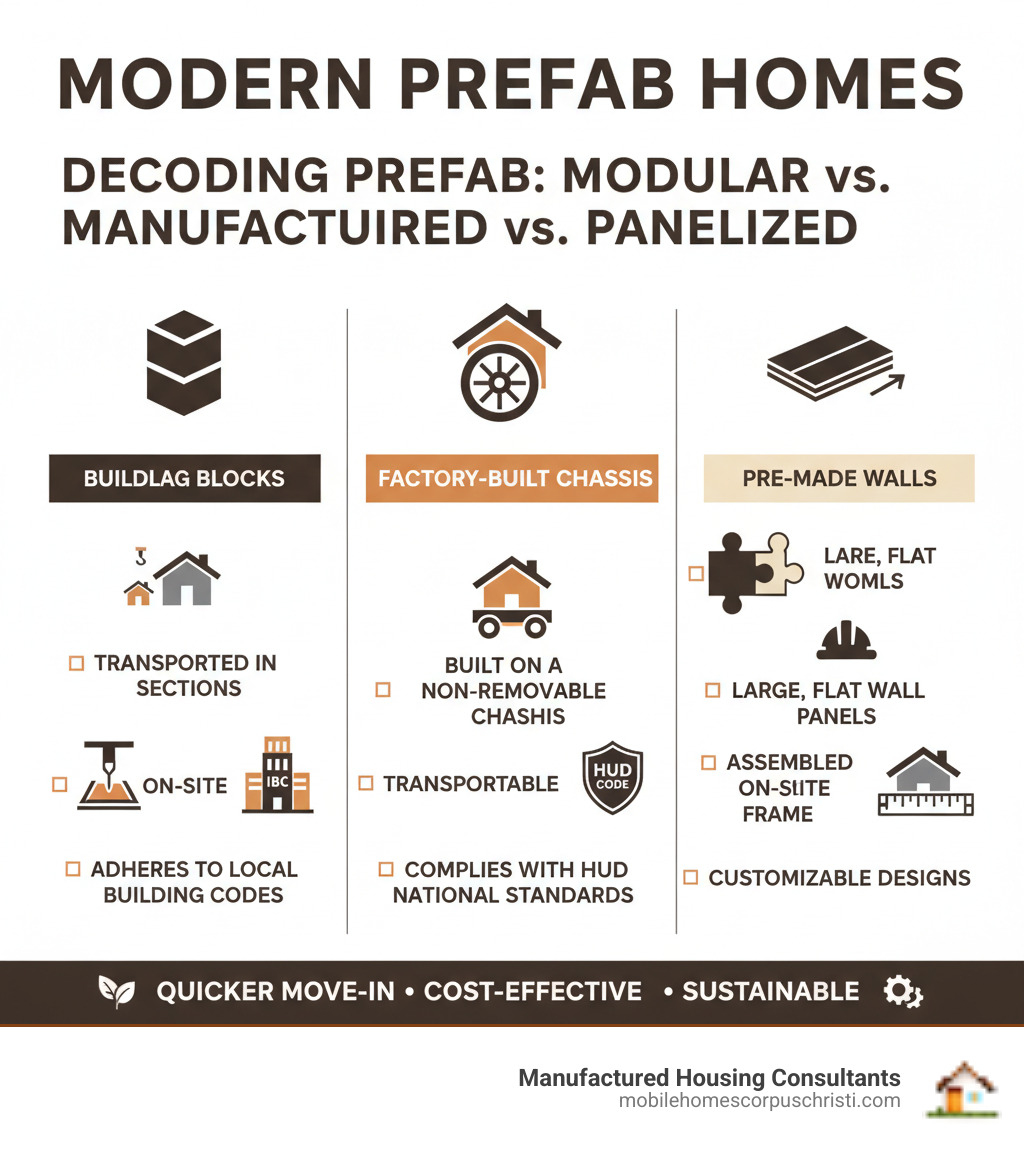
When exploring modern prefab houses, you’ll encounter terms like “modular,” “manufactured,” and “panelized.” All are built off-site, but they have distinct characteristics affecting financing, placement, and building codes.
Modular Homes: Building in Blocks
Modular homes are constructed in factory-built sections, or modules, that are transported to your property and assembled on a permanent foundation. Critically, they must meet the same local and state building codes as any traditional, site-built home. This ensures they follow the same rules for safety, structure, and efficiency.
Once assembled, a modular home is indistinguishable from a site-built one and can be designed in any architectural style. Because they sit on a permanent foundation, they are considered real property and appreciate in value just like other homes in the neighborhood. You can explore our modular homes to see the impressive variety available.
Manufactured Homes: The HUD Code Standard
Manufactured homes are also factory-built but follow a single federal building code administered by HUD (U.S. Department of Housing and Urban Development). This national standard ensures consistent quality and safety, regardless of location. Their most distinctive feature is a non-removable steel chassis, which allows them to be transported.
Today’s manufactured homes have shed the old “mobile home” image, featuring beautiful aesthetics, quality materials, and amenities like open-concept layouts and gourmet kitchens. They offer an accessible price point without sacrificing style. Depending on local rules, they can be placed on a permanent or non-permanent foundation, making them a flexible and affordable choice for many buyers.
Panelized and Kit Homes
Panelized and kit homes involve factory-built components, rather than whole modules, that are assembled on-site. Panelized systems use entire wall panels, often including windows and doors. Many use Structural Insulated Panels (SIPs), which create highly energy-efficient structures. You can learn more about What Are SIPs? and their benefits.
Kit homes provide all the pre-cut components needed to assemble the structure. Both approaches offer faster on-site framing than traditional methods and allow for greater design flexibility. To compare these options with traditional building, our article on What is a site-built home? is a helpful resource. Each type of modern prefab house has unique advantages, and our team can help you find the perfect fit.
Designing Your Dream: Customization and Performance in Modern Prefab Houses
Today’s modern prefab houses offer incredible design flexibility and high performance, including excellent energy efficiency and smart technology. They are far from the one-size-fits-all boxes of the past.
The Myth of the “Cookie-Cutter” Home: Customization Levels
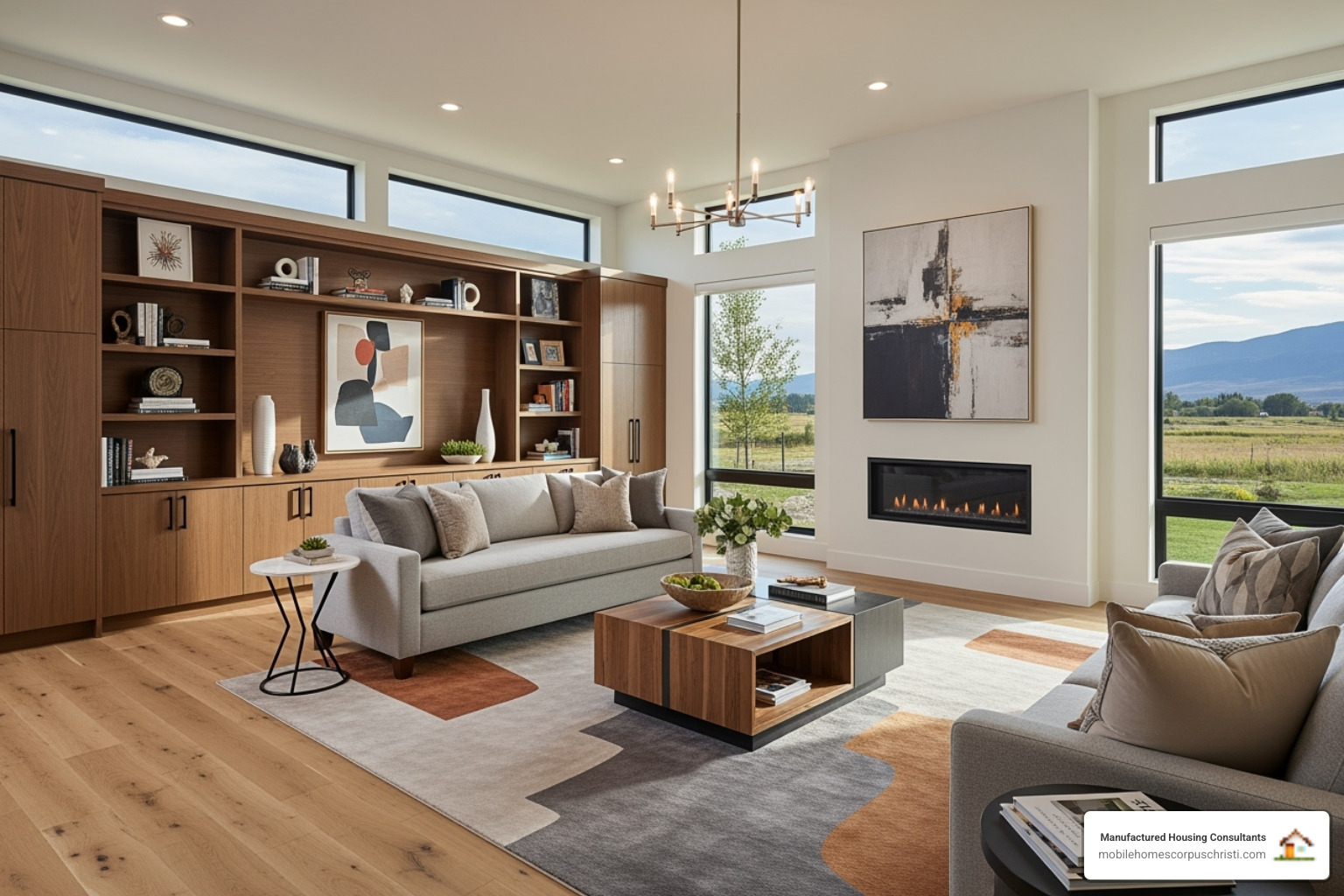
The idea that prefab means “cookie-cutter” is outdated. Modern prefab houses are highly customizable. You can start with a proven floor plan and then personalize it to fit your needs and style. Customization options include:
- Floor plan modifications to add rooms or create open-concept spaces.
- A wide choice of exterior finishes, from modern metal siding to classic board-and-batten.
- Full selection of interior materials, such as flooring, countertops, and cabinetry.
- Your choice of fixtures and appliances to match your taste and budget.
Many manufacturers also collaborate with architects on bespoke designs, giving you custom results with factory precision.
High-Performance Living in modern prefab houses
Because they are built in controlled factory environments, modern prefab houses achieve a level of performance that is difficult for site-built homes to match. The factory setting allows for superior insulation and airtight construction, which can cut energy bills by up to 80%. This tight building envelope also reduces noise and keeps out pollutants.
Many prefab manufacturers design to rigorous standards like LEED certification or Passive House principles, with some homes achieving net-zero energy usage. This is often accomplished with high-performance materials like structural insulated panels (SIPs) and integrated technology, such as smart home systems that optimize energy use and air quality.
The Role of Architects and Designers
Architects and designers have transformed prefabrication into an art form. They use innovative materials and create designs that are both beautiful and buildable in a factory setting. This collaboration lifts prefab aesthetics to compete with, and often surpass, traditional custom homes.
Designers create spaces with soaring ceilings, walls of windows, and flowing floor plans that feel spacious and light-filled. This partnership between architects and manufacturers allows you to benefit from professional design expertise without the high cost of a fully custom home. For Texas families, Manufactured Housing Consultants provides access to beautifully designed homes from top manufacturers that don’t compromise on style or performance.
The Building Journey: From Factory Floor to Your Foundation
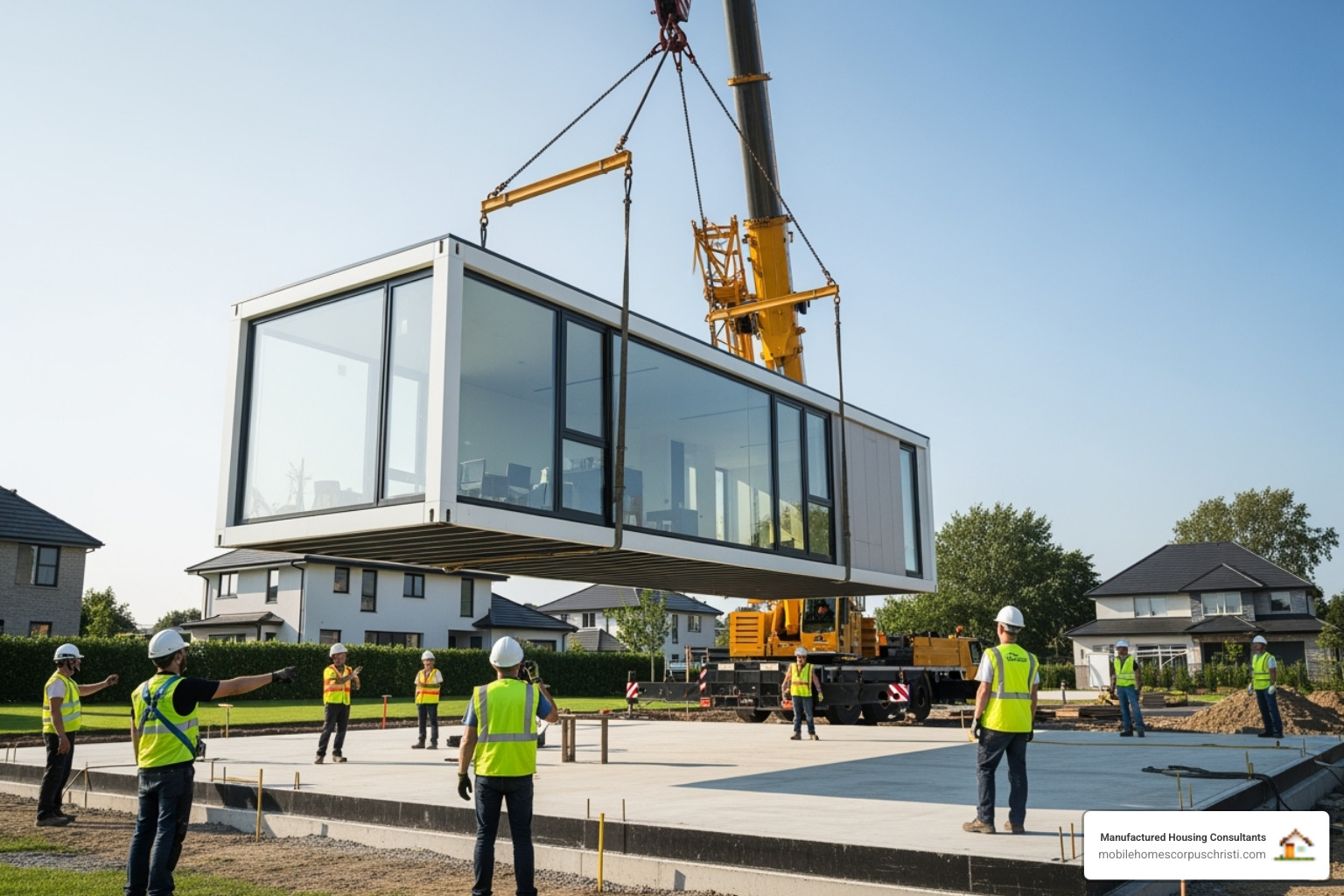
The path to a finished modern prefab house is straightforward but has key considerations. While your home is built with precision in a factory, your site is prepared simultaneously. The modules are then transported and craned into place, a process that takes days or weeks instead of months.
Navigating Challenges and Considerations
While the process is efficient, it’s important to plan for a few key areas:
- Financing: Modular homes on permanent foundations usually qualify for conventional mortgages. Specialized financing exists for manufactured homes, and at Manufactured Housing Consultants, we offer solutions for all credit situations. Find more info about modular home financing in our guide.
- Zoning and Permits: Research local requirements early. Modular homes must meet local codes just like site-built homes, while manufactured homes follow the federal HUD code. Some areas have restrictions, so check first.
- Transportation and Site Prep: Your home’s sections must be transported from the factory, which involves logistical planning. We deliver homes anywhere in Texas, simplifying this step. Remember to budget for site preparation costs, including the foundation, utilities, and grading, which are separate from the home’s price.
- Appraisals: While becoming less common, appraisal challenges can sometimes occur if an appraiser is unfamiliar with modern prefab quality. This is changing as more high-quality factory-built homes enter the market.
Durability by Design for modern prefab houses
Modern prefab houses are often more durable than traditional homes because they are engineered to withstand transportation. Traveling on highways requires stronger joints, more secure connections, and resilient materials, giving prefab homes a structural advantage.
The factory environment also improves longevity. Materials are protected from weather, and quality control is performed at every stage. Homes are built to meet rigorous building codes from the start, with no compromises due to on-site conditions. Many are designed for extreme resilience, with some models able to withstand hurricane-force winds. When your home arrives, it has already proven its durability, ensuring it’s built to last for generations.
Frequently Asked Questions about Modern Prefab Homes
Here are answers to the most common questions we hear from people exploring modern prefab houses.
What is the typical cost range of a modern prefab home?
The cost of a modern prefab house varies widely based on size, features, and location. While the cost per square foot is often lower than for traditional builds, the total investment depends on several factors:
- Base Price vs. Turnkey Cost: The base price covers the home as it leaves the factory, while the turnkey cost includes site work, foundation, delivery, and installation.
- Size and Customization: A larger home or one with high-end finishes, premium appliances, and luxury features will have a higher cost.
- Site and Transportation: The cost of preparing your land (foundation, utilities) and transporting the home to your site are significant factors.
We provide transparent pricing and offer specialized financing for all credit situations to help you find an option that fits your budget.
How long does it take to build a prefab home?
Modern prefab houses have a much faster timeline than traditional homes. A typical project can be completed in around three months, compared to 8-12+ months for a site-built home.
This speed is achieved through parallel processing: your home’s modules are built in a factory (taking 4-8 weeks) at the same time your land is being prepared. Because factory work isn’t affected by weather, there are no delays. On-site assembly is also very fast, often taking only a few days or weeks. This streamlined process allows you to move in sooner, saving time and money.
Are prefab homes as durable as traditional homes?
Yes, modern prefab houses are just as durable as traditional homes, and in many cases, they are even more so. They are engineered to withstand the stresses of transportation over highways, which requires them to be built with reinforced structures and stronger connections.
Additionally, all prefab homes must adhere to strict building codes. Modular homes meet the same local and state codes as site-built homes, while manufactured homes follow the rigorous federal HUD code. The controlled factory environment ensures high-quality materials are used and protected from weather, and constant quality control checks catch any issues early. This results in a resilient home built to last for generations.
Conclusion: Is a Modern Prefab Home Right for You?
Modern prefab houses offer a compelling solution to the challenges of traditional homebuilding. They provide a faster, more affordable, and sustainable path to homeownership without sacrificing quality, design, or durability. With benefits like rapid construction timelines, lower energy costs, and extensive customization, prefab homes are an excellent choice for today’s homebuyers.
These homes are not cookie-cutter boxes but architecturally innovative spaces that can be custom to your personal style. They often exceed traditional construction in efficiency and value, making them a smart investment for your future.
For families in Texas, Manufactured Housing Consultants makes the journey to prefab homeownership simple. We offer the largest selection from 11 top manufacturers with guaranteed lowest prices. Our specialized financing options are available for all credit situations, including FICO improvement programs, and we deliver homes anywhere in Texas. We are here to help you steer your options and find the perfect fit for your budget and dreams.
Ready to see what’s possible? View our gallery of modern modular homes and start your journey to a better, faster, and more sustainable home.