Your Path to a Successful Sale
If you’re thinking, “I need someone to buy my manufactured home,” whether for an upgrade, downsizing, or relocation, the process doesn’t have to be overwhelming. Here’s what you need to know:
Quick Options for Selling Your Manufactured Home:
- Sell directly to a home buyer – fastest option, typically 7-30 days, sold as-is
- Sell on your own – potentially higher price but takes 3-6 months on average
- Trade in for upgrade – seamless transition to a newer home
- Sell with or without land – different processes depending on ownership
Selling a manufactured home differs from traditional real estate. They are often considered personal property, not real estate, which means different paperwork, financing challenges for buyers, and unique location considerations.
Success hinges on understanding these differences and choosing the right strategy. Some sellers need a quick sale due to job changes or finances, while others prioritize maximizing their return.
The good news is that manufactured homes are in high demand. As traditional housing costs rise, they become an affordable option, creating opportunities for well-prepared and competitively priced sellers.
Basic buy my manufactured home vocab:
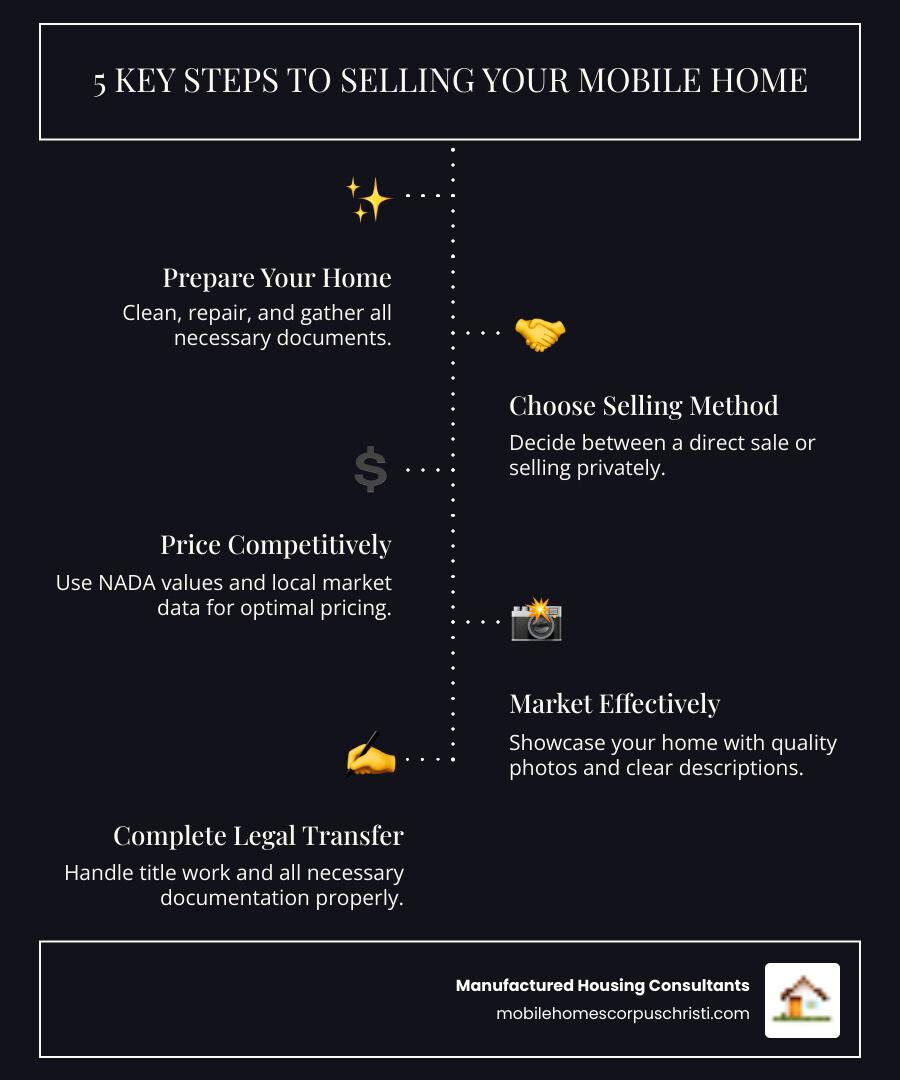
Step 1: Preparing and Valuing Your Mobile Home for Sale
Before listing your manufactured home, preparation is key to making a great first impression. This effort can significantly impact your sale’s speed and price.
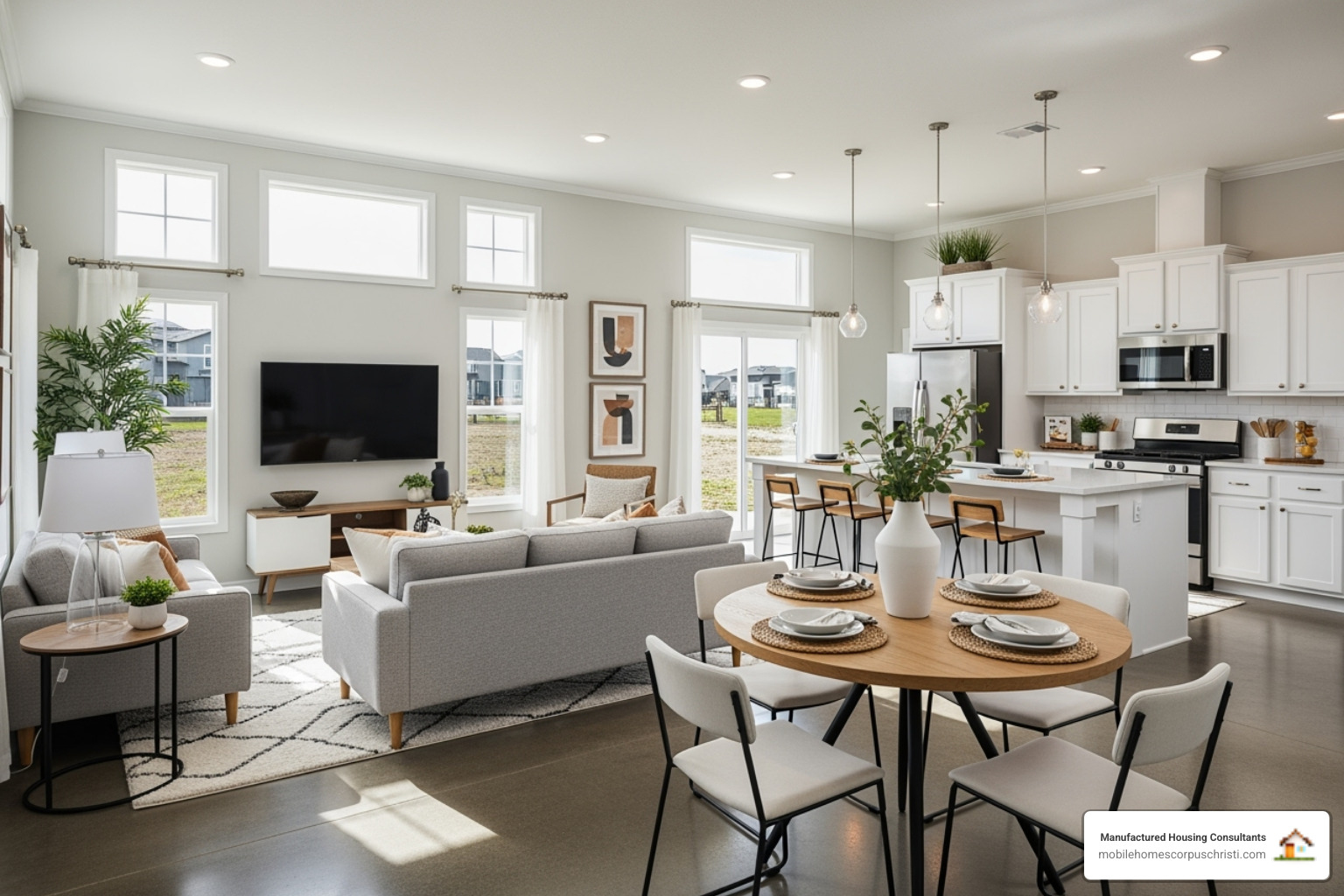
First, focus on appearances. Declutter, deep clean, and depersonalize your space by tucking away family photos so buyers can envision their life there. A fresh coat of neutral paint can make rooms feel larger and brighter.
Next, boost your curb appeal. Trim bushes, mow the lawn, and add potted plants. Repairing damaged skirting or rusty tie-downs improves perceived value and suggests a well-maintained home.
Finally, gather your documents: the home’s title, bill of sale, and tax records. If in a community, understand the park’s sales rules and lease agreements. Locate the HUD data plate and CSA certification stickers, which are crucial for financing and legal transfers for homes built after 1976.
How to Improve Your Mobile Home’s Value
To get the best return when someone wants to buy my manufactured home, focus on high-ROI improvements instead of major renovations.
Here are 5 high-ROI improvements to consider:
- Fresh Paint: As we mentioned, a fresh coat of paint in neutral colors is perhaps the cheapest and most impactful improvement. It instantly brightens a space and makes it feel clean and updated.
- Updated Fixtures: Swapping out old, dated light fixtures, cabinet pulls, and faucets for modern ones is a relatively inexpensive way to give your kitchen and bathrooms a contemporary facelift.
- Landscaping and Curb Appeal: Beyond just mowing, consider adding some fresh mulch, a few vibrant flowers, or even a small, well-placed tree. A welcoming exterior invites buyers inside.
- Skirting Repair and Cleaning: The skirting around your manufactured home protects the underside and hides utility connections. Repairing any damage and ensuring it’s clean and tidy makes the home look well-cared for.
- Energy-Efficient Updates: If your budget allows, consider small energy-efficient upgrades like sealing drafty windows and doors, or even replacing older light bulbs with LED ones. Modern buyers are often keen on saving on utility bills.
The goal is to make your home stand out, encouraging buyers to make an offer.
How to Price Your Home So Someone Will Buy My Manufactured Home
Correctly pricing your manufactured home is a delicate balance. Price it too high, and it sits on the market; too low, and you lose money. Finding the sweet spot is key.
Several factors influence your home’s market value:
- Location: A desirable community, proximity to amenities, and whether the land is owned or rented all play a huge role.
- Age and Condition: Age matters, as lenders consider the home’s economic life (around 45 years). A well-maintained older home can have a lower “effective age,” significantly impacting its value.
- Size and Features: Square footage, number of bedrooms/bathrooms, and desirable features like updated kitchens or a porch add value.
- NADA® Value: The NADA® value is a key starting point for homes built after 1976, similar to a car’s “Blue Book.” An in-person evaluation is often more accurate, accounting for local market conditions.
- Comparable Sales: Reviewing recent sales of similar homes in your area is a reliable way to gauge market value.
- Professional Appraisal: An appraisal provides an unbiased, accurate valuation, which is invaluable for negotiations and loan applications, especially if financing challenges are anticipated.
Understanding these factors helps price your home competitively to attract buyers looking to buy my manufactured home.
Step 2: What Are My Options When I Want to Sell My Manufactured Home?
When you decide to sell your manufactured home, you face an important decision. You have two main paths, and your choice will define your selling experience.
You can sell directly to a specialized buyer like us at Manufactured Housing Consultants, or you can sell it yourself. Both options serve different needs.
| Feature | Selling to Manufactured Housing Consultants | Selling on Your Own |
|---|---|---|
| Speed | Fastest (7-30 days typically) | Slower (3-6 months on average, sometimes longer) |
| Price | Fair market cash offer | Potentially higher, but not guaranteed |
| Convenience | High (we handle everything) | Low (requires significant time and effort from seller) |
| Condition | Sold as-is (no repairs needed) | Often requires repairs and staging to attract buyers |
| Financing | We buy with cash or pre-approved funds | Buyer needs to secure financing (can be complex) |
| Paperwork | Minimal for seller (we guide you) | Seller responsible for all legal and transfer documents |
| Showings/Marketing | None needed | Seller handles all showings, marketing, and inquiries |
| Risk | Low (guaranteed sale) | High (no guarantee of sale, deal can fall through) |
| Expertise | Our specialized knowledge | Seller steers complex market and legal aspects |
Selling to us is the express lane; selling on your own is the scenic route. Both lead to a sale, but the journey is very different.
Selling to Manufactured Housing Consultants
If you need someone to buy my manufactured home quickly and without hassle, we can help. Our business is built on making the selling process smooth for homeowners.
Speed is our specialty. We often close in 7-30 days, perfect for situations like a job relocation or needing to free up cash. We work on your timeline.
What makes us different is that we buy homes as-is. No need to fix that leaky faucet or update cabinets. You won’t spend money on repairs or staging, saving you time, money, and stress.
The process is simple. No endless showings or waiting for agent calls. We handle the marketing, paperwork, and all the background work to complete the sale.
As local Corpus Christi experts, we understand the Texas market and are committed to fair, transparent offers. When people ask, “who buys trailer homes?” we aim to be the top choice for all the right reasons.
Working with us provides peace of mind. You avoid the headaches of private sales, like lowball offers or unreliable buyers. We are professionals with the resources to close deals properly.
Selling on Your Own
If you have time and want to maximize your price, selling your home yourself is an option. Be aware that it’s more work than many expect.
Marketing is a major task. You’ll need quality photos, compelling descriptions, and effective online listings. A strong internet presence is essential to reach the millions of online shoppers.
Prepare for numerous showings. Your home must be spotless and ready for visitors on short notice. You’ll answer many questions and need to distinguish serious buyers from casual lookers.
Negotiations can be complicated. You’ll need to counter-offer reasonably, avoiding pricing too high or too low.
The biggest challenge is that financing for manufactured homes is tricky. They often face unique financing issues, especially on rented land, as lenders may view them as personal property. This affects loan availability, and even qualified buyers can struggle, causing deals to fall through.
This financing complexity is a key reason sellers come to us. After struggling with buyers who can’t secure loans, they realize working with professionals is more effective.
The choice depends on your priorities. If you value speed, convenience, and certainty, we’re here to help. If you have time and prefer to manage the process yourself, that’s also a valid option. Understanding your choices is key to making the best decision.
Step 3: Navigating the Legal and Logistical Side of the Sale
Once you’ve chosen your selling approach, the paperwork begins. It’s similar to transferring a car title but with a few extra steps.

The title transfer process is central to the sale. The title proves ownership and is typically handled through your state’s Manufactured Home Registry, a separate system from traditional real estate.
Key documents include the Bill of Sale, which details the transaction (price, parties, home details), and a Seller’s Disclosure, where you must be honest about any known issues. Being upfront prevents future disputes. You’ll also need tax clearance to prove property taxes are current, as buyers and lenders require this before closing.
Selling a Home on Rented Land vs. Owned Land
The process changes dramatically depending on whether you own or rent the land your home sits on.
If your home is in a mobile home park on rented land, you’re only selling the structure. The buyer must be approved by park management and sign a new lease. They need to review the lease agreements, rules, and lot rent. The park approval process can sometimes slow a sale. Park approval is a serious step. Management will likely check the buyer’s credit and references. As the seller, you can help by providing park management’s contact information and relevant documents.
When selling a home with land you own, the process is more like a traditional real estate transaction. The home may be classified as real property (attached to land) instead of chattel (movable property). If you want to sell only the home but it’s titled with the land as real property, you may need to retitle it as personal property first. This involves paperwork to legally separate the home from the land.
Selling a Mobile Home That Needs to Be Moved
Sometimes a buyer will want to move the home. This is common and feasible, especially for newer homes in good condition.
Relocation considerations are important. Homes under 10 years old with no liens are the best candidates. The buyer usually handles logistics, but you should know that professional moving costs for under 100 miles range from $2,000 to $5,000.
Moving costs can be a negotiation point; some sellers offer to help cover them. Licensed movers handle permit requirements for both locations, and the home’s registration must be updated after the move.
Finding buyers for movable homes means targeting those who already have land. They are often looking for a good deal to offset the complexity and cost of moving.
Whether you need someone to buy my manufactured home where it sits or for moving, understanding these legal aspects ensures a smooth transaction.
Frequently Asked Questions about Selling a Mobile Home
When homeowners say, “I need someone to buy my manufactured home,” they often have questions. Selling a home is a big decision with unique considerations for manufactured homes. Here are answers to common questions.
How long does it take to sell a mobile home?
The time it takes to sell depends on several key factors.
Market conditions and location are crucial. High demand and a desirable location speed up sales, while a slow market or less desirable area can extend the timeline. A competitive pricing strategy and good condition are vital. A well-priced, move-in ready home attracts buyers faster than an overpriced one needing work.
Your selling method is crucial. Selling directly to us at Manufactured Housing Consultants typically takes 7-30 days. We’re ready to buy and handle all paperwork. In contrast, selling on your own averages 3-6 months and can be delayed by buyer financing issues.
What paperwork do I need when someone wants to buy my manufactured home?
Organizing your paperwork from the start makes the process much smoother.
The title is your most important document, proving ownership. If you have a loan, the lender holds the title, but we can work with that. Know your home’s year, make, and model. You’ll also need a bill of sale to record the transaction details and tax documents to prove taxes are current.
For homes in a community, you’ll need park paperwork, including buyer approval forms and your lease agreement. The new owner must be approved by the park.
Inspection reports can build buyer confidence. A seller’s disclosure is also needed to share any known issues with the home, which protects everyone. We guide you through gathering all these documents to ensure nothing is missed.
Do I need a real estate agent to sell my mobile home?
The short answer is no, you don’t need a real estate agent. Let’s discuss the pros and cons.
Real estate agents, especially those specializing in manufactured homes, offer expertise in pricing, marketing, and negotiations. They can be helpful if you’re overwhelmed by the legal paperwork. The downside is the agent commission, typically 3-6% of the sale price. On a $75,000 home, that’s $2,250 to $4,500 that you could otherwise keep.
Selling on your own (FSBO) lets you keep the commission, but you must handle all marketing, showings, negotiations, and paperwork. This is a lot of work and may not be ideal if you need a quick sale.
Working directly with us offers the speed and convenience of a direct sale without commissions. We handle everything, closing in weeks, not months. We provide a hassle-free way for someone to buy my manufactured home. The best choice depends on your timeline, comfort level, and financial goals. We’re happy to discuss your situation and help you understand all your options.
Conclusion: Take the Next Step in Your Home Selling Journey
Selling your manufactured home is a major decision, but it doesn’t have to be overwhelming. Whether you’re upgrading, downsizing, or relocating, you now have a clear roadmap.

The key takeaways are: preparation matters, strategic pricing wins, and choosing the right selling method is crucial. A clean home with organized paperwork sells faster. Understanding your home’s value through NADA assessments and comparable sales helps you price competitively.
Most importantly, you have options. For speed and convenience, selling directly to us means closing in 7-30 days with no repairs needed. We buy my manufactured home in any condition, handle the paperwork, and provide fair cash offers to help you meet your goals. The traditional route is also an option, but remember the challenges: buyer financing issues, months of showings, and the risk of deals falling through.
At Manufactured Housing Consultants in Corpus Christi, we’ve helped countless homeowners transition smoothly. We understand the local market and legal requirements, and we are committed to making your experience as stress-free as possible.
Your home is part of your story. When you’re ready to move forward, we’re here to ensure a smooth and successful transition.
Ready to upgrade or sell your current home in Texas? Contact us today, and let’s start your next trip together. Your future home is waiting!