

Why Mobile Home Trade-Ins Are Changing How Families Upgrade Their Homes
Mobile home dealers that take trade ins offer a streamlined path to homeownership that’s revolutionizing how families upgrade their living situations. Instead of dealing with the complexities of selling your current home separately, these dealers accept your existing mobile, manufactured, or modular home as partial payment toward a new one.
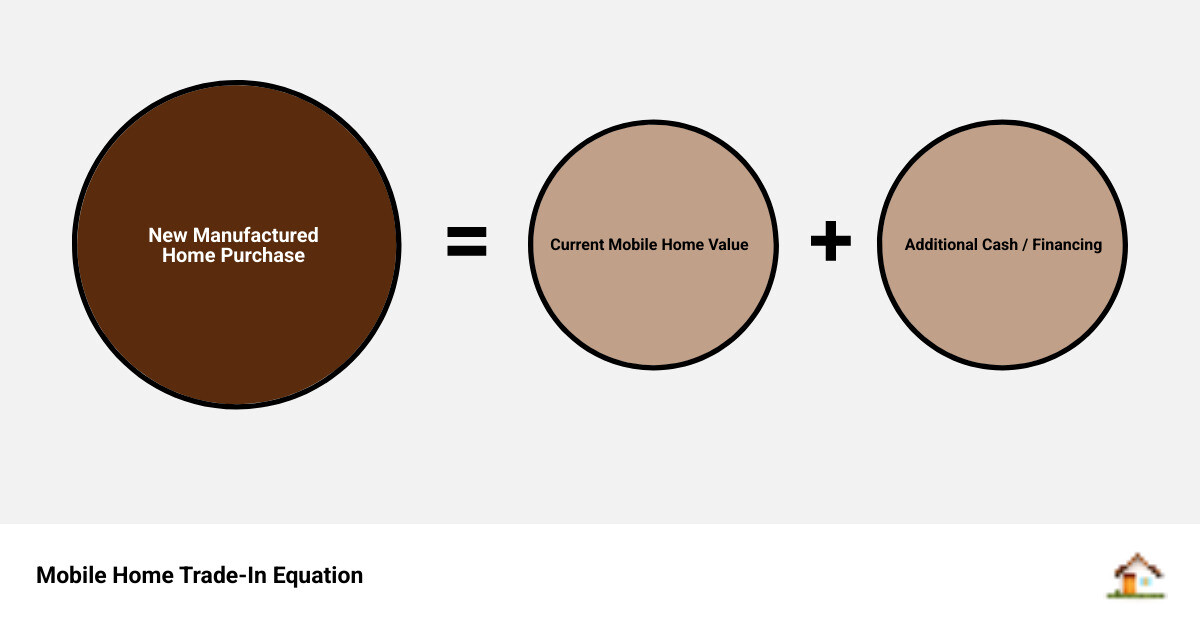
A mobile home trade-in works much like trading in a car at a dealership. Your current home’s value gets applied toward the purchase price of a new manufactured home, reducing your down payment or overall loan amount. This process eliminates the need to manage two separate transactions – selling your old home and buying a new one.
The benefits are clear: convenience, speed, and financial leverage. As one industry expert notes, “Trading in items with a title can be a significant part of the buying process for a new manufactured home.” You avoid the hassles of private showings, negotiations with multiple buyers, and the uncertainty of timing your sale with your new home purchase.
For budget-conscious families, trade-ins offer a practical solution. The value of your current home – even if it’s older or needs repairs – can help bridge the gap to homeownership. Many dealers accept homes in various conditions, from well-maintained units to those requiring significant work.
Is a Mobile Home Trade-In Right for You?
Choosing between trading in your mobile home or selling it privately feels a lot like deciding between taking the highway or the scenic back roads. Both routes get you where you’re going, but the journey is completely different.
When families come to us asking about mobile home dealers that take trade ins, we always start with this honest conversation about what matters most to them. Is it getting every possible dollar, or is it about making the transition as smooth as possible for their family?
| Feature | Mobile Home Trade-In | Private Sale |
|---|---|---|
| Convenience | High (dealer handles everything) | Low (you manage all aspects) |
| Max Value Potential | Lower (dealer needs profit margin) | Higher (you keep all proceeds) |
| Speed of Transaction | Fast (often completed within weeks) | Slow (can take months or longer) |
| Removal of Old Home | Dealer handles removal | You are responsible for removal or negotiating with buyer |
| Transaction Complexity | Single, streamlined transaction | Two separate transactions (sell old, buy new) |
| Showings/Negotiations | Minimal (one appraisal, one negotiation) | Many (multiple showings, intense negotiations) |
| Timeline Uncertainty | Low (dealer provides clear timeline) | High (unpredictable market, buyer financing) |
The reality is that most families we work with choose the trade-in route once they understand what’s involved in a private sale. You might squeeze out a few more dollars selling privately. But when you factor in the stress, time, and uncertainty, that extra money often doesn’t feel worth it.
Think about it this way: with a private sale, you’re essentially running a small business for several months. You’re marketing, showing the property, negotiating with strangers, and hoping everything aligns perfectly with your new home purchase timeline. Meanwhile, you’re still trying to pack, coordinate movers, and handle all the other details of relocating your family.
Advantages of Trading In Your Mobile Home
Moving is stressful enough without turning yourself into a part-time real estate agent. That’s exactly what drew us to help families through the trade-in process in the first place.
The biggest advantage is pure simplicity. Instead of juggling two major transactions, you’re handling one. One set of paperwork. One negotiation. One closing. It’s like the difference between cooking a seven-course meal and ordering takeout when you’re already overwhelmed.
Speed is another game-changer. Private sales can drag on for months, especially if your home needs work or if the market is slow. With a trade-in, we’re motivated to move quickly because we want to get you into that new home. Most of our trade-in transactions wrap up in a matter of weeks, not months.
Your current home becomes an instant down payment source. Even if your home is older or needs some TLC, that value goes directly toward reducing what you need to finance for your new manufactured home. We’ve helped families who thought they couldn’t afford to upgrade find that their existing home gave them exactly the boost they needed.
And here’s something people don’t always think about: professional removal. If you’ve ever tried to figure out how to move or dispose of a mobile home, you know it’s no small task. When you work with us, that headache disappears completely. We handle everything from permits to transport. You can learn more about how we make this process seamless through Our Services.
Potential Drawbacks of a Trade-In
We believe in straight talk, so let’s address the elephant in the room. You’ll probably get lower value than a private sale – and that’s just the reality of how trade-ins work.
Just like at a car dealership, we need to account for our costs to refurbish, move, and resell your home, plus our profit margin. If maximizing every dollar is your top priority and you have the time and energy to manage a private sale, that might be your better option.
The negotiation complexity can catch some people off guard too. While the overall process is simpler, you still need to understand how we determine trade-in values. We’re always transparent about our process, but it helps to come prepared with realistic expectations.
There’s also the dealer profit margin factor. Part of the convenience you gain comes from the fact that we need to make this work as a business on both sides of the transaction.
Finally, you’re working within our inventory. We’re proud to offer the largest selection from 11 top manufacturers, which means we can usually find exactly what families are looking for. But if you have your heart set on a very specific model that we don’t carry, a trade-in might not be the right fit.
The bottom line? For most families, the peace of mind and simplicity far outweigh getting a few extra dollars through a private sale.
The Step-by-Step Guide to Working with Mobile Home Dealers That Take Trade-Ins
Ready to take the plunge into the trade-in world? Great choice! Let’s walk through exactly what happens when you work with mobile home dealers that take trade ins. Think of this as your roadmap from that first phone call all the way to jingling the keys to your brand new home.
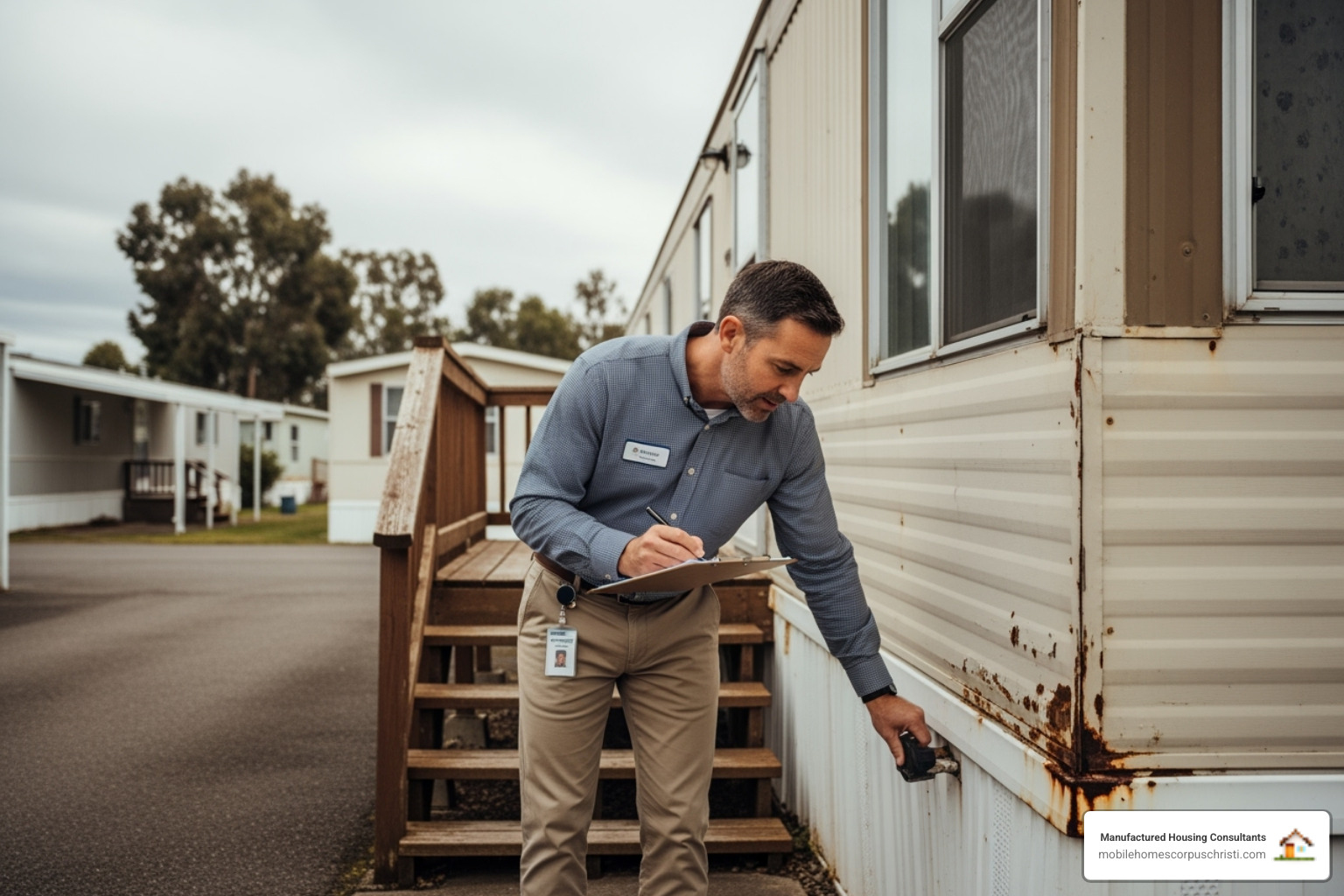
The whole trade-in journey is designed around one simple idea: making your life easier. We’ve helped hundreds of families through this process, and honestly, most are surprised by how straightforward it really is. No jumping through hoops, no endless paperwork nightmares – just a clear path from your current home to your dream home.
Step 1: Preparing for Your Trade-In
Before you even think about calling a dealer, there’s some homework that’ll make everything go smoother. Don’t worry – we’re talking about the easy kind of homework, not the kind that kept you up all night in school!
The most important thing you’ll need is your title. This little piece of paper proves you actually own your home and have the right to trade it in. If you’re still making payments, don’t panic – you’ll just need your loan information instead, including who holds the loan and how much you still owe.
Next up, gather any paperwork that shows you’ve taken good care of your home. Got receipts for that new air conditioner you installed last year? Perfect. Records of the roof repair from two years ago? Even better. These documents tell the story of a home that’s been loved and maintained.
Here’s something that might sound silly, but trust us on this one: take some photos of your home. Good ones, inside and out. While we’ll always come out for an in-person inspection, having clear photos can help us get started on your evaluation right away. Plus, it shows you care enough about your home to present it well.
A little cleaning and tidying never hurt anyone either. We’re not talking about a white-glove inspection here – just clearing out the clutter and maybe running a vacuum. A clean home, even one that needs some work, always makes a better first impression.
Quick checklist of what you’ll need:
- Mobile home title (or loan information if you’re still paying)
- Current loan balance if applicable
- Your ID
- Any maintenance records or upgrade receipts
- Recent photos of your home
Step 2: How Mobile Home Dealers That Take Trade-Ins Determine Value
Here’s the question everyone asks: “So, what’s my old home actually worth?” It’s a fair question, and the answer involves a bit more than just pulling a number out of thin air.

For manufactured homes built in 1976 or later, we start with the NADA book value. Think of it as the Blue Book for mobile homes. You can actually check this yourself online through NADA® value to get a ballpark idea of where your home stands.
But here’s where it gets interesting – the NADA value is just our starting point. The real value depends heavily on your home’s condition. A well-maintained 1995 home can be worth significantly more than a neglected 2005 model. We look at everything from the roof and flooring to the appliances and overall structure.
One of the biggest factors is whether your home has in-place value or pull-out value. If your home can stay where it is and be sold to the next owner right there, that’s in-place value – and it’s much higher. If we need to move it somewhere else, that’s pull-out value, and unfortunately, the costs of moving, permits, and re-setup eat into the overall worth.
The age and HUD code your home was built under makes a huge difference too. Homes built before 1976 often have limited value because they don’t meet current HUD standards. The foundation type matters – permanent foundations typically add value. And of course, any needed repairs get factored into our calculations.
We also consider market demand in your area and realistic transport costs if the home needs to be moved. It’s a comprehensive evaluation that takes into account the real-world costs and opportunities for your specific situation.
Step 3: The Trade-In’s Impact on Your New Home Purchase
Now for the fun part – seeing how your trade-in value transforms into your ticket to a new home! This is where the magic really happens, and honestly, it’s one of our favorite parts of the process.
Most families use their trade-in value as their down payment. Instead of scrambling to come up with thousands of dollars in cash, your old home becomes your down payment. This immediately reduces your loan amount, which means lower monthly payments on your shiny new manufactured home.
What if you still owe money on your current home? No problem at all. We work with lenders all the time to handle situations where we’re rolling your existing loan balance into your new home financing. This actually simplifies your life – instead of two separate payments, you end up with just one manageable monthly payment.
Our team specializes in finding creative financing solutions for all kinds of credit situations. Whether your credit is perfect or needs some work, we have programs that can help, including options for FICO improvement. Check out our Financing page to learn more about how we make homeownership possible for everyone.
Everything gets spelled out clearly in your sales agreement for the new home. You’ll see exactly how your trade-in value is being applied, so there are no surprises or hidden details. This transparency is what makes working with mobile home dealers that take trade ins such a smart choice for families ready to upgrade their living situation.
What to Look For in a Reputable Dealer
When you’re ready to trade in your mobile home, choosing the right dealer makes all the difference. Think of it like finding a good doctor or mechanic – you want someone you can trust with something important to you and your family.

The right dealer won’t just give you a fair price for your current home – they’ll guide you through the entire process with honesty and expertise. They’ll take time to understand your needs and help you find the perfect new home for your family’s next chapter.
Finding Reputable Mobile Home Dealers That Take Trade-Ins
So how do you separate the good dealers from the not-so-good ones? Start by looking for mobile home dealers that take trade ins who are properly licensed and bonded. This isn’t just paperwork – it’s your protection as a consumer. We’re proudly TDHCA registered and a BBB Member, which means we operate under strict guidelines here in Texas.
Next, dig into their reviews and testimonials. What are real customers saying about their experiences? Look for consistent themes like fairness, honesty, and good communication. Every business might have a few unhappy customers, but you want to see a clear pattern of satisfied families.
Transparent pricing is another must-have. A good dealer will explain exactly how they determine your trade-in value, without hidden fees or surprise costs. They should be upfront about their process from day one.
Check their BBB rating too. This gives you insight into how they handle problems when they arise. Even the best dealers occasionally have issues, but what matters is how they resolve them.
Finally, local expertise matters more than you might think. A dealer who knows your area understands what affects mobile home values in your specific market. For us, that means deep knowledge of the Texas market from Corpus Christi to every corner of the state. You can learn more about our local expertise on our About Us page.
Key Questions to Ask Your Dealer
When you sit down with a potential dealer, come prepared with questions. A reputable dealer will welcome them – in fact, they should be happy you’re asking! It shows you’re a serious buyer who cares about making the right decision.
Start by asking what types of homes they accept for trade-in. Some dealers are picky about age, condition, or type. Others, like us, accept various types including pre-owned manufactured homes in different conditions.
Find out exactly how they appraise your home. Do they use NADA values? Do they always do an in-person inspection? Understanding their process helps you understand their offer and whether it’s fair.
Ask about fees upfront. Are there charges for the appraisal? Who pays for removing your old home? These costs can significantly impact your trade-in value, so get clarity before you commit.
Request a breakdown of the trade-in value. A good dealer will show you how they arrived at their number, including any deductions for needed repairs or removal costs. This transparency helps you understand whether you’re getting a fair deal.
Don’t forget to ask what brands they carry. You want to make sure they have the type of new home you’re looking for. We’re proud to offer the largest selection from 11 top manufacturers, which you can explore on our Mobile Homes Brands Available in Corpus Christi page.
Finally, get clear on how the trade-in affects your financing. How will the credit be applied? What will your new monthly payments look like? A good dealer will walk you through the numbers so you understand exactly what you’re signing up for.
Frequently Asked Questions about Mobile Home Trade-Ins
Over the years, we’ve helped hundreds of families steer the trade-in process, and certain questions come up time and time again. These are genuine concerns that deserve thoughtful answers, so let’s address the big ones that might be on your mind.
Do I need to have my current mobile home paid off before trading it in?
This is probably the most common worry we hear: “But I still owe money on my current home!” Here’s the reassuring truth: no, you don’t need to have your home completely paid off to work with mobile home dealers that take trade ins.
Think of it like trading in a car that still has a loan. The process is remarkably similar. We work directly with your current lender to determine the exact payoff amount, and then we can explore several options to make the trade-in work for you.
The most common solution involves rolling the remaining debt into your new home loan. Essentially, we consolidate everything into one clean transaction. Your old loan gets paid off as part of the new home purchase, and you end up with just one monthly payment instead of juggling multiple obligations.
The key factor here is equity – the difference between what your home is worth and what you still owe. If your trade-in value is higher than your remaining loan balance, that positive equity becomes a powerful down payment toward your new home. Even if you have negative equity (owing more than the current value), we can often work with specialized lenders to find solutions.
Open lender communication is crucial throughout this process. We handle most of the heavy lifting, coordinating with your current lender to ensure a smooth transition. It’s one less thing for you to worry about during what can already be a stressful time.
Are there any tax implications for a mobile home trade-in?
Now this is a question that can save you some serious money! The tax implications of trading in versus selling privately can be quite different, and usually in your favor.
Here in Texas, and in many other states, you typically enjoy significant sales tax benefits when you trade in rather than sell privately. Instead of paying sales tax on the full purchase price of your new home, you only pay tax on the net amount – that’s the new home price minus your trade-in value.
Let’s say your dream home costs $120,000 and your trade-in is worth $25,000. With a trade-in, you’d only pay sales tax on $95,000. If you sold privately and then bought the new home separately, you’d pay sales tax on the full $120,000. Depending on your local tax rate, this could save you over $1,500!
However, tax laws can be complex and vary by state. While we see these benefits regularly, we always recommend consulting a tax professional for advice specific to your situation. They can help you understand exactly how a trade-in might impact your overall tax picture and ensure you’re making the most financially sound decision.
Can I trade in a mobile home that needs significant repairs?
Absolutely! This is one of the biggest advantages of working with experienced dealers. Your home doesn’t need to be magazine-ready to have trade-in value.
We regularly accept homes in “as-is” condition, even those requiring significant work. The difference is that the value gets adjusted for repairs – we factor in the cost of necessary improvements when determining your trade-in credit. This is often much more convenient than trying to tackle major repairs yourself or finding a private buyer willing to take on a fixer-upper.
Here’s where our dealer’s ability to refurbish really shines. We have established relationships with contractors, bulk purchasing power for materials, and the expertise to efficiently restore homes. What might be overwhelming and expensive for an individual homeowner becomes just another part of our business process.
Even homes with structural issues, outdated systems, or cosmetic problems can often be traded in. We’ve seen families turn homes they thought were worthless into meaningful down payments on beautiful new manufactured homes. Sometimes the land value or the basic structure still holds significant worth, even when the home itself needs extensive work.
The bottom line? Don’t let the condition of your current home stop you from exploring your options. Even if it feels like more of a burden than an asset right now, it might still be the key to open uping your path to a brand-new home.
Your Path to a New Home Starts Here
We hope this guide has shown you just how much convenience and financial leverage a mobile home trade-in can offer. It’s not just about upgrading your home – it’s about changing what could be a stressful, complicated process into something surprisingly straightforward and even exciting.
Think about it: instead of juggling the sale of your old home while trying to buy a new one, you’re handling everything in one smooth transaction. Your current home becomes the key that open ups the door to your dream home, regardless of its age or condition. That’s the power of working with mobile home dealers that take trade ins.
At Manufactured Housing Consultants, we’ve built our entire approach around making homeownership accessible for Texas families. We understand that every family’s situation is unique – whether you’re dealing with credit challenges, budget constraints, or simply want the easiest path to a beautiful new home.
Our largest selection from 11 top manufacturers means you’re not limited to just a few options. From cozy starter homes to spacious family retreats, we have something that fits your needs and your budget. And with our guaranteed lowest prices and specialized financing for all credit situations (including FICO improvement programs), we remove the barriers that might otherwise keep you from your ideal home.
What really sets us apart is our commitment to bringing your new home to you. We deliver homes anywhere in Texas, which means whether you’re in Corpus Christi, Houston, Austin, or anywhere in between, your dream home can be delivered right to your doorstep.
If you’re ready to find how your current mobile home can become the stepping stone to something better, we’re here to guide you through every step. Let’s turn your trade-in into your upgrade.