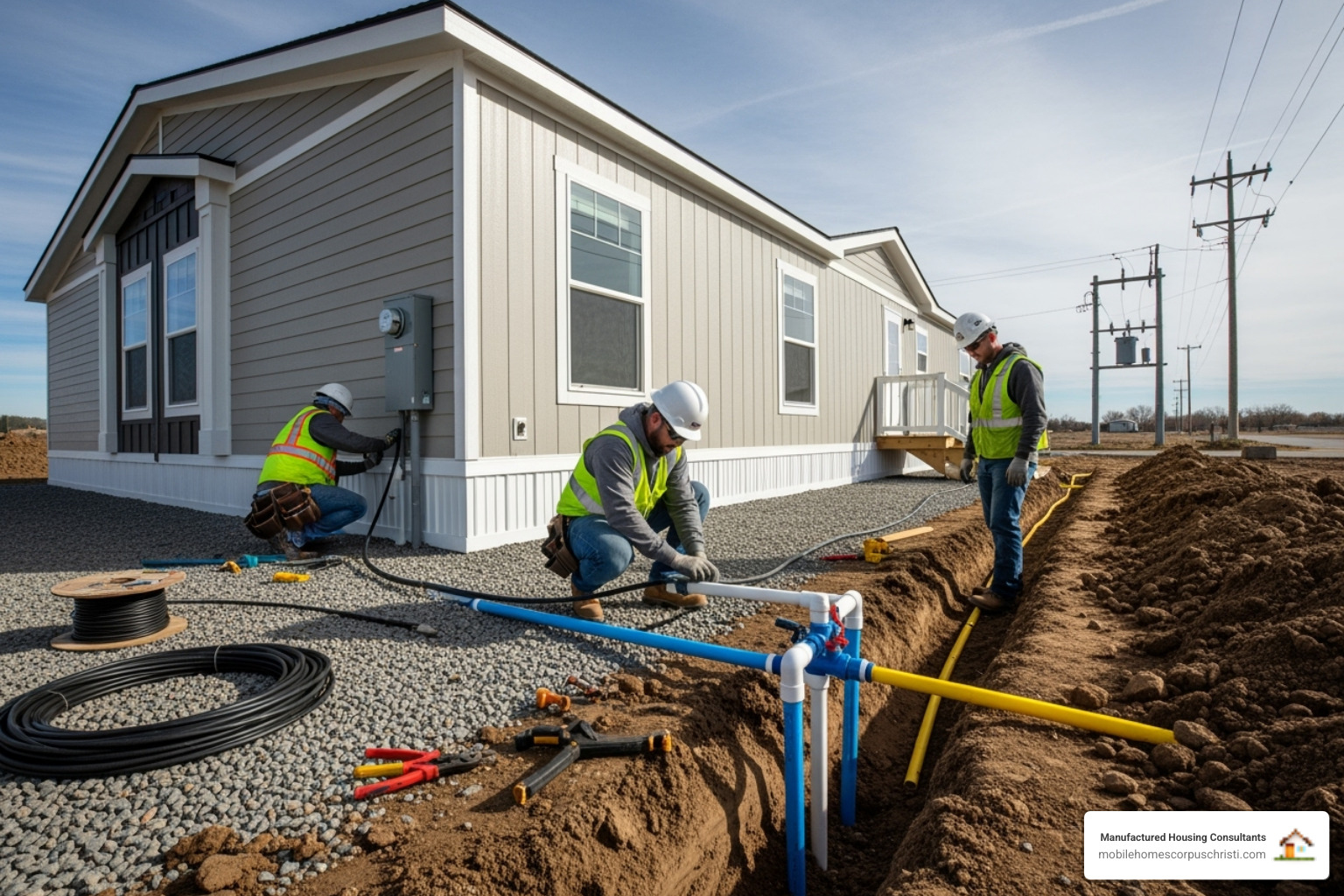
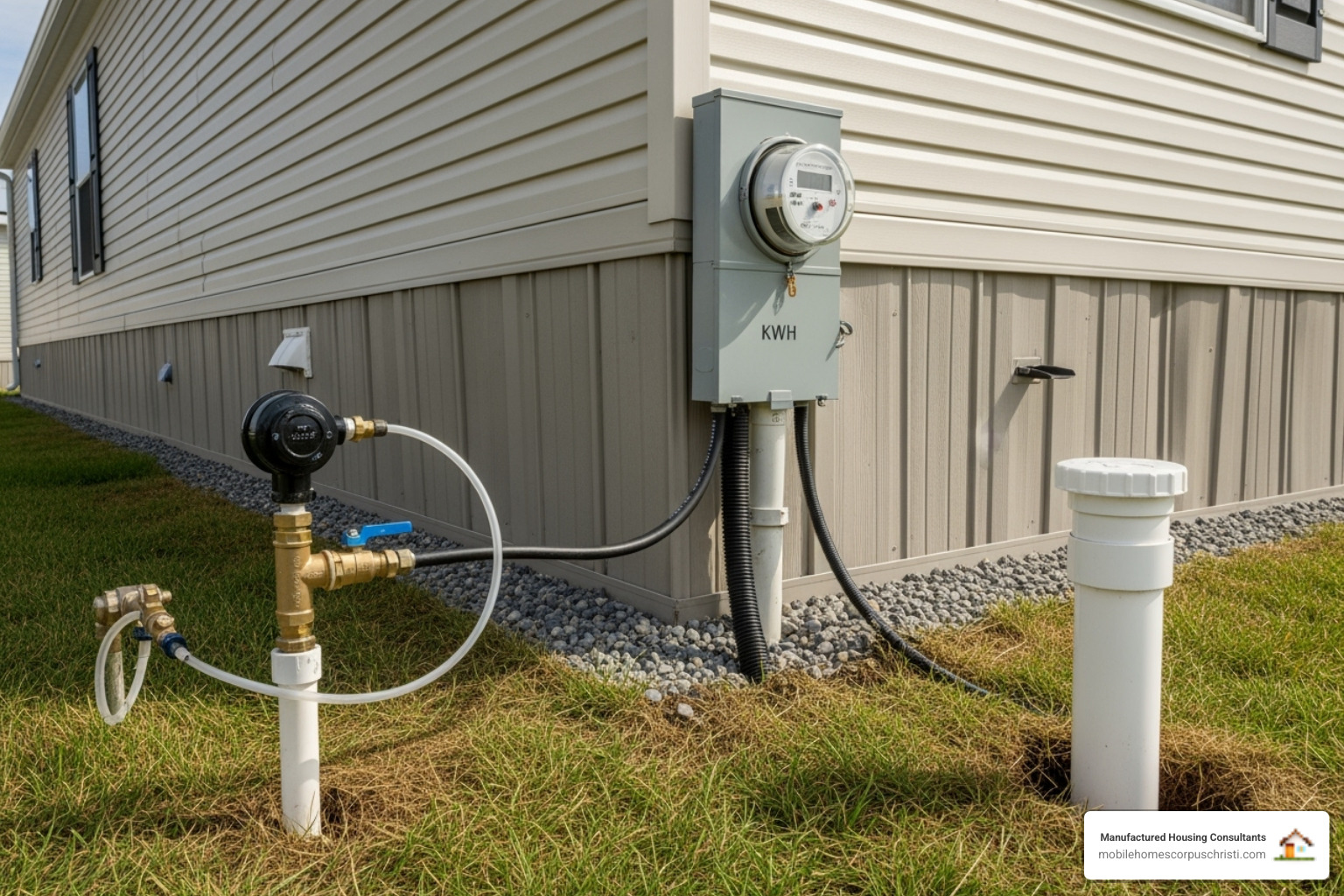
The Lifelines of Your New Home
Setting up utility connections is one of the most critical steps when establishing your new manufactured home. These essential services literally power your daily life and provide the basic necessities every family needs.
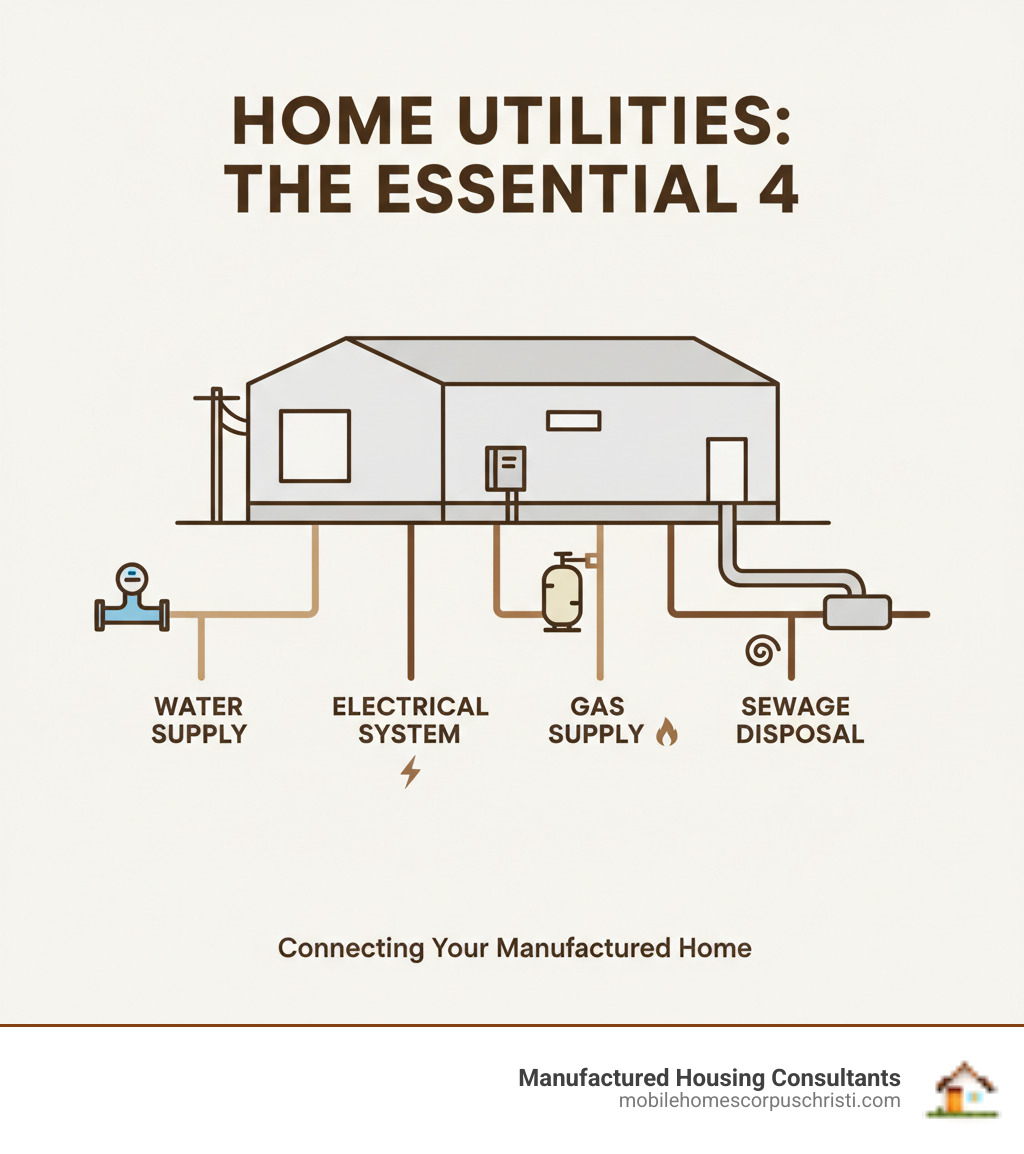
Essential Utility Connections for Your Home:
- Water – Public water systems or private wells
- Sewer – Municipal sewer lines or septic systems
- Electricity – Grid connection with local power company
- Gas – Natural gas lines or propane tanks
Getting these connections right from the start saves you thousands of dollars and weeks of delays. Poor planning can leave your family without basic services or facing unexpected costs that blow your budget.
The type and availability of utilities vary based on your property’s location and condition. Rural areas might require private wells and septic systems, while suburban locations typically offer public water and sewer services. In Northern Virginia, for example, electricity comes from Dominion Energy, while Washington Gas provides natural gas service.
Smart planning makes all the difference. As one industry expert put it: “One of the most complex and often overlooked aspects of building a new home is establishing utility connections on that property.” This is especially true for manufactured homes, where proper Expert Site Preparation and Land Location and utility coordination are essential for a smooth installation process.
Why Pre-Construction Planning is Crucial
Picture this: you’re standing in your beautiful new manufactured home, boxes unpacked and everything perfect—except the lights won’t turn on and the water won’t flow. Unfortunately, this nightmare scenario happens more often than you’d think when utility connections aren’t properly planned from the start.
Early planning is your lifeline. It saves you time, money, and countless headaches down the road. We’ve seen too many families face weeks of delays and thousands in unexpected costs simply because someone didn’t think ahead about utilities.
The secret lies in thorough site evaluation before construction even begins. This means soil testing to determine if your land can support a septic system, and carefully identifying any existing utility lines buried underground. You definitely don’t want your builder accidentally hitting a gas line or electrical cable during excavation.
Coordinating with your builder early makes all the difference. When everyone’s on the same page about where utilities need to go, the entire process flows smoothly. This proactive approach through proper Site Preparation ensures your home will be functional from day one.

Key Steps for Planning Utility Connections
Getting your utility connections right starts with a solid plan. The first step is conducting a comprehensive site evaluation. We examine your property for existing utility lines, check soil conditions (especially important if you’ll need a septic system), and identify the best connection points. Think of it as getting to know your land before asking it to support your new home.
Contacting utility providers early might be the most important call you’ll make during this process. Each provider—whether it’s Corpus Christi Water, your local electric company, or gas supplier—has their own timeline and requirements. Starting these conversations months ahead gives everyone time to coordinate properly.
Creating a detailed utility map comes next. This isn’t just a nice-to-have document—it’s your roadmap showing exactly where water, sewer, electrical, and gas lines will run. Having this map prevents costly mistakes during construction and ensures everything connects where it should.
Securing the right permits keeps your project legal and safe. Every municipality has different requirements for utility connections, and we handle the paperwork to make sure everything meets local building codes. Nobody wants to redo work because a permit was missed.
Don’t forget about temporary construction utilities. Your building crew needs power and water while they’re working on your home. Planning these temporary connections keeps your project moving smoothly without delays.
Finally, budgeting for connection fees and potential overruns protects you from financial surprises. Utility hookups involve application fees, connection charges, and sometimes costs for extending lines to your property. We help you plan for these expenses, including a buffer for unexpected challenges.
Understanding Connection Points
The spots where your home connects to each utility aren’t random—they’re carefully chosen for safety, accessibility, and code compliance. Getting these locations right matters for both installation and long-term maintenance.
Water meter locations for public systems typically sit near your property line in an accessible pit or box. You’ll also have a shut-off valve inside your home for emergencies or repairs. Gas meters usually go on your home’s exterior, positioned for easy utility company access while staying out of sight from the street.
Your electrical service panel lives inside your home—often in a utility room or garage—while the meter stays outside where it connects to incoming power lines. For sewer connections, your main line ties into the municipal system under the street, with a cleanout access point on your property.
If you’re going with a septic system instead, the tank and leach field will be located on your property with proper access points for maintenance and pumping. Accessibility is crucial for all these connection points. When utility workers can easily reach meters and access points, you get faster service and fewer headaches during maintenance or emergencies.
A Guide to Primary Utility Connections
When you’re planning your new manufactured home, choosing the right utility connections feels a bit like picking the foundation for your daily life. These aren’t just technical decisions—they’re choices that will affect everything from your monthly bills to how comfortable you feel in your new space.
The good news? Your location does most of the heavy lifting when it comes to what’s available. If you’re setting up within Corpus Christi city limits, you’ll likely have access to public water and sewer systems. But if you’re dreaming of a more rural setting outside the city, you might be looking at a private well and septic system instead.
We love helping families think through these choices because they’re so personal. Some folks appreciate the convenience and reliability of public services, while others get excited about the independence that comes with private systems. There’s no wrong answer—just what works best for your lifestyle and budget.
Understanding the long-term costs is crucial too. That initial connection fee might sting a little, but when you factor in monthly usage charges, maintenance requirements, and potential future upgrades, the picture becomes clearer. This thoughtful planning approach is exactly what makes Mobile Home Living: Pros, Cons, and Expectations such a rewarding experience for so many families.
Water Supply: Public vs. Private
Your water source is probably one of the most important utility connections you’ll make, and thankfully, the choice is usually pretty straightforward based on where you’re building.
Public water systems are the go-to option when they’re available. In Corpus Christi, you’d work with Corpus Christi Water to get connected. The process typically involves paying an initial connection fee, then ongoing monthly charges based on how much water your family uses. The beauty of public water is the peace of mind—the municipality handles all the treatment and quality testing, so you can trust what’s coming out of your tap.
Private wells become your best friend when public water isn’t available or when you want more control over your water supply. This route involves drilling a well right on your property, which sounds more complicated than it actually is. The key step is getting proper testing done—you’ll want to follow guidance on testing your private well water to make sure everything meets safety standards.
While a private well gives you independence from municipal systems, it also means you’re responsible for maintenance and any water treatment systems you might need. Some families love this control, while others prefer leaving it to the professionals.
Sewage Disposal: Sewer vs. Septic
Just like water, your sewage disposal options depend largely on your location and what infrastructure is already in place.
Public sewer systems offer the ultimate in convenience. Your home connects directly to the municipal sewage lines, and they handle everything from there. You’ll pay a connection fee upfront and monthly service charges afterward, but that’s it—no worrying about maintenance or system failures on your property.
Private septic systems are essential when public sewer isn’t available, and they’re actually pretty amazing when you understand how they work. These systems use your property’s soil as a natural filter to treat wastewater. Before you can install one, though, you’ll need to understand how a perc test works. This test determines whether your soil can handle a septic system and what size system you’ll need.
The design and size of your septic system depends on both your soil test results and how big your home is. Regular maintenance is part of the deal—you’ll need to pump the tank periodically and keep the leach field area clear of heavy traffic or structures.
Gas Supply: Natural Gas vs. Propane
When it comes to powering your heating, cooking, and other appliances, you’ll typically choose between natural gas and propane—and both have their devoted fans.
Natural gas lines often win on convenience and cost-effectiveness where they’re available. The gas flows directly to your home through municipal or private gas lines, so you never have to worry about running out or scheduling deliveries. We’ll help you figure out if natural gas is accessible in your area and walk you through the Natural Gas Hookup Cost so there are no surprises.
Propane tanks become your reliable partner when natural gas infrastructure isn’t available. These tanks get installed right on your property, and a gas company comes out regularly to refill them. The flexibility is fantastic—propane works anywhere—but you’ll need to plan for tank placement and stay on top of your refill schedule.
Both options have their sweet spots, and we’ll help you weigh the pros and cons based on your specific property and how your family lives.
Electricity: Getting on the Grid
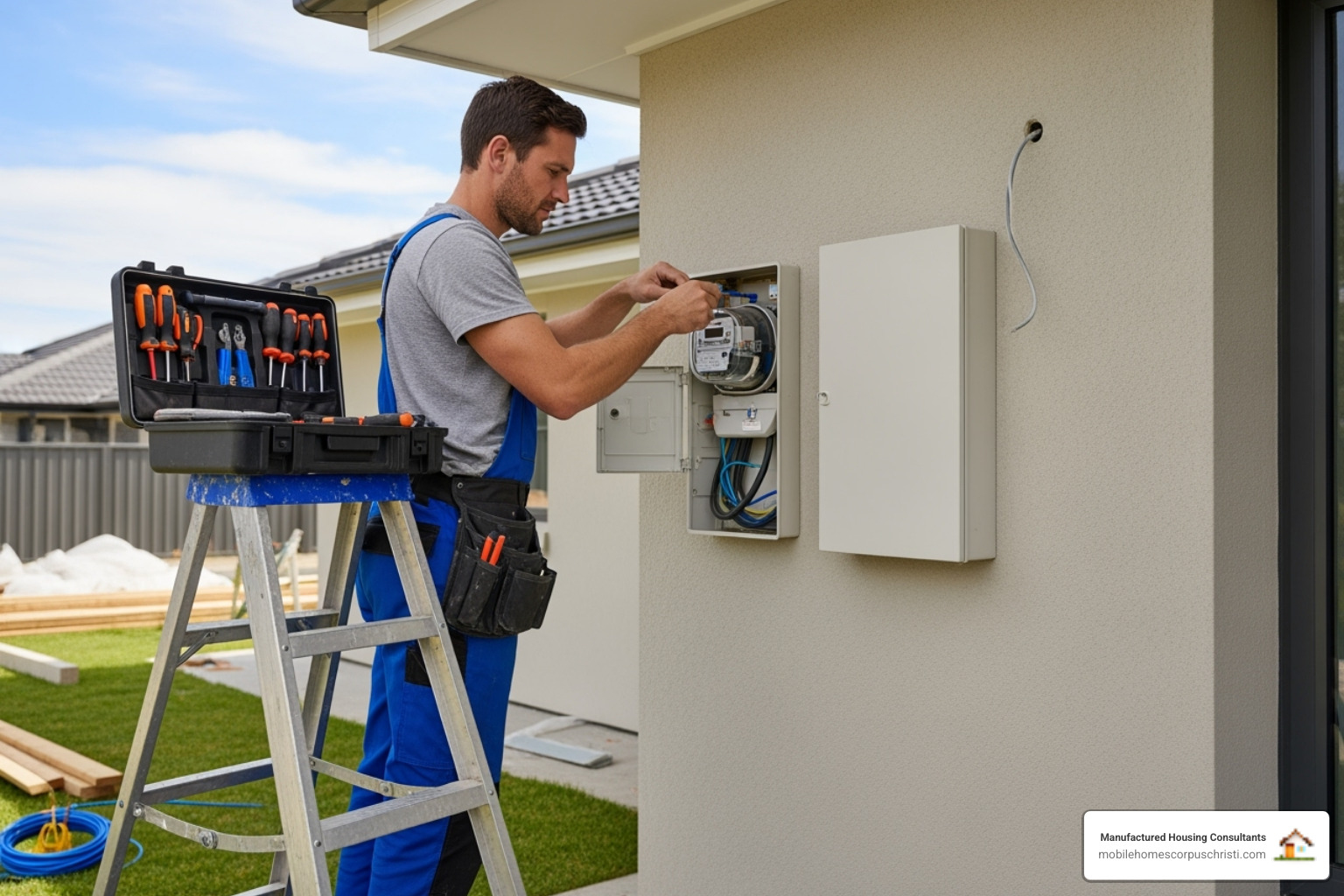
Getting your electricity connected is like flipping the switch that brings your new home to life. The process involves working with your local electric company to establish service and get the physical connection in place.
Establishing service starts with setting up an account with your local provider. From there, they’ll coordinate the actual connection to your home. This might mean extending power lines to your property, either through underground trenching or overhead lines, depending on your property layout and local requirements.
During construction, we’ll arrange for a temporary power pole so our crews have the electricity they need to work efficiently. This temporary setup keeps your project moving smoothly until the permanent connection is ready.
Connection costs can vary quite a bit depending on how far your property sits from existing power lines. If you’re in a developed area, costs are usually pretty reasonable. But if you’re building somewhere more remote, extending those lines can add up quickly. We factor these potential expenses into your budget from the very beginning.
Alternative energy options like solar panels are becoming increasingly popular. While most homes still connect to the traditional grid, solar panels can supplement your regular electricity, potentially reducing your monthly bills while giving you a bit more energy independence. It’s definitely worth discussing if you’re interested in exploring greener options for your new home.
Navigating the Connection Process
Getting your utility connections up and running might seem overwhelming at first, but don’t worry—we’ve walked this path countless times with families just like yours. Think of it as a well-choreographed dance between several partners, and we’re here to lead you through every step.
The process typically starts with applications and documentation, moves through various inspections, and ends with the exciting moment when everything gets switched on. Each utility has its own personality and timeline, but our experience helps us coordinate them all smoothly. This careful orchestration is what makes our Manufactured Homes Installation and Delivery process so successful.
The Role of Utility Providers and Local Authorities
Setting up utility connections is truly a team effort, and understanding who does what makes the whole process much clearer.
Your utility providers are the workhorses of this operation. These companies—whether it’s your electric company, water department, or gas provider—handle the heavy lifting. They’ll process your applications, give you cost estimates, and actually install all the pipes, wires, and meters that bring services to your home. Each provider has their own way of doing things and their own timeline, which is why starting early matters so much.
Local authorities wear the safety hat in this process. The City of Corpus Christi, for example, issues the permits that make everything legal and safe. They’re not trying to slow you down—they’re making sure your utility connections meet building codes and safety standards that protect you and your neighbors. Their inspectors will check the work at key stages and give final approval once everything looks good.
We work closely with both groups, handling the paperwork maze and scheduling coordination so you don’t have to become an expert in municipal regulations overnight.
Potential Challenges with Utility Connections
Even with the best planning, sometimes life throws us a curveball. We’ve seen it all, and honestly, most challenges have straightforward solutions when you know what to expect.
Timing hiccups happen more often than we’d like. Utility companies have busy schedules, and sometimes they’re dealing with their own staffing issues or equipment delays. Weather can also throw a wrench in the works—nobody’s digging trenches during a thunderstorm. That’s why we always start the utility process as early as possible.
Property surprises can pop up during excavation. Maybe the soil survey missed that rocky patch, or there’s an old pipe nobody knew about. Sometimes we find the septic system needs a different design than originally planned. These aren’t disasters—they’re just puzzles that need solving.
Easement issues occasionally arise when utility lines need to cross neighboring properties. Most neighbors are cooperative, but sometimes it takes a little extra time to work out the details legally.
Budget bumps can catch people off guard. While we’re pretty good at estimating costs, those property surprises we mentioned can sometimes mean additional expenses. That’s why we always recommend building a little cushion into your utility budget.
The paperwork shuffle can feel endless sometimes. Between permits, applications, and inspections, there’s a lot of documentation flying around. Different departments have different requirements, and keeping track of it all can make your head spin.
Here’s the good news: proactive communication solves most problems before they become real headaches. We stay in regular contact with all the players, keep you updated on progress, and jump on any issues quickly. Our experience means we can often see potential problems coming and head them off at the pass.
The key is patience and flexibility. Yes, utility connections can be complex, but thousands of families have successfully steerd this process before you. With good planning and the right team, you’ll have all your services up and running before you know it.
Frequently Asked Questions about Utility Hookups
When families come to us about utility connections for their new manufactured home, they always have the same burning questions. And honestly, we love answering them! It means you’re thinking ahead and planning smart. Let’s explore the questions we hear most often.
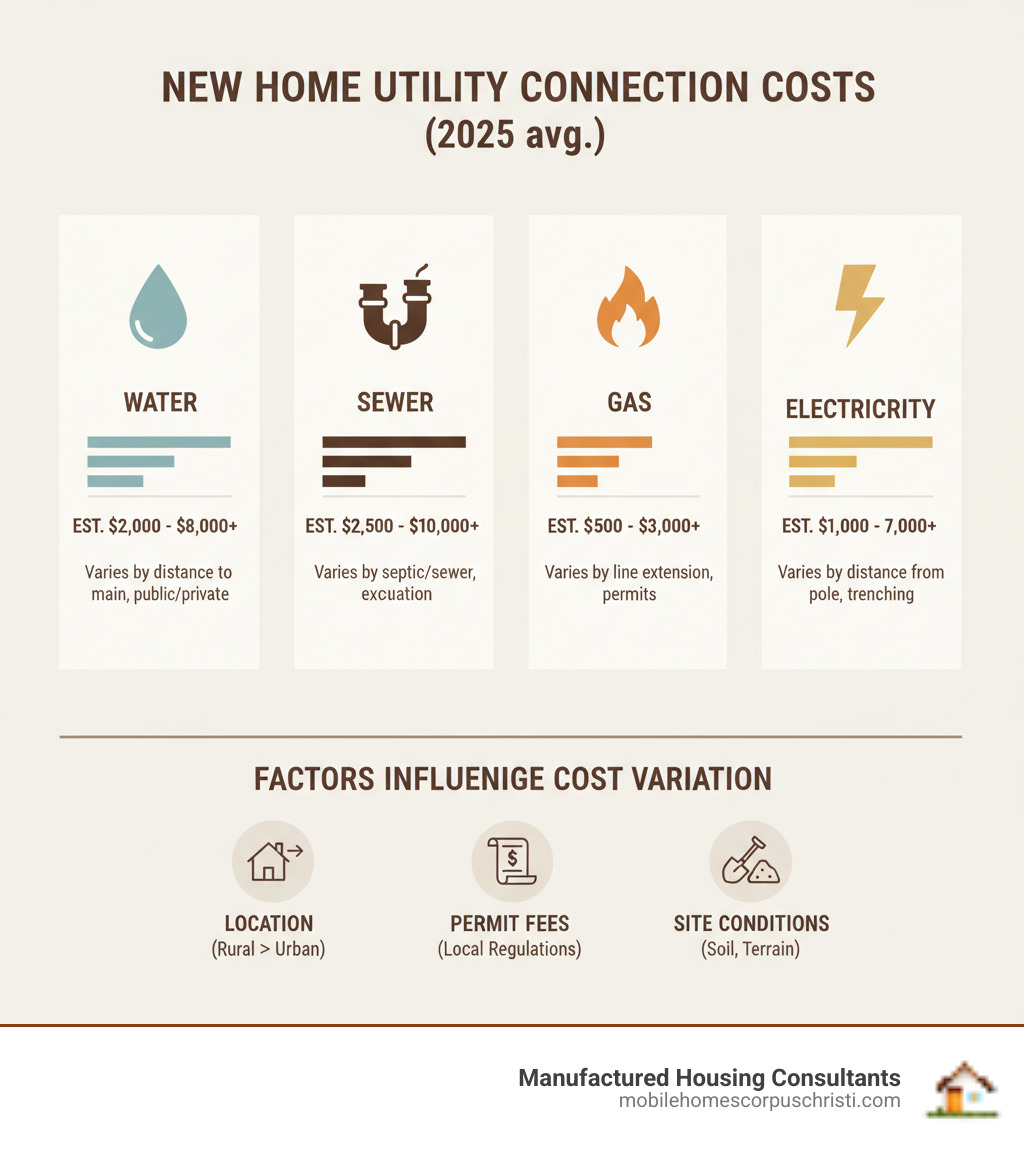
How much does it cost to get utilities connected to a new home?
This is the million-dollar question—literally, sometimes it feels that way! But here’s the honest truth: there’s no magic number we can give you without knowing your specific situation. The cost of utility connections varies dramatically based on several key factors.
Your land’s location plays a huge role in determining costs. If you’re buying a lot in a developed neighborhood in Corpus Christi, you might find water and sewer mains right at your property line. Lucky you! But if you’ve fallen in love with that perfect rural spot outside the city, you could be looking at significant costs to extend utilities to your property.
Distance from existing mains is often the biggest cost driver. Utility companies charge for every foot of pipe, wire, or gas line they have to install to reach your home. We’ve seen connection costs range from a few thousand dollars for a simple hookup to tens of thousands when major extensions are needed.
The type of service you choose also impacts your wallet differently. Public utilities typically charge connection fees upfront—maybe $500 for water, $1,200 for sewer, plus various permit fees. Private systems like wells and septic tanks have higher installation costs initially, but you won’t have monthly service charges forever.
Permit fees add up too. Every municipality has its own fee schedule, and you’ll need permits for each utility connection. These can range from $50 to several hundred dollars per permit.
Then there are those site-specific surprises we sometimes encounter. Rocky soil that requires special drilling equipment, wetlands that need careful navigation, or existing underground obstacles can all bump up costs. That’s why we always recommend budgeting extra for the unexpected.
For a complete picture of what you might spend on your entire manufactured home project, including utility connections, check out our detailed guide on How Much Does It Cost to Buy and Move a Mobile Home in Corpus Christi?
How long does it take to get utilities connected?
Ah, the waiting game! This is where patience becomes your best friend. Utility connections timelines can range anywhere from a few weeks to several months, and it all depends on what you need and where you’re building.
Electricity is often the speediest connection, especially if power lines already run near your property. Most electric companies in Texas can have you connected within 2-4 weeks once permits are approved. But if they need to extend lines or install a transformer, add several more weeks to that timeline.
Water and sewer connections vary wildly based on whether you’re going public or private. Public water hookups might take 4-6 weeks if the main line is close by. But if you’re drilling a well, factor in 2-3 weeks for drilling, plus time for testing and any needed treatment systems. Septic systems can take 3-6 weeks from excavation to final inspection.
Natural gas connections can be tricky to predict. If gas mains are available, you’re looking at 3-5 weeks typically. But extending gas lines to your property? That could take months, especially if it requires crossing other properties or getting easements. Propane tank installation is much faster—usually just a few days once the tank arrives.
Provider backlogs can throw a wrench in the best-laid plans. During busy construction seasons, utility companies get swamped with requests. Weather delays are another wildcard, especially for underground work during Texas’s stormy seasons.
Here’s our golden rule: start early, start everything. We begin the application process for all utility connections as soon as we have your site plan. The earlier we start, the better chance we have of coordinating everything to be ready when your home arrives.
What are temporary utilities and why do I need them?
Think of temporary utilities as the construction crew’s lifeline. Your beautiful new manufactured home needs a lot of work before it’s ready for you to flip that first light switch, and our crews need power and water to make that happen.
Temporary power usually means installing a temporary power pole on your property. This gives our electricians, carpenters, and other contractors the electricity they need to run saws, drills, and other essential tools. Without it, your project grinds to a halt.
Temporary water might come from a temporary connection or even trucked-in water tanks. Contractors need water for mixing concrete, cleaning tools, and sometimes for basic sanitation facilities on longer projects.
We handle coordinating with your builder to make sure these temporary services are in place before work begins. Once your permanent utility connections are established and your home is ready for occupancy, we arrange for the temporary services to be removed or converted to permanent connections.
Renting equipment sometimes becomes necessary if permanent connections face delays. We might bring in generators for power or water tanks to keep your project moving forward. It’s all about keeping momentum going so you can move into your dream home on schedule.
The best part? You don’t have to worry about any of this coordination. We handle the temporary utility setup and removal as part of our comprehensive service, so you can focus on the fun stuff—like picking out paint colors and planning your housewarming party!
Your Partner in Building Your Dream Home
Getting utility connections set up for your new manufactured home doesn’t have to feel like solving a puzzle blindfolded. We know it can seem overwhelming at first—all those permits, applications, and coordination with different providers. That’s exactly why we’re here to guide you through every single step.
Over the years, we’ve helped hundreds of families in Corpus Christi steer this process. We’ve seen the relief on homeowners’ faces when they flip that first light switch or turn on the water for the first time. There’s something magical about that moment when your house truly becomes your home.
Here’s what matters most: proper planning from day one, clear communication with all the right people, and having an experienced team that knows how to avoid the common pitfalls. When you work with us, you’re not just getting a manufactured home—you’re getting peace of mind that everything will work exactly as it should.
At Manufactured Housing Consultants, we believe buying a home should be exciting, not stressful. We bring our expertise to every aspect of your journey, from helping you choose the perfect home from our selection of 11 top manufacturers to making sure your utility connections are handled professionally and efficiently.
Our commitment is simple: we’ll handle the complex stuff so you can focus on the fun part—planning how you’ll arrange your furniture and imagining family gatherings in your new space.
Ready to power up your dream home? We’re here to make it happen. Visit our Utility Connections service page to see exactly how we’ll help connect your future to all the essential services you need.