
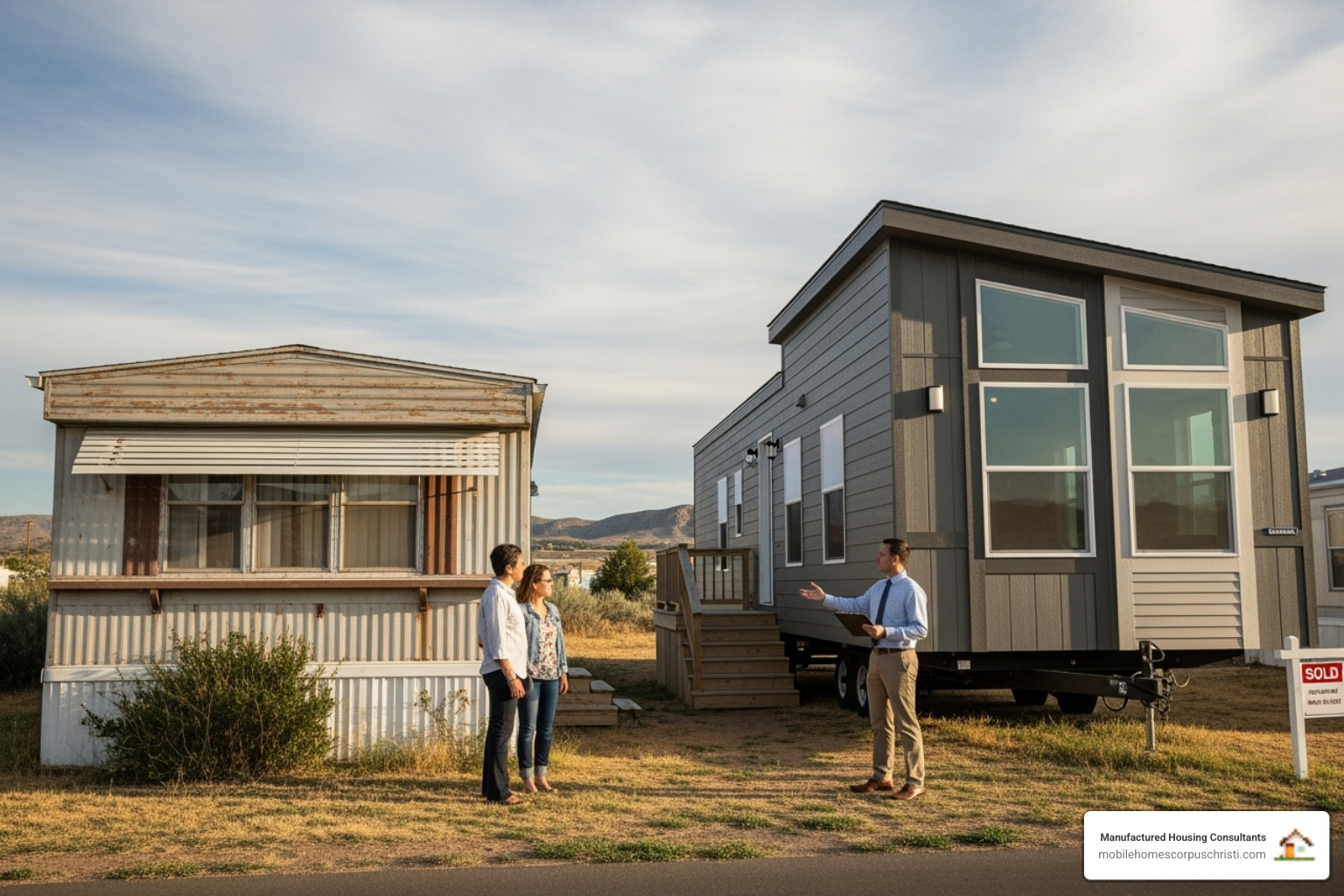
Upgrading Your Lifestyle Through Mobile Home Trade-Ins
Can you trade in mobile homes? Yes, you absolutely can! Many manufactured home retailers accept used mobile homes as trade-ins toward a new home, much like trading in a car.
Quick Answer:
- What it is: Exchange your current mobile home for credit toward a new manufactured home
- How it works: Dealer evaluates your home’s value and applies it to your new home purchase
- Benefits: No separate selling process, reduces down payment, streamlined transaction
- Requirements: Home title (or loan payoff information), roadworthy condition preferred
- Value factors: Age, condition, size, location, and market demand
Mobile home trade-ins are an increasingly popular route for homeowners who want to upgrade their living space without the complications of selling their old home separately. This process lets you use your current home’s value as a partial payment, which can significantly reduce upfront costs and help budget-conscious families get into their desired residences.
The main advantage is convenience. It’s a streamlined way to upgrade without listing your home, holding showings, or coordinating two separate transactions. You can seamlessly transition from your old mobile home to a new one, using your existing equity as a down payment source.
This guide will walk you through everything you need to know about trading in your mobile home, from understanding how values are determined to navigating the process with confidence.
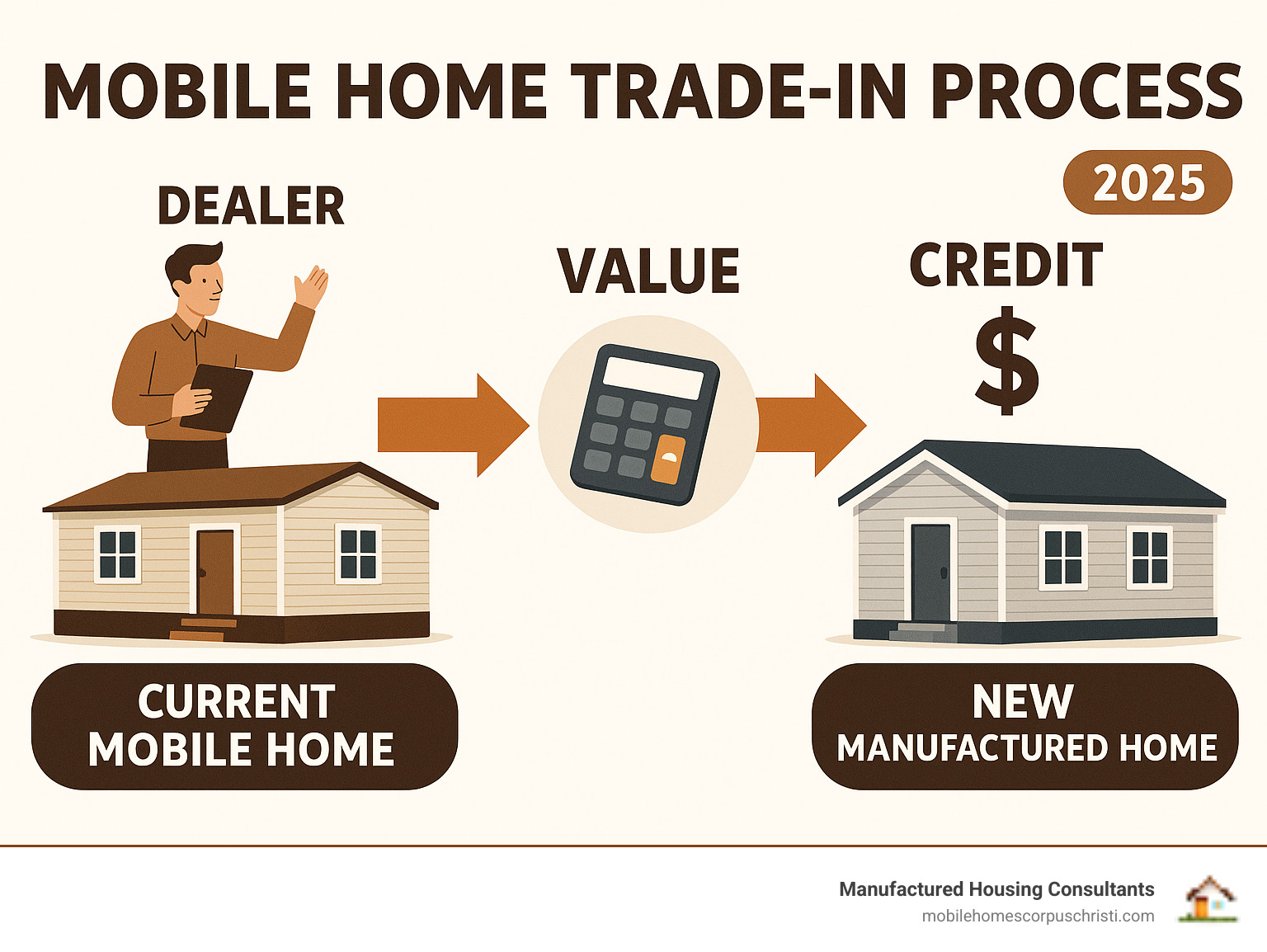
What is a Mobile Home Trade-In and How Does It Work?
Trading in a mobile home is remarkably similar to the familiar car dealership experience. Can you trade in mobile homes the same way? Absolutely!
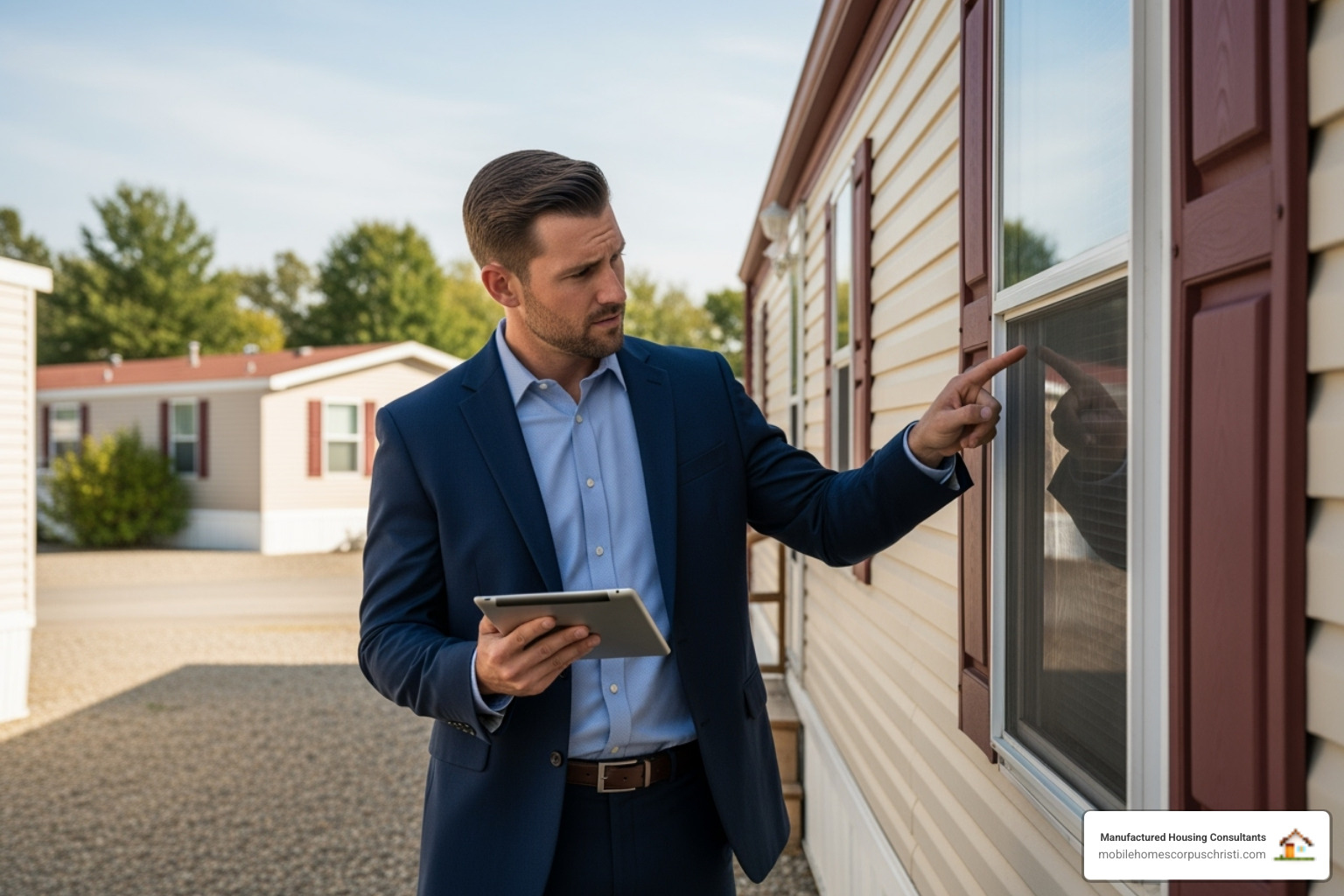
When you trade in your mobile home, you’re exchanging your current home for credit toward a new one. Instead of selling your home separately and then shopping for a new one, you handle both transactions in one smooth process.
A dealer evaluates your existing mobile home and determines its value. That value becomes credit toward your new manufactured home purchase. Whether you’re looking to upgrade to a larger, modern home or downsize, the trade-in process makes the transition seamless.
You’re not limited to brand-new homes, either. If you’re considering a pre-owned option, our guide on What to Look For When Buying a Used Mobile Home can help you make an informed decision.
This streamlined approach eliminates the juggling act of timing two separate real estate transactions. You won’t have to worry about selling your current home before you can buy your new one.
The Pros: Convenience and Savings
The biggest reason people choose to trade in their mobile homes is convenience. Selling a home can be exhausting. There’s no need to stage your home for showings, deal with unqualified buyers, or negotiate with multiple parties. The trade-in eliminates all that hassle.
You get a truly hassle-free experience where one dealer handles everything. From a financial standpoint, the savings can be substantial. Your current home’s value directly reduces the down payment you’ll need for your new home, which can make a huge difference in your budget.
Many dealers also offer special incentives for trade-ins. These promotions can add up to real savings, even if your current mobile home is showing its age.
The Cons: Potential Downsides to Consider
While the trade-in process is beneficial, it’s important to be aware of potential drawbacks. The main concern is that you might get a lower value than if you sold privately.
Dealers need to make a profit when they resell your home, so they factor their profit margin into their offer. If maximizing your return is the top priority, a private sale might net you more money.
Your new home options may be limited to that particular dealer’s inventory. The process can also sometimes take longer than expected due to evaluations, paperwork, and logistics.
Finally, if you still owe money on your current mobile home, that debt may carry over into your new financing arrangement. We’ll cover this in more detail later.
Trade-In vs. Selling for Cash to a Dealer
Here’s how trading in compares to selling your mobile home for cash to a dealer:
| Feature | Trading In Your Mobile Home | Selling for Cash to a Dealer |
|---|---|---|
| Speed | Generally faster than private sale, but can take time for evaluation/paperwork. | Can be very quick if the dealer is motivated and the home is desirable. |
| Value | Often lower than a private sale, as dealer needs profit margin. | May offer closer to market value, but still less than private sale usually. |
| Convenience | High. One-stop shop for selling and buying. No listing, showings, or multiple negotiations. | High. Quick transaction, no need to list or deal with multiple buyers. |
| Effort | Low. Dealer handles most of the process once you agree. | Low. Dealer handles most of the process once you agree. |
| Process | Value applied as credit towards new home purchase. | Receive direct cash payment for your home. |
| New Home Selection | May be limited to the dealer’s inventory. | Unlimited, as you have cash to buy from any source. |
If maximizing your payout is the main goal, a cash sale offers more flexibility. But if you value convenience and a one-stop process, trading in often makes the most sense.
How Your Mobile Home’s Trade-In Value is Determined
Figuring out your mobile home’s trade-in value is like a car appraisal; there are industry standards, but every situation is unique.

Most reputable dealers start with a professional appraisal to get an accurate picture of your home’s condition and also check current market demand in your area. A home that’s a good fit for the local market will naturally be worth more.
The NADA® value guide is the industry standard for manufactured homes, much like Kelley Blue Book for cars. If your home was built in 1976 or later, it has a NADA® value that provides a solid starting point. You can purchase your own report through the NADA® value guide to get an idea before visiting a dealer.
However, the NADA® value is just the beginning. The final fair market value that you and the dealer agree on will depend on more than what’s in a book. It’s about finding a price that works for both parties based on your home’s specific situation.
Key Factors Influencing Your Trade-In Value
When a dealer evaluates your mobile home, they’re looking at it from the perspective of the next owner.
- Age and condition are primary factors. A well-maintained newer home will always be worth more than an older one in poor shape. The evaluation covers everything from the roof and siding to flooring and cabinets.
- Size and layout matter. Double-wides typically command higher values than single-wides, and open floor plans with multiple bedrooms and bathrooms are desirable. Lenders often require at least 400 square feet for financing.
- Location can make or break its value. A home on private land you own is generally worth more than one in a leased lot. The community’s reputation and proximity to amenities also play a role.
- Pre-HUD homes, built before 1976, were constructed before modern safety standards and often have very little trade-in value. Many dealers only accept them for salvage.
- Upgrades and features like updated electrical systems, modern appliances, renovated bathrooms, or additions like decks and carports can boost your value.
- The foundation type also influences value, especially if it’s a permanent foundation, as this affects financing options and perceived stability.
Understanding ‘In-Place’ vs. ‘Pull-Out’ Value
This is a critical concept to understand when you trade in mobile homes. Your home’s value isn’t just the structure; location plays a huge role.
In-place value refers to the home’s worth in its current location. If you’re in a desirable community or on great private land, this scenario typically offers the highest value. The home already has utility connections, landscaping, and other benefits of its location, making it easy for a new buyer to move in.
Pull-out value is what your home is worth after accounting for the costs of moving it. This includes disconnecting utilities, dismantling structures like decks, hiring professional movers, transportation, and setting it up at a new site.
These moving costs can be substantial, sometimes exceeding the value of an older home. This is why you might hear the term “salvage value” for older homes, where the dealer is mainly interested in the home for parts.
A large portion of your home’s total value often comes from where it sits. This is especially true in well-maintained communities. For a deeper dive, check out our guide on Mobile Home Living: Pros, Cons, and Expectations.
The Step-by-Step Guide to Trading In Your Mobile Home
Trading in your mobile home is a straightforward process when you know what to expect. It’s a collaborative effort with your dealer to find the best solution for your housing needs.
- Find the Right Dealer: Your first step is finding a dealer that accepts trade-ins. Look for one with a solid reputation and fair policies. At Manufactured Housing Consultants, we’re proud to help Texas families upgrade their homes through our trade-in program.
- Get an Evaluation: A professional will assess your current home’s condition, note any upgrades, and determine if it’s roadworthy for a move. Having your home’s title ready helps, but knowing the year, make, and model is enough to start.
- Receive an Offer: After the evaluation, you’ll get a credit offer to apply toward your new home. Take time to review it and ask questions about how the value was determined.
- Choose Your New Home: This is the exciting part! Browse the dealer’s inventory to find a manufactured home that fits your budget and lifestyle. If you’re in our area, you can start by Finding Mobile Homes for Sale in Corpus Christi.
- Sign Contracts: The final step is signing paperwork that details your trade-in allowance, new home price, financing, and transition timeline. Once complete, you’ll begin payments on your new home, with the trade-in value reducing what you owe.
Can you trade in a mobile home that still has a loan on it?
Yes, you absolutely can trade in a mobile home that still has a loan on it! This is a common situation that dealers are equipped to handle.
Be upfront about your loan from the start. You’ll need to contact your current lender to get the exact payoff amount—the total required to satisfy your debt. This figure often includes additional fees and interest not shown on a monthly statement.
Once you have the payoff amount, your dealer can factor it into the trade-in. If your home’s trade-in value is higher than what you owe, you have equity to put toward your new home. If you owe more than the trade-in value (being “underwater”), many dealers can work with lenders to roll that remaining debt into your new home’s financing. This means your new loan covers both the new home and the remaining debt on the old one.
Every financial situation is unique, so have an honest conversation with your dealer. For more information, check out our guide on Mobile Home Loans or Financing.
What Can You Trade In?
When people ask “can you trade in mobile homes,” they’re often surprised by the flexibility of what dealers accept. Many types of factory-built homes can qualify.
- Manufactured homes built after June 15, 1976, are the most common trade-ins, as they meet federal HUD standards and typically have the best value.
- True mobile homes (built before 1976) can also be traded, though their value is highly dependent on condition and location.
- Modular homes, which are built in sections and assembled on permanent foundations, are another option many dealers will consider.
- Other titled assets can sometimes be part of the deal. Some dealers accept boats, RVs, cars, or trucks. The key is that the asset must have a clear, transferable title.
This flexibility means you might have more options than you think. It’s always worth asking your dealer about any titled assets you own.
So, Can You Trade In Mobile Homes? Final Considerations
By now, it should be clear that the answer to can you trade in mobile homes? is a resounding yes. It’s a convenient, streamlined path to upgrading your living situation that can reduce upfront costs and bypass the complexities of a private sale.
However, like any major financial decision, research is key. We encourage you to weigh the pros and cons for your specific situation and work with trusted professionals.

Do I Need a Broker for a Mobile Home Trade-In?
The short answer is: no, you don’t necessarily need one. The dealer facilitating your new home purchase will typically handle the trade-in evaluation and paperwork directly with you.
However, an experienced professional can be beneficial if you feel overwhelmed. A broker can help steer complex legal and financial aspects and provide objective market insights. The main drawback is the cost, as they typically charge a commission (often around 6% of the sale price). For many, dealing directly with a reputable dealer is sufficient and avoids this extra fee.
What are the tax implications when you trade in mobile homes?
When trading in your mobile home, there are sales tax implications to consider.
The good news is that in many states, you won’t pay sales tax on the value of your trade-in. Similar to vehicle trade-ins, the value reduces the taxable amount of your new purchase. For example, if your new home costs $100,000 and your trade-in is valued at $20,000, you would only pay sales tax on the remaining $80,000. This can lead to significant savings.
You will still be responsible for paying sales tax on the remaining balance of your new home. Tax rates and rules vary by state and local jurisdiction. For instance, Texas applies sales tax to manufactured homes.
We always recommend consulting with a tax professional or your dealer’s finance department to understand the specific tax implications for your situation and location.
What to Look For in a Reputable Dealer
Choosing the right dealer is paramount to a successful trade-in experience. Here’s what to look for:
- Transparency: A reputable dealer will be upfront about the process, how they determine value, and all associated costs.
- Free Evaluations: Many trusted retailers will provide a free trade-in evaluation with no obligation.
- Large Selection: A dealer with a wide range of new homes gives you more options. We offer the largest selection from 11 top manufacturers.
- Good Reviews and Reputation: Check online reviews and testimonials to gauge customer satisfaction and trustworthy practices.
- Clear Communication: The process should be explained clearly, and your questions should be answered thoroughly.
- Specialized Financing Options: Look for dealers who offer financing for all credit situations, including FICO improvement programs.
- Guaranteed Lowest Prices: A dealer confident in their pricing, perhaps with a price-match guarantee, shows a commitment to value.
At Manufactured Housing Consultants in Corpus Christi, TX, we pride ourselves on these qualities. We sell new mobile and manufactured homes, delivering anywhere in Texas. Learn more about our commitment on our About Us page.
Conclusion: Your Path to a New Home
So, can you trade in mobile homes? Absolutely. Trading in your mobile home is not only possible but can be an incredibly smart move for your family’s future.
The trade-in process offers a chance to upgrade your living situation without the stress and complications of a traditional home sale. You can avoid listing your property, dealing with showings, and waiting for a buyer. Instead, you get a streamlined path to your new home by using your current home’s value as a stepping stone.
While you might not get as much as a private sale, the convenience and financial benefits often make up for it. When you factor in the time saved, reduced stress, and using your home’s equity as a down payment, the trade-in is often an excellent choice.
What matters most is doing your homework. Understanding how your home’s value is determined and being realistic about factors like age and condition will help you make the best decision.
Most importantly, partnering with trusted experts makes all the difference. You want a dealer who is transparent, offers free evaluations, and has the inventory to help you find your perfect new home. At Manufactured Housing Consultants, we’ve built our reputation on these principles, offering the largest selection from 11 top manufacturers, guaranteed lowest prices, and specialized financing for all credit situations.
Many homeowners don’t realize how valuable their current home can be toward purchasing their next one. The path to your new home doesn’t have to be complicated. Trading in can provide the convenience you crave and the financial flexibility you need.
Ready to explore your options? We’d love to help. Visit our Trade in or Sell Us Your Old Mobile Home page to learn more, or contact us today to schedule your free evaluation. We’re here to make your journey to a new home as smooth as it should be!