
Why Natural Gas Hookups Are Essential for Modern Homeowners
Searching for a natural gas hookup near me means finding licensed professionals to safely connect your home to natural gas service. Here’s a quick overview:
Quick Answer for Natural Gas Hookup Services:
- Local utility companies – Contact providers like Enbridge Gas or your city’s gas department
- Licensed gas contractors – Find certified professionals through TSSA or HRAI directories
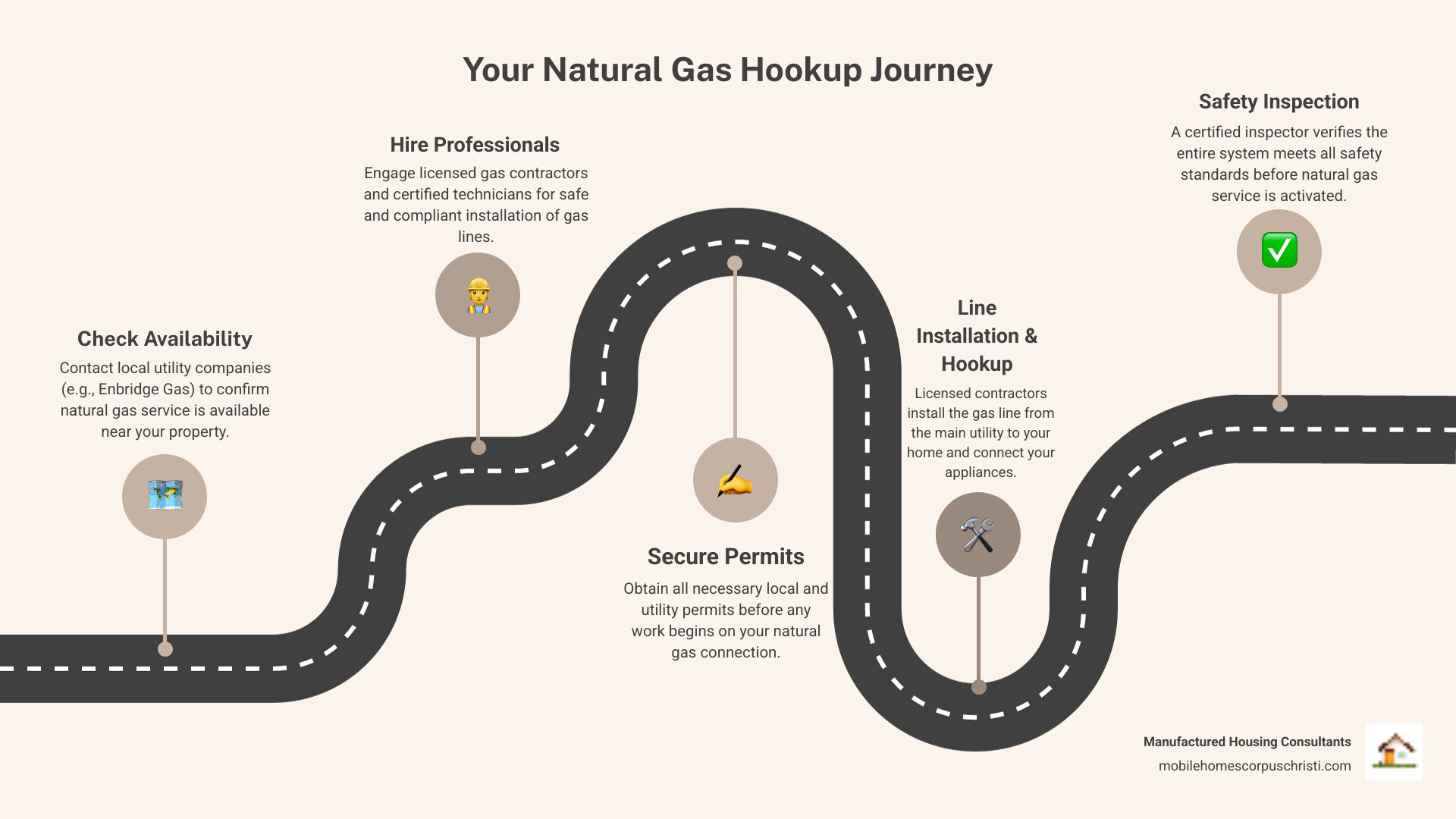
- Process steps – Confirm availability → Hire contractor → Get permits → Install lines → Connect appliances
- Typical costs – $500-3,000+ depending on distance from main line and appliances
- Safety requirement – Only TSSA-certified technicians should perform installations
Natural gas provides key advantages for homeowners. Gas-powered appliances are generally more energy-efficient than electric ones, leading to long-term savings on energy bills. With lower carbon emissions than oil and propane, it’s an economical and environmentally sound choice.
The hookup process involves your local utility, licensed contractors, and safety inspectors. While there’s an initial investment, natural gas can increase home value and provides reliable energy trusted by millions. For manufactured homes, the gas option for a range and furnace costs around $1,485, an investment that often pays for itself through lower utility bills and better appliance performance.
Why Choose Natural Gas for Your Home?
Natural gas is an efficient and reliable fossil fuel delivered directly to homes through a pipeline network. This versatile energy source powers a wide array of appliances without needing on-site fuel storage. Environmentally, natural gas has lower carbon emissions compared to oil and propane, making it a responsible choice. Its underground delivery system also makes it less susceptible to weather-related outages than electricity, ensuring consistent energy. While hookup costs exist, the lower cost per unit of energy often leads to significant long-term savings on utility bills.
What are the benefits of switching to natural gas?
Switching to natural gas offers several key advantages for homeowners:
- Cost-effectiveness: Natural gas is often the most affordable energy source, with more stable pricing than volatile oil or propane markets.
- Increased Home Value: Properties with natural gas are often more attractive to buyers and can command a higher resale value.
- Appliance Performance: Gas ranges offer precise heat control, while gas dryers and water heaters are known for their speed and efficiency.
- Uninterrupted Supply: Delivered via an underground pipeline, you won’t run out of fuel or need to schedule deliveries like with propane or oil.
- Environmental Benefits: Natural gas burns cleaner than other fossil fuels, producing fewer greenhouse gas emissions and improving air quality.
How does natural gas compare to propane or electricity?
When choosing an energy source, it’s helpful to compare natural gas with its main alternatives: propane and electricity.
| Feature | Natural Gas | Propane | Electricity |
|---|---|---|---|
| Cost per Unit | Generally lower and more stable | Higher than natural gas, can fluctuate | Varies widely by region, can be expensive for heating |
| Appliance Efficiency | High efficiency for heating, cooking, water heating | Good efficiency, but often less than natural gas | High for some appliances, but heating can be less efficient |
| Availability | Requires pipeline infrastructure (city/suburban) | Available almost anywhere (requires tank delivery) | Universally available |
| Storage | No on-site storage needed | Requires on-site storage tank | No on-site fuel storage needed |
| Environmental Impact | Lower carbon emissions than oil/propane | Higher carbon emissions than natural gas | Varies based on source of electricity generation |
| Installation Costs | Can be high if main line is distant | Tank rental/purchase, line installation | Wiring upgrades may be needed for high-demand appliances |
Cost per unit: Natural gas is typically cheaper per thermal unit than propane and electricity, reducing monthly bills.
Appliance efficiency ratings: Gas furnaces and water heaters often have higher efficiency ratings than electric models, saving energy and money.
Installation costs: For a natural gas hookup near me, connecting to a nearby gas main can be cost-effective. However, extending a main line can be expensive. Propane requires a tank, and electricity may need panel upgrades for high-demand appliances.
Maintenance and Safety: All systems require regular professional maintenance. Gas and propane are flammable and demand careful installation and leak detection by certified technicians to ensure safety.
The Step-by-Step Process for a Natural Gas Hookup Near Me
Getting a natural gas hookup near me is a well-defined process involving your local utility and licensed contractors. For details on how we coordinate these services, see our installation services.
How do I find out if a natural gas hookup near me is possible?
The first step is confirming service availability at your location.
- Check with local utility companies: In Texas, contact providers like Texas Gas Service, CenterPoint Energy, or the City of Corpus Christi Gas Department. They can confirm if a gas main runs along your street.
- Use online postal code tools: Many utilities offer online tools to check service availability by address.
- Inquire about service extension: If gas isn’t available, you can ask about extending the service. Companies may have an inquiry process, like this natural gas inquiry form. A “customer contribution” might be required for major extensions.
- Check neighborhood availability: If neighbors have gas meters, service is likely available for you too.
What is the process for connecting to natural gas service?
Once availability is confirmed, the connection process begins. This must be handled by professionals for safety.
- Confirm Availability: Ensure gas lines can reach your property.
- Hire a Certified Contractor: This is crucial for safety and code compliance. Never attempt DIY gas work. Hire a licensed and insured gas fitter or certified HVAC technician and get multiple quotes.
- Obtain Permits: Your contractor will handle filing the necessary permits with the city and utility to ensure all work meets local codes.
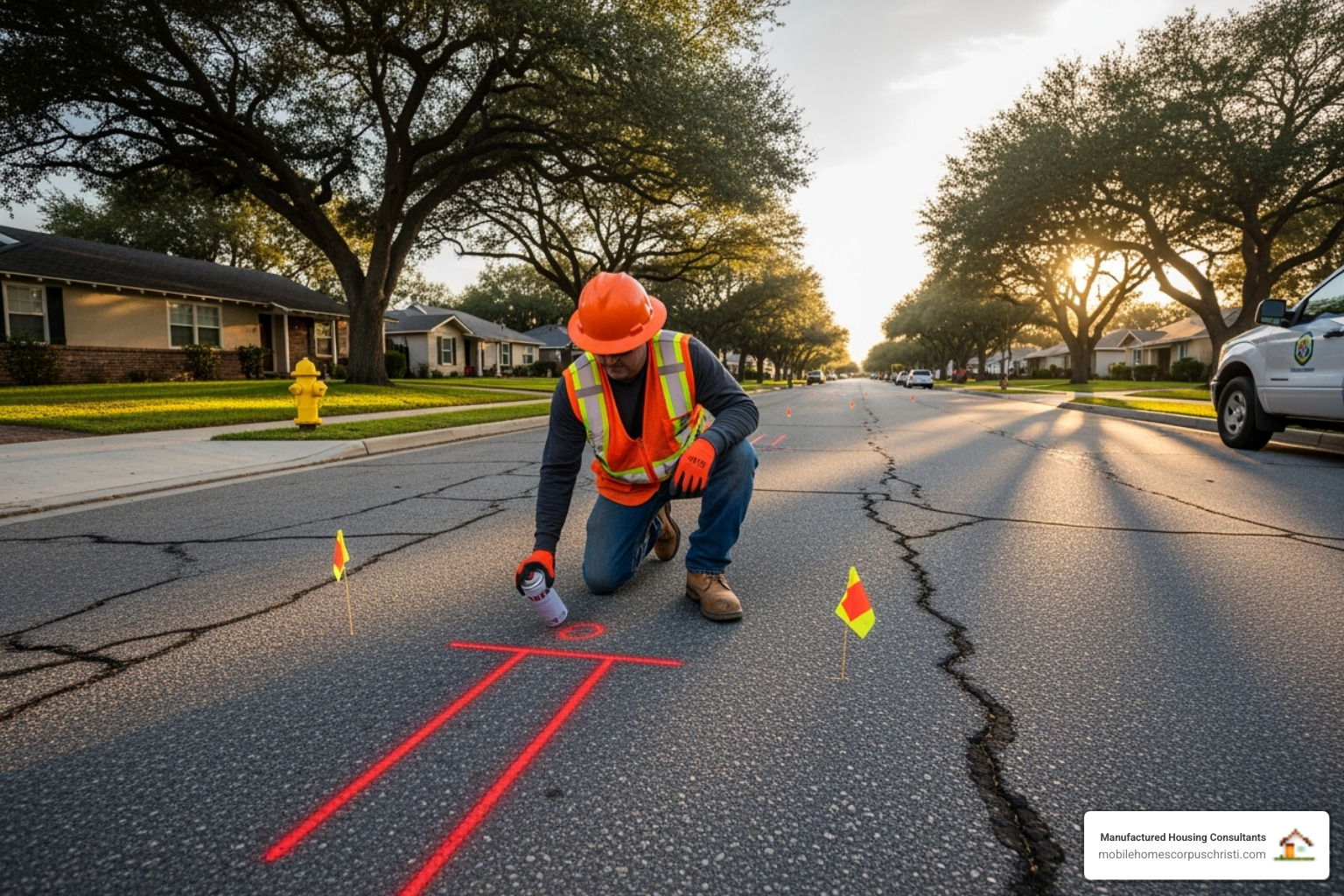
- Site Preparation: Before digging, existing underground utilities (water, electric) must be located and marked. Our team can assist with Expert Site Preparation and Land Location.
- Line and Meter Installation: The utility runs a service line from the street main to your property and installs the meter. Your contractor then runs interior gas lines to your appliances.
- Appliance Connection: The contractor connects your furnace, water heater, stove, and other gas appliances.
- Final Inspection: A utility or city inspector verifies the installation is safe and up to code before activating the service. Do not remove your old heating system until the new one is inspected and activated.
What are the typical costs for a natural gas hookup near me?
Costs for a natural gas hookup near me vary but are a worthwhile investment. Here’s a breakdown of potential expenses:
- Utility Connection Fees: A one-time setup fee or a small monthly charge may apply. Extending a gas main to your area will incur additional “customer contribution” costs.
- Contractor Labor Costs: This covers professional fees for installing interior gas lines and connecting appliances, depending on the job’s complexity.
- Cost of Piping Per Foot: This includes materials and labor for installing the gas lines.
- Appliance Conversion or Purchase: You’ll need to buy new natural gas appliances or have a certified technician install a conversion kit if switching from propane. For manufactured homes, a “Gas Option: Range & Furnace” package is around $1,485.
- Permit Fees: Your city charges fees for gas line installation permits.
Overall costs can range from hundreds to thousands of dollars, depending on the distance from the main line and the scope of interior work. For more on home costs, see our guide on How Much Does It Cost to Buy & Move a Mobile Home in Corpus Christi?.
Hiring Professionals and Ensuring Safety
When considering a natural gas hookup near me, this is not a DIY job. The risks of gas leaks, fires, or explosions are serious, making trained and certified experts essential. Safety is always the top priority.
Who can perform natural gas installations and repairs?
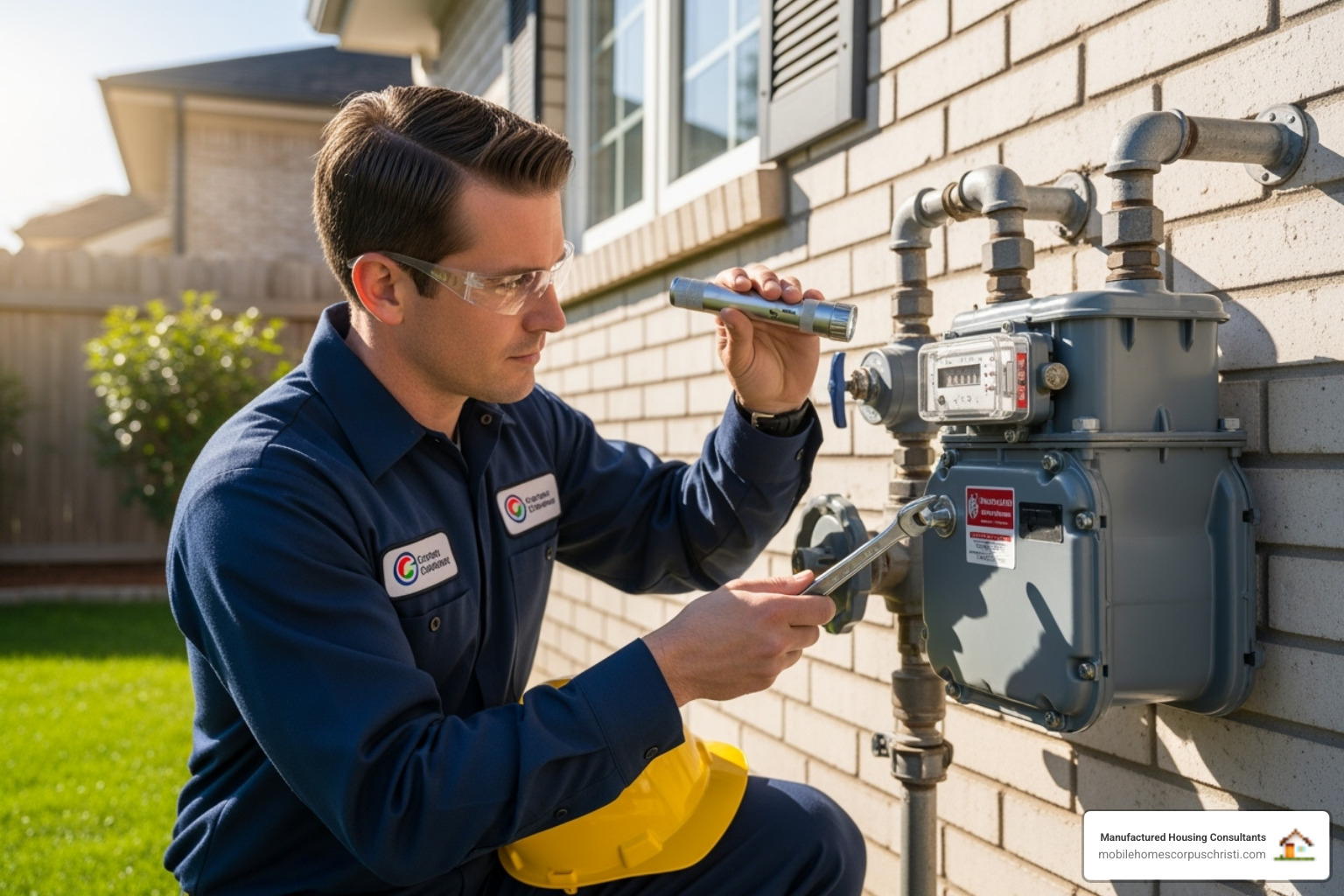
Only qualified professionals should handle natural gas work:
- Licensed Gas Fitters: Specialists trained and certified specifically for gas line work, knowledgeable about all codes and safety protocols.
- Certified HVAC Technicians: Many HVAC pros are also certified to work on gas lines, particularly for furnaces and boilers.
- Plumbers with Gas Certification: Some plumbers have additional certification to work on gas lines for appliances like water heaters.
To find qualified professionals for your natural gas hookup near me, verify credentials with your state’s licensing board or local authority. In Texas, check with the Texas Railroad Commission and local city licensing boards. The HRAI dealer locator is a useful resource in Canada. Always get multiple quotes from registered, insured contractors.
What are the signs of a gas leak and what should I do?
Knowing the signs of a gas leak is critical for safety. Utility companies add a distinct rotten egg or sulfur smell to natural gas to make leaks detectable.
Signs of a Leak:
- The distinct rotten egg smell.
- Hissing sounds near a gas line or appliance.
- Bubbling in wet soil or puddles.
- Dead or discolored vegetation near underground gas lines.
- Physical symptoms like headaches, dizziness, or nausea.
What to Do if You Suspect a Leak:
- Evacuate Immediately: Get everyone, including pets, out of the building.
- Do NOT Use Electronics or Flames: Don’t turn lights on/off, use phones, or light matches. Avoid anything that could create a spark.
- Call 911 from a Safe Distance: Once you are far away from the building, call 911 and your natural gas utility’s emergency line.
What is a ‘red tag’ and what does it mean?
A “red tag” is a warning notice placed on a gas appliance or piping by a technician, indicating a safety hazard that requires attention.
- Type A Tag (Immediate Hazard): This signifies a serious, immediate danger like a major gas leak or carbon monoxide risk. The technician must shut off the gas supply immediately. The appliance cannot be used until the issue is repaired by a licensed professional and re-inspected.
- Type B Tag (Non-Immediate Hazard): This indicates a problem that needs repair but is not an immediate threat. You have a set time (e.g., 45 days) to have the issue fixed and inspected. If not corrected in time, the utility may shut off your gas.
If you receive a red tag, contact a licensed gas fitter or HVAC technician immediately to perform the necessary repairs.
Living With Natural Gas: Appliances and Maintenance
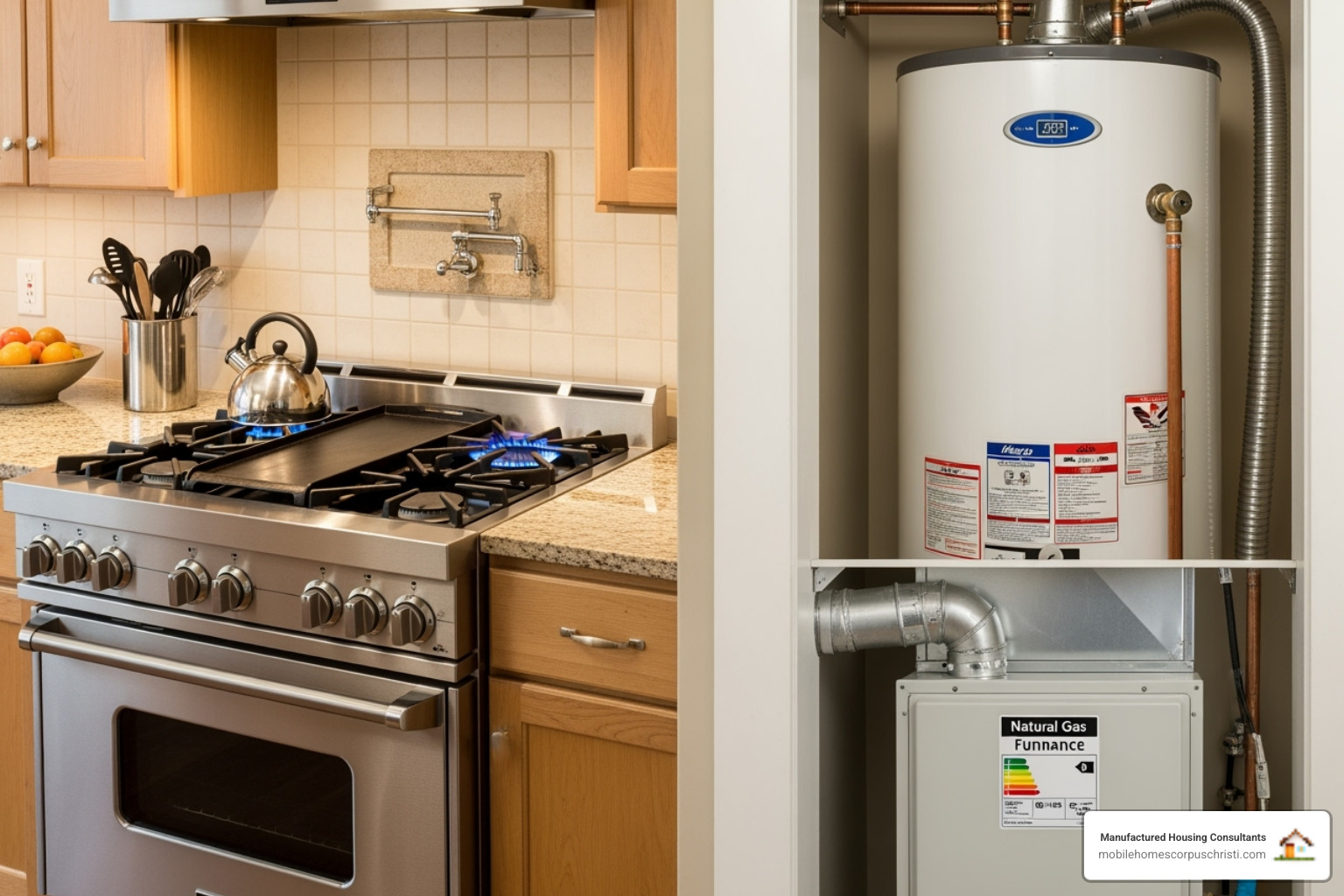
Once your natural gas hookup near me is complete, you can enjoy the comfort and efficiency of gas-powered appliances. This versatile fuel can make daily life smoother and more budget-friendly.
What types of appliances can be powered by natural gas?
Natural gas can power a wide range of home appliances, often with better performance and efficiency than electric models.
- Heating & Hot Water: High-efficiency furnaces provide consistent warmth, while tank-style or tankless water heaters offer a continuous supply of hot water.
- Kitchen & Laundry: Stoves and cooktops give chefs instant, precise heat control. Clothes dryers work quickly and efficiently.
- Comfort & Leisure: Enjoy the ambiance of a gas fireplace without the mess, a permanently connected BBQ grill that never runs out of fuel, or a pool heater to extend your swimming season.
- Backup Power: A natural gas backup generator automatically provides power during an outage, keeping your home safe and comfortable.
We offer gas options for ranges and furnaces in our manufactured homes so you can enjoy these benefits.
What maintenance is required for natural gas lines and appliances?
Regular maintenance is crucial for the safety, efficiency, and longevity of your natural gas system.
- Annual Professional Inspections: Have a licensed professional inspect your entire gas system (lines and appliances) at least once a year. They can perform gas leak testing and catch minor issues before they become major problems.
- Check Appliance Vents: Regularly ensure vents for your furnace, water heater, and dryer are clear of debris, snow, or other blockages to prevent dangerous carbon monoxide buildup.
- Keep the Meter Area Clear: The area around your outdoor gas meter must be free of obstructions like snow, ice, or overgrown plants.
- User Maintenance Tips:
- Be Alert: Immediately act on any rotten egg smell or hissing sounds.
- Clean Filters: Regularly clean or replace furnace and dryer filters to improve efficiency.
- Check Pilot Lights: A pilot light should have a steady, blue flame. A yellow or flickering flame needs professional attention.
- Follow Manufacturer Recommendations: Adhere to the maintenance guidelines for each specific appliance.
Frequently Asked Questions about Natural Gas Hookups
We understand that getting a natural gas hookup near me can raise many questions. Here are some of the most common questions we hear, along with our straightforward, expert answers.
Can I perform a natural gas installation myself?
No. Working with natural gas is extremely dangerous and should only be handled by trained, certified professionals. A small mistake can lead to gas leaks, fires, or carbon monoxide poisoning. DIY installations violate building codes, can void your homeowner’s insurance, and require costly professional correction. For your safety, always hire a licensed expert.
How long does the hookup process typically take?
The timeline varies. If a gas main is already on your street, the process can take 2 to 8 weeks. This includes scheduling contractors and getting permits. If the main line needs to be extended to your property, the project is more involved and could take 3 to 6 months or longer. It’s best to start the process early and get a timeline from your utility provider and contractor.
What safety considerations are most important when working with natural gas?
When it comes to natural gas, safety is the absolute top priority. Here are the crucial safety considerations everyone should be aware of:
- Professional Installation: All work must be done by licensed professionals to adhere to strict safety codes. Find certified pros through resources like the TSSA contractor locator (for Ontario) or by checking with your state’s licensing boards.
- Proper Ventilation: Gas appliances must be correctly vented to the outdoors to prevent carbon monoxide (CO) buildup.
- Certified Materials: Only approved pipes and fittings that meet local codes can be used.
- Leak Testing & Inspection: After installation, the system must be professionally leak-tested and inspected before service is activated.
- Emergency Preparedness: Know the signs of a gas leak (rotten egg smell) and the evacuation procedure.
- Carbon Monoxide Detectors: Install CO detectors on every level of your home, especially near sleeping areas, as an essential early warning system.
Your Guide to a Smooth Natural Gas Connection
Making the switch to natural gas is a smart investment. As we’ve covered, natural gas hookup near me services provide lower utility bills, cleaner fuel, and superior appliance performance. From precise cooking control to reliable home heating, natural gas delivers the performance modern families need.
The process is straightforward when you follow the right steps: confirm availability, hire certified professionals, and complete the permitting process to guarantee safety. Professional installation is essential—this is not a DIY project. Licensed technicians ensure your connection is safe and correct.
At Manufactured Housing Consultants, we help coordinate all aspects of your move, including utility connections. We want your new home to be a source of joy, not stress. With the largest selection of homes from 11 top manufacturers, specialized financing, and statewide Texas delivery, we’re committed to making your dream home a reality.
Ready to take the next step? Learn more about our Utility Connections services and let us handle the details. Your comfortable, efficient, natural gas-powered home is waiting.