
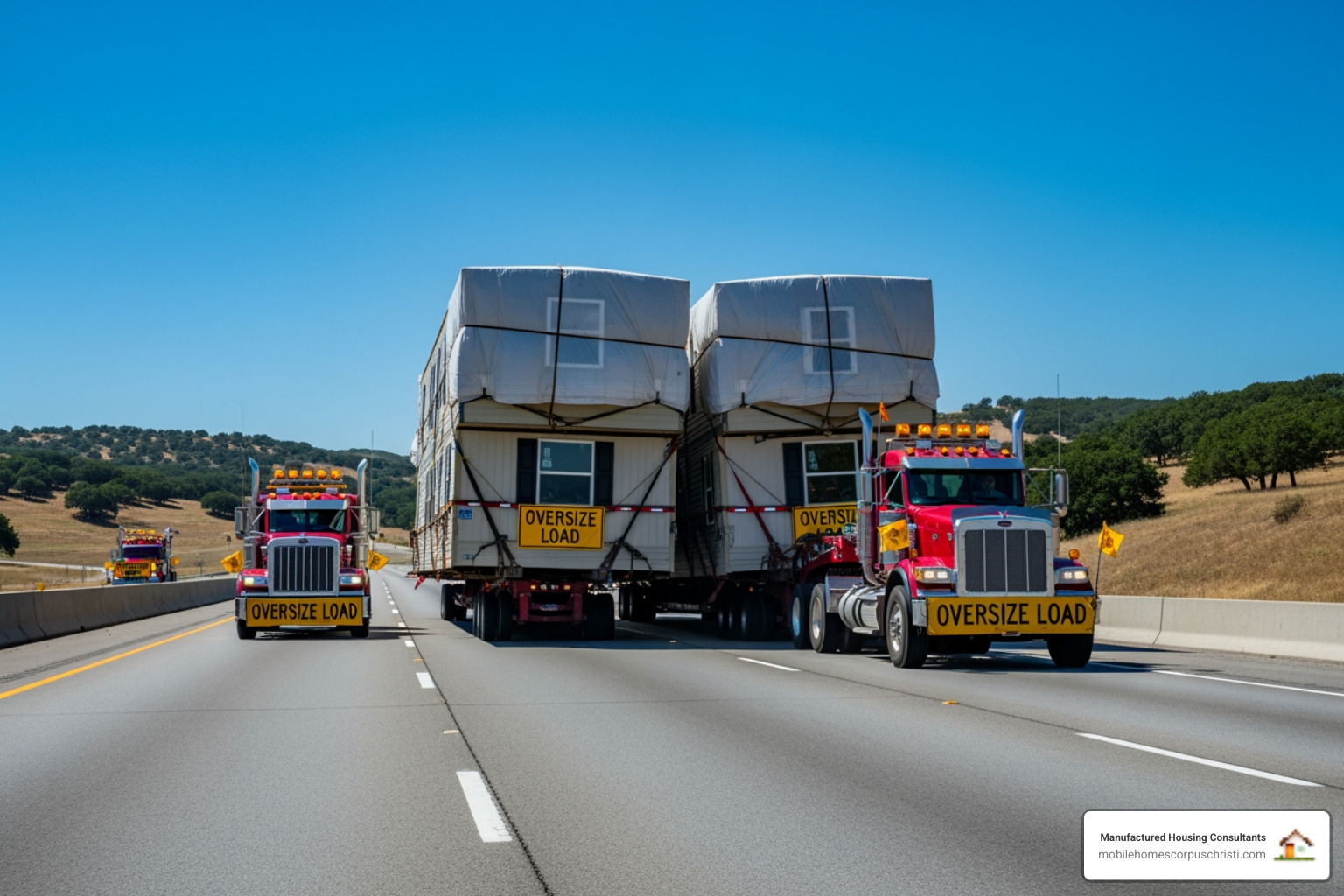
Understanding the True Cost of Relocating Your Double-Wide Home
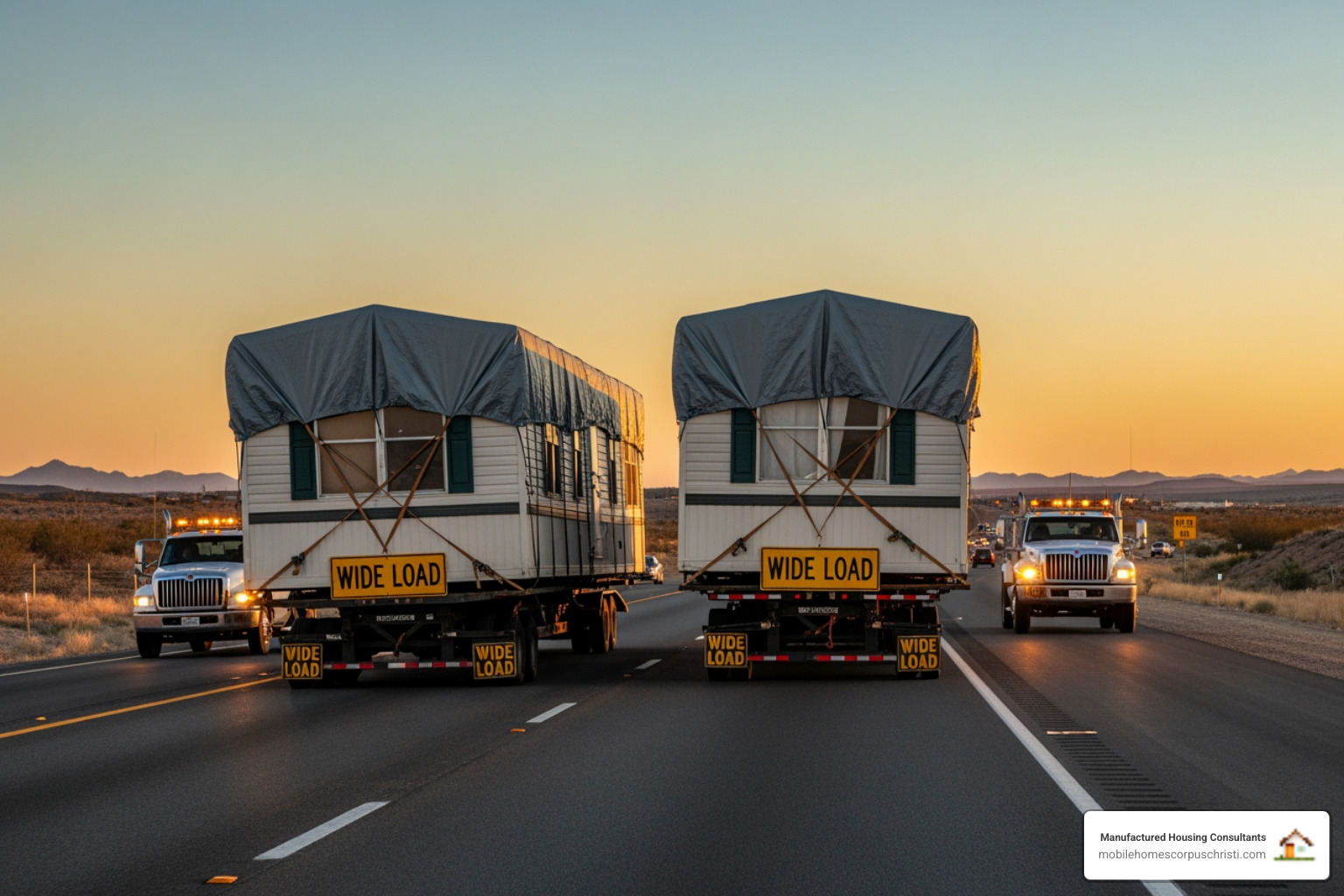
The price to move a double wide mobile home typically ranges from $8,000 to $15,000 for a full-service move. The final cost depends on distance, home condition, and the specific services you need. Here’s a quick overview:
Quick Cost Breakdown:
- Transport-Only Move: $2,000 – $3,500 (for short distances, up to 60 miles)
- Full-Service Move: $8,000 – $15,000 (includes disconnection, transport, permits, and setup)
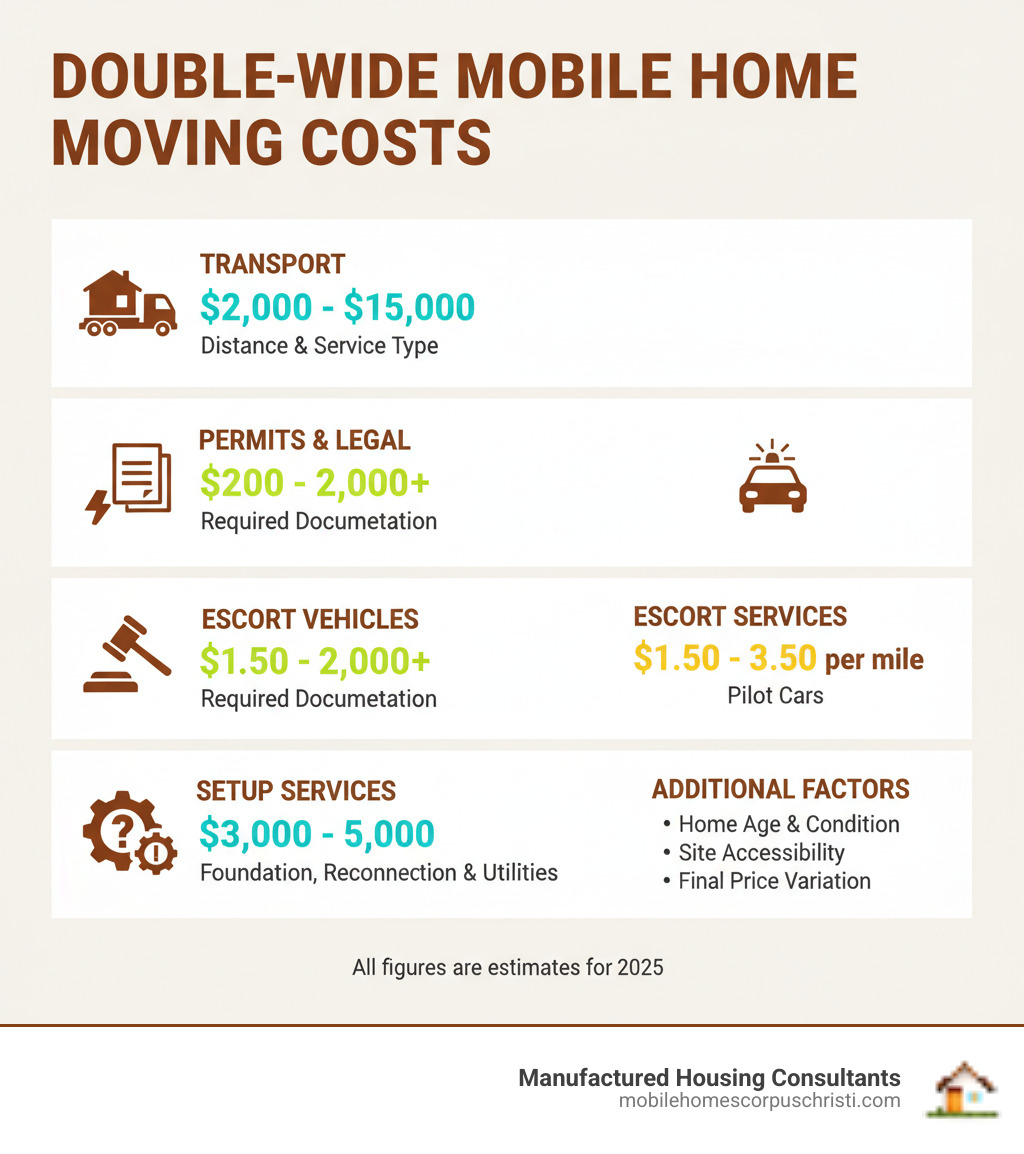
- Additional Costs: Permits ($200 – $2,000+), escort vehicles ($1.50 – $3.50 per mile), and setup services ($3,000 – $5,000)
Moving a double-wide is a complex job. The home must be professionally separated into two halves, transported on individual trailers, and then reconnected at the new site. This requires specialized equipment, licensed movers, and strict adherence to state and federal regulations.
Key factors influencing the total cost include moving distance, your home’s age, site accessibility, and the type of move you choose (transport-only vs. full-service). Most movers charge $4 to $15 per mile for towing, plus separate fees for pilot cars and permits. Understanding these costs upfront is crucial for accurate budgeting and a stress-free relocation.
Key Factors That Influence Your Final Moving Bill
Understanding what drives the price to move a double wide helps you budget realistically. Several key factors determine your final bill.
- Home Size and Weight: Double-wides are large, often 2,000+ square feet and weighing up to 100,000 pounds. This substantial weight requires more fuel, specialized equipment, and time, all of which increase costs.
- Age and Condition: A newer, well-maintained home is easier to move. Older homes, especially those built before 1976, often need structural reinforcement before they can be safely transported, adding to the overall cost.
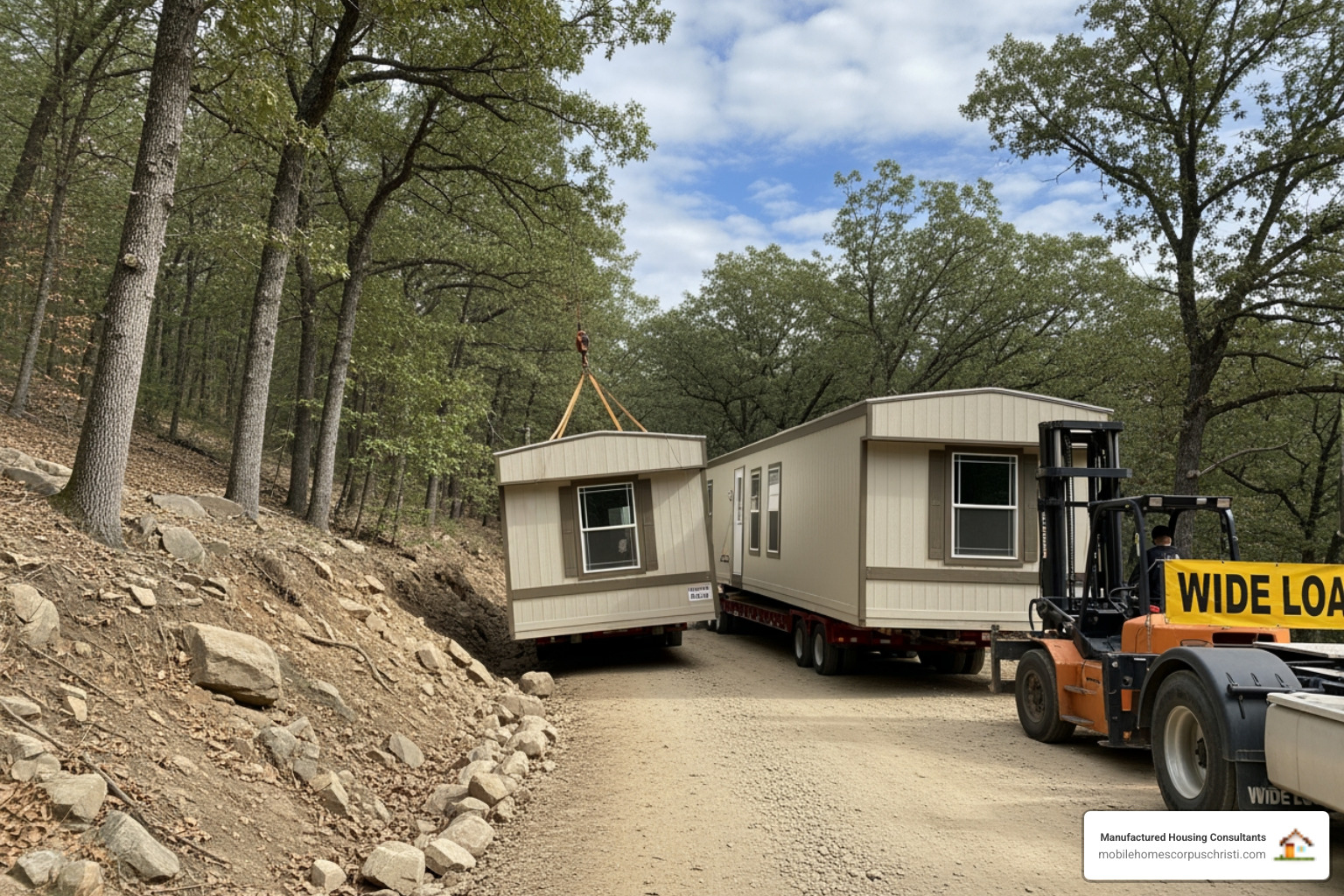
- Site Accessibility: Difficult access at either the origin or destination will raise the price. Narrow roads, tight corners, steep grades, or remote locations may require extra time and special equipment to steer.
- Foundation Type: Disconnecting a home from a poured concrete or block foundation is more labor-intensive and costly than from a standard steel beam foundation.
- Insurance Coverage: Professional movers must carry liability insurance. You should also verify your personal homeowner’s policy provides adequate coverage for the entire relocation process.
How Distance Impacts the Price to Move a Double Wide
Distance is a primary cost driver. For short-distance moves (under 60 miles), you can expect to pay $2,000 to $3,500 for transport-only service, sometimes as a flat rate. Even a move of just a few miles can cost $1,000 to $5,000 depending on route complexity.
Long-distance moves cost more overall, with movers charging between $4 and $15 per mile for the towing vehicle, plus separate fees for escort cars. A cross-state move can easily cost $10,000 to $20,000 or more.
Interstate moves are the most complex and expensive. Each state has its own transport regulations and permit requirements, which adds time and cost. Your mover must comply with all rules for every state you pass through. For more details, you can check Interstate moving regulations.
Why Older Homes Can Cost More to Relocate
Moving an older double-wide presents unique challenges that increase costs. The key date is 1976, when the Department of Housing and Urban Development (HUD) established the HUD Code for manufactured home construction.
Homes built before 1976 do not meet these modern standards, and many jurisdictions prohibit them from being moved at all. You must verify that your destination allows for the relocation of a pre-HUD Code home. You can learn more about these requirements at HUD regulations.
If your older home can be moved, it will likely require structural reinforcement. Decades of settling can weaken the frame, floor joists, and roof trusses. A moving company will inspect the home and require repairs to ensure its structural integrity during transport. These reinforcement costs can add several thousand dollars to your bill but are necessary to prevent catastrophic damage during the move.
Transport-Only vs. Full-Service: A Breakdown of Your Options
When moving your double-wide, you can choose between a transport-only or a full-service move. The price to move a double wide varies dramatically between these two options, so it’s important to understand what each includes.
A transport-only move costs between $2,000 and $3,500 for short distances, while a full-service move ranges from $8,000 to $15,000. The difference lies in who is responsible for the work before and after the physical transport.
| Service Type | Disconnection | Transport | Reconnection | Permits | Setup | Average Cost Range (Double-Wide) |
|---|---|---|---|---|---|---|
| Transport-Only | No | Yes | No | No (handled by homeowner) | No (handled by homeowner) | $2,000 – $3,500 |
| Full-Service | Yes | Yes | Yes | Yes | Yes | $8,000 – $15,000 |
Double-wides cost more to move than single-wides ($5,000 to $8,000 for full-service) because they are heavier and must be separated and reconnected, a process requiring specialized expertise.
Transport-Only Move: The Budget-Friendly Choice
A transport-only move is the most affordable option, costing $2,000 to $3,500 for moves up to 60 miles. The moving company is only responsible for hauling the two halves of your home from point A to point B. Everything else is up to you.
Your responsibilities will include:
- Disconnecting all utilities (electrical, plumbing, gas).
- Removing exterior features like skirting, decks, and porches.
- Securing all necessary moving permits for every jurisdiction on the route.
- Preparing the foundation at the new site.
- Arranging for the professional reconnection of the two halves.
- Handling all utility hookups at the new location.
This option is best for those with significant DIY experience and the time to manage a complex project.
Full-Service Move: A Higher Price to Move a Double Wide for Total Peace of Mind
For $8,000 to $15,000, a full-service move offers a turnkey solution and complete peace of mind. The moving company manages the entire process from start to finish.
Services typically include:
- Professional disconnection of all utilities.
- Disassembly of the double-wide, carefully separating the two halves.
- Securing all permits and handling the paperwork.
- Arranging and paying for escort vehicles as required by law.
- Transporting both halves of the home to the new location.
- Positioning, leveling, and reconnecting the home on the new foundation.
- Handling all utility hookups and ensuring they are functional.
- Installing skirting and reassembling decks or porches (confirm if included in your quote).
For most homeowners, the complexity of moving a double-wide makes the investment in a full-service move worthwhile, ensuring the job is done safely and correctly.
Budgeting for Additional Fees and Setup Costs
The base transport fee is only part of the total price to move a double wide. A variety of additional expenses are required for a legal and successful move. Understanding these costs helps you create an accurate budget.
Permits, Escort Vehicles, and Legal Requirements
Moving a manufactured home is a regulated process that involves significant administrative and logistical costs.
- Moving Permits: You will need permits from the state, county, and city for your route. Costs typically range from $200 to $2,000 or more. Interstate moves require separate permits for each state, adding to the complexity and expense. The Federal Motor Carrier Safety Administration provides details on state-specific rules.
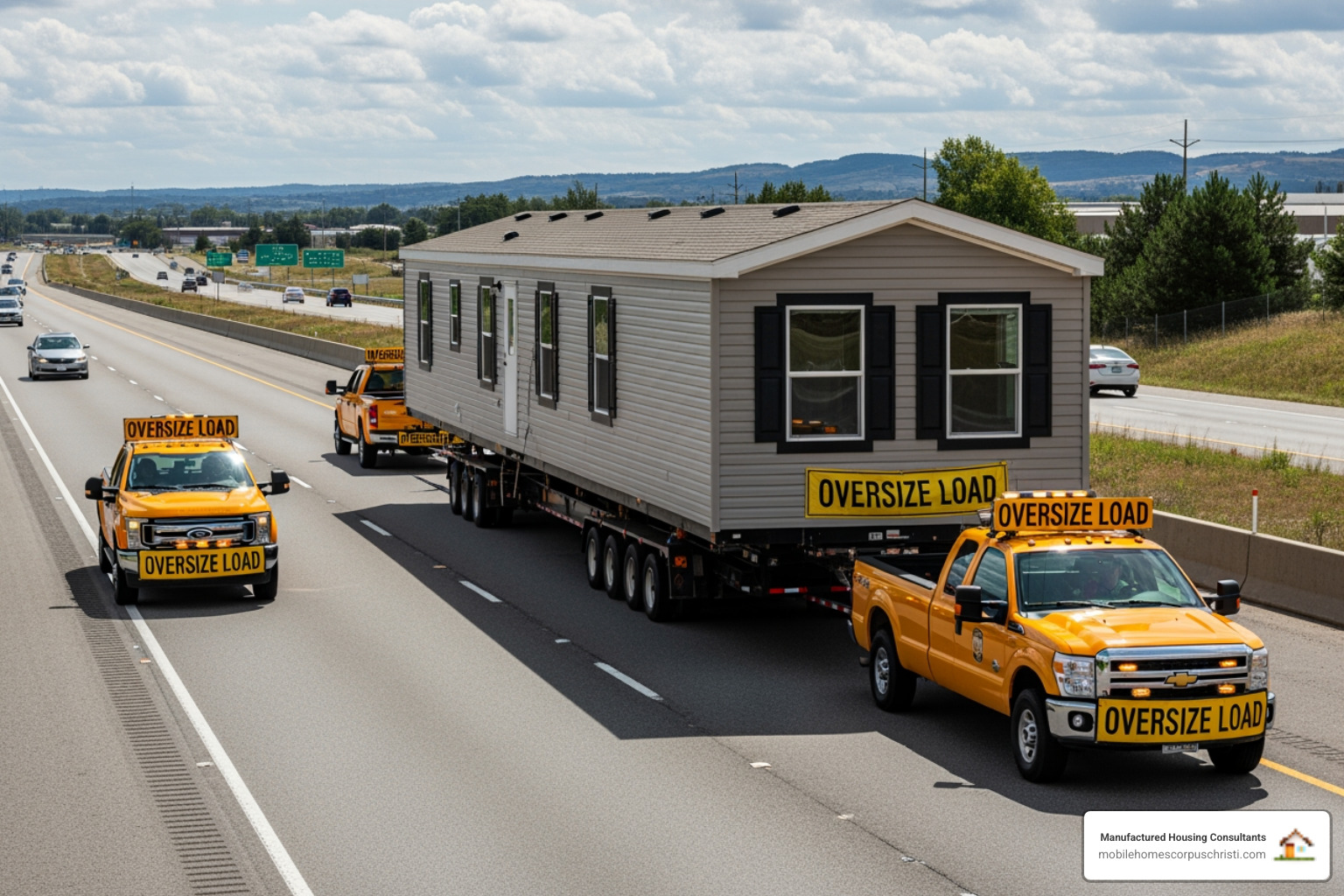
- Oversize Load Requirements: Because of their width, double-wides are classified as oversize loads. This means they must travel on specific, pre-approved routes.
- Escort Vehicles: By law, oversize loads must be accompanied by pilot cars. These vehicles travel in front of and behind your home to ensure safety. Fees typically run $1.50 to $3.50 per mile.
- Police Escorts: In some urban areas or for particularly challenging routes, a police escort may be required to manage traffic, adding another layer of cost.
Typical Setup Costs at Your New Location
Once your home arrives, a new set of costs begins. Professional setup is critical for the home’s longevity and safety, typically costing $3,000 to $5,000 combined, not including the foundation.
- Foundation Preparation: This is often the largest single setup expense, costing between $5,000 and $8,000 for a double-wide. A properly installed foundation, like a pier and beam system common in Texas, is essential for stability.
- Anchoring and Tie-Downs: These systems secure your home to the ground to withstand high winds. Depending on your location’s Wind Zone, this can cost around $2,600 and is a critical safety feature.
- Reconnecting the Two Halves: This specialized task involves perfectly aligning, joining, and sealing the two sections of your home along the “marriage line.” This process alone can cost $1,000 to $5,000.
- Utility Connections: A licensed professional must connect your plumbing, electrical, and gas lines to meet local codes.
- Finishing Touches: This includes skirting installation to enclose the underbelly of the home and the reassembly of decks and porches.
Cutting corners on setup can lead to significant problems later, so it’s crucial to have this work done by experienced professionals.
How to Get Accurate Quotes and Reduce Your Overall Cost
Knowing how to manage the process can significantly reduce the price to move a double wide. With smart planning, you can keep more money in your pocket.
Start by planning 30 to 60 days in advance to secure better rates and availability. If possible, schedule your move during the off-season (fall or winter) and on a weekday, as spring, summer, and weekends are typically more expensive.
To get accurate quotes, gather your home’s details (dimensions, age, condition) and the exact pickup and delivery addresses. Decide if you want a transport-only or full-service move. Then, contact at least three specialized mobile home movers. Always get detailed, itemized quotes in writing and ask what is included, such as permits, escort vehicles, and setup services. Read the fine print to understand all terms and potential extra charges.
Finding and Vetting Professional Movers
Choosing the right mover is the most critical decision you’ll make. Do not cut corners here.
- Verify Licensing and Insurance: Only hire movers who are fully licensed, bonded, and insured for mobile home transport.
- Check Experience and Reviews: Look for companies with at least five years of experience. Read customer reviews on independent sites and check their Better Business Bureau rating.
- Request a Written Contract: Never proceed with a verbal agreement. The contract should detail all services, costs, timelines, and insurance coverage.
- Ask for References: A reputable company will gladly provide references from recent customers. Speaking to them can offer valuable insight.
Actionable Tips for Saving Money
Here are practical ways to lower your moving costs:
- DIY Packing: Pack your own personal belongings to avoid paying for professional packing services.
- Handle Utility Transfers: If you choose a transport-only move, coordinate the disconnection and reconnection of utilities yourself to save on labor costs.
- Remove Exterior Features: Taking off skirting, decks, and awnings yourself reduces the work for the movers and lowers your bill.
- Compare Multiple Quotes: This is the most effective way to ensure a fair price. Don’t be afraid to negotiate or ask one company to match a competitor’s bid.
- Minimize Unnecessary Services: Evaluate each add-on service. Can you handle the post-move cleaning or landscaping yourself? Every task you do saves money.
Frequently Asked Questions about Moving a Double-Wide
Relocating a double-wide is a major undertaking that naturally brings up many questions. Here are answers to some of the most common ones we hear regarding the price to move a double wide and the logistics involved.
Can I move a double-wide mobile home myself?
In short, no. It is illegal and extremely dangerous to move a mobile home yourself. This task requires specialized equipment, licenses, and insurance that are only available to professional movers.
Attempting a DIY move is prohibited for several key reasons:
- Specialized Equipment: Moving a 40,000+ pound structure requires commercial trucks, specialized trailers, and hydraulic systems not available for public rental.
- Licensing and Permits: Movers must have a Commercial Driver’s License (CDL) and secure oversize load permits for the entire route. Moving without them leads to severe legal penalties.
- Insurance: Professionals carry specific liability insurance to cover potential damage to your home, public property, or other vehicles. A standard auto or homeowner’s policy will not cover this.
- Safety Risks: The potential for a catastrophic accident is incredibly high. For your safety and the public’s, this job must be left to trained and licensed professionals.
How are the two halves of a double-wide moved and reconnected?
The process is a fascinating feat of engineering. A double-wide is made of two manufactured sections joined at the “marriage line.”
- Separation: The crew disconnects all shared utilities, removes trim along the marriage line, and unbolts the two sections. Each half is then lifted onto its own transport trailer.
- Transport: Each half is transported as a separate oversize load, often in a convoy with escort vehicles.
- Reconnection: At the new site, the two halves are precisely positioned and leveled on the new foundation. They are then bolted back together.
- Finishing: The crew reconnects all utilities and re-seams the marriage line inside and out, installing new trim and finishing siding to make the home a single, seamless structure again.
This complex process is why moving a double-wide costs more than a single-wide and requires true expertise.
What are the biggest risks or challenges when moving a double-wide?
While professional movers mitigate risks, it’s good to be aware of potential challenges.
- Structural Damage: Road vibrations can cause minor cosmetic issues like drywall cracks. Older homes are more susceptible to stress. Professional prep work and proper insurance are key.
- Delays: Bad weather, such as high winds or heavy rain, can halt transport. Permitting issues or holidays can also cause delays, potentially adding to costs.
- Unexpected Site Issues: Problems at the new location, like soft ground or unforeseen obstacles, can require extra work and expense. A thorough site survey helps prevent these surprises.
- Improper Setup: Incorrect leveling can lead to long-term issues like sticking doors, poor drainage, and structural stress. Proper anchoring is also critical for safety.
Working with an experienced, insured moving company is the best way to minimize these risks and ensure your home is moved and set up correctly.
Your Next Steps for a Successful Move
Now that you understand the logistics and costs, you can decide the best path forward for your family. The price to move a double wide typically falls between $8,000 and $15,000 for a full-service move, factoring in distance, home condition, permits, and setup fees.
One thing is certain: professional movers are essential. Moving a double-wide is a complex, regulated, and potentially dangerous task that is illegal to do yourself. The cost of hiring licensed and insured professionals is an investment in protecting your home and ensuring a safe, successful relocation.
For Texas residents weighing the cost of moving an older home, consider the alternative: starting fresh with a new manufactured home. New homes meet modern safety and energy-efficiency standards and come without the hidden issues or relocation stress of an older model.
At Manufactured Housing Consultants in Corpus Christi, we offer the largest selection of new mobile homes from 11 top manufacturers at guaranteed lowest prices. We provide specialized financing for all credit situations and deliver homes anywhere in Texas with professional installation included. When you buy new from us, you get a complete, turnkey solution.
If you’re deciding between moving your current home or investing in a new one, let us help you explore your options. Learn more about our manufactured home installation and delivery to see how simple and affordable getting a new home can be.