
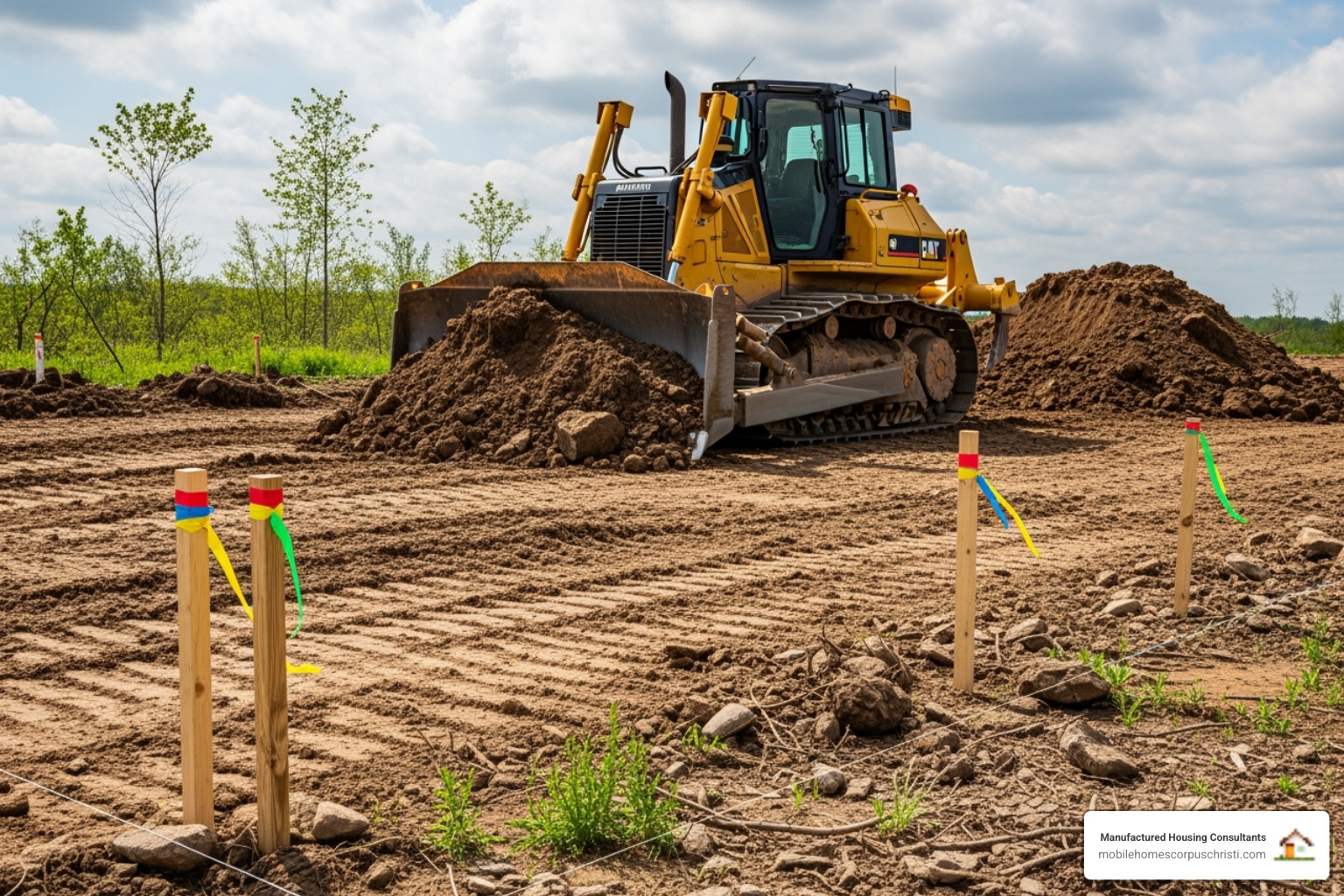
Why Proper Land Preparation Is the Foundation of Your Dream Home
Preparing land to build a house is the critical first step that determines whether your construction project succeeds or becomes a costly nightmare. This comprehensive process transforms raw or undeveloped land into a stable, code-compliant building site ready for your new home.
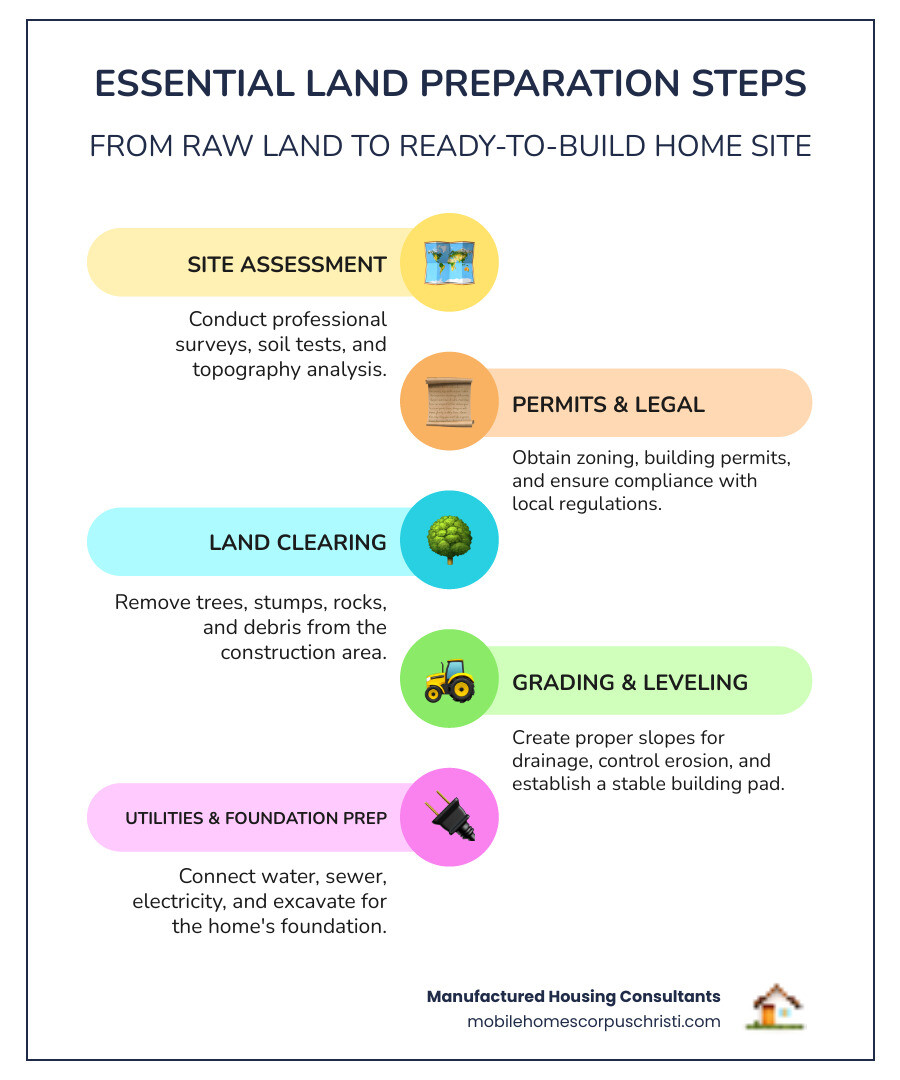
Essential steps for preparing land to build a house:
- Survey and assess – Get professional land surveys and soil tests
- Secure permits – Obtain zoning, building, and utility permits
- Clear the site – Remove trees, stumps, rocks, and debris
- Grade and level – Create proper drainage and a stable building pad
- Install utilities – Connect water, sewer, electricity, and other services
- Prepare foundation – Excavate and prepare for your home’s foundation
The research shows that land preparation costs can range from $1,500 to $3,000 per acre for lightly covered land, with heavily wooded areas costing significantly more. However, proper preparation prevents far costlier problems down the road.
As one industry expert noted: “Your home design will largely be shaped by your land, so before you even bring in an architect to plan your house, you’ll need to take into account the shape, size and slope of your grounds.”
Whether you’re planning for a manufactured home, modular construction, or traditional building, the fundamentals remain the same. Poor site preparation can lead to foundation problems, drainage issues, and structural damage that cost tens of thousands to fix later.
Smart planning includes budgeting 10-20% extra for unexpected costs and understanding that simple sites might take 2-3 weeks to prepare, while complex properties could require 6-8 weeks or more.
Phase 1: Due Diligence and Planning Before You Break Ground
Preparing land to build a house starts with due diligence. This homework phase can save you from expensive surprises by ensuring your property is suitable for construction.
Understanding Your Land: Surveys, Soil, and Suitability
Before physical work begins, you must understand your property’s characteristics.
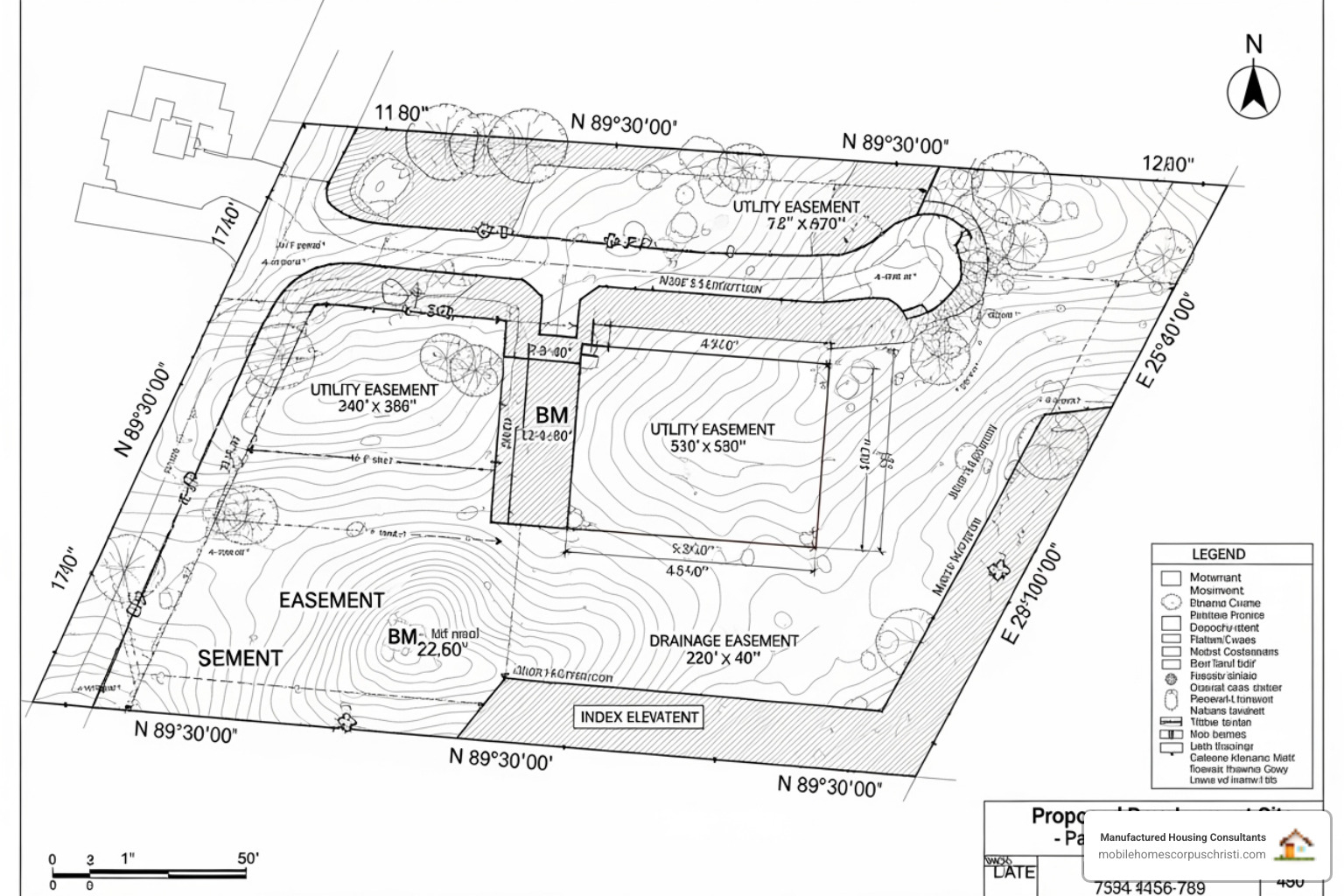
A professional land survey is your starting point. It establishes your exact boundaries, identifies any easements (which might allow utility access), and details the topography, showing how water flows naturally across the site.
Next, soil testing is critical. The importance of a construction soil test cannot be overstated. For about $500 to $1,000, a soil test reveals:
- Bearing capacity: How much weight the ground can support.
- Soil type: Whether it’s stable or prone to shifting.
- Water table depth: To avoid foundation issues related to moisture.
Your site evaluation also includes planning for construction vehicle access, utility placement, and deciding which natural features to keep or remove. For professional guidance, you can learn more info about our land location services.
Navigating Legal and Regulatory Problems
Skipping the legal and regulatory steps can lead to project shutdowns and fines.
Zoning laws dictate what you can build. These local rules may restrict home types, sizes, or placement on the property. Understanding zoning bylaws in your area is crucial before you commit to a property.
Permits are non-negotiable. You will need building permits, utility permits, and possibly land clearing permits. The process can take weeks or months, so start early.
Environmental assessments may be required to check for protected wetlands, habitats, or soil contamination.
Covenants and restrictions in subdivisions or planned communities can add another layer of rules regarding materials, design, and more.
Financing Your Land and Preparation Costs
Financing land preparation involves more than just the property’s purchase price.
Land loans differ from traditional mortgages. Lenders often require higher down payments, typically 20% to 50%, as raw land is considered a riskier investment.
Budgeting for preparation costs must include:
- Surveys and soil tests
- Permit fees ($1,000 to $25,000+)
- Land clearing ($1,500 to $3,000+ per acre)
- Grading and excavation
- Utility connections
- Driveway installation
Always budget an extra 10-20% for unexpected costs, as surprises are common in land preparation. At Manufactured Housing Consultants, we offer specialized financing for all credit situations. You can learn about mobile home loans or financing options for your project. If you own property, using home equity lines of credit (HELOCs) can also be a flexible way to fund these costs.
Phase 2: The Physical Process of Preparing Land to Build a House
With planning complete, it’s time to physically transform your land into a build-ready site. This phase involves clearing, grading, and excavating to lay the groundwork for your new home.

Clearing the Site: From Trees to Debris
The first physical step is clearing the site of anything obstructing construction.
- Tree and Stump Removal: Trees must be felled and stumps ground down to prevent foundation issues. This is heavy work best handled by professionals with the right equipment. A pro might charge around $250 per tree.
- Rock and Debris Removal: Large rocks, old fences, or other debris must be cleared to create a clean slate.
- Land Clearing Costs: Costs vary, from $1,500 to $3,000 per acre for lightly covered land to double that or more for heavily wooded sites.
- Call Before You Dig: Always call 811 before any digging. This free service marks underground utility lines to prevent dangerous accidents.
- Debris Disposal: Plan for how cleared materials will be disposed of, whether chipped for mulch or hauled away.
Best Practices for Grading, Leveling, and Drainage
After clearing, the site is graded to create a stable base and manage water flow.
- Creating a Building Pad: The land is shaped into a level, stable platform for the foundation. Most sites require significant earthwork to achieve this.
- Proper Slope for Water Runoff: The ground must slope away from the foundation to direct water away and prevent damage.
- Erosion Control: During construction, silt fences are installed to prevent soil runoff and protect nearby waterways.
- Soil Compaction: After grading, the soil is compacted to increase its density, preventing future shifting that could compromise the foundation.
- Foundation Stability: These steps are essential for the long-term structural integrity of your home. Learn more about our expertise in land preparation and grading for your new home.
Excavation and Foundation Preparation
With grading complete, the final step before foundation work is excavation.
- Digging the Foundation: Trenches or a basement area are dug according to your home’s specific plans. Precision is key.
- Precision Layout: Excavators use laser levels to ensure the build’s corners are precisely located for both position and elevation.
- Backfill Material: Excavated soil can often be reused as backfill around the foundation, saving on material costs.
- Preparing the Base: For slab foundations, a compacted gravel layer is added to provide a stable, well-drained base. Other foundation types are prepared according to engineered specifications, an important step in preparing your land for building a foundation.
Phase 3: Installing Essential Utilities
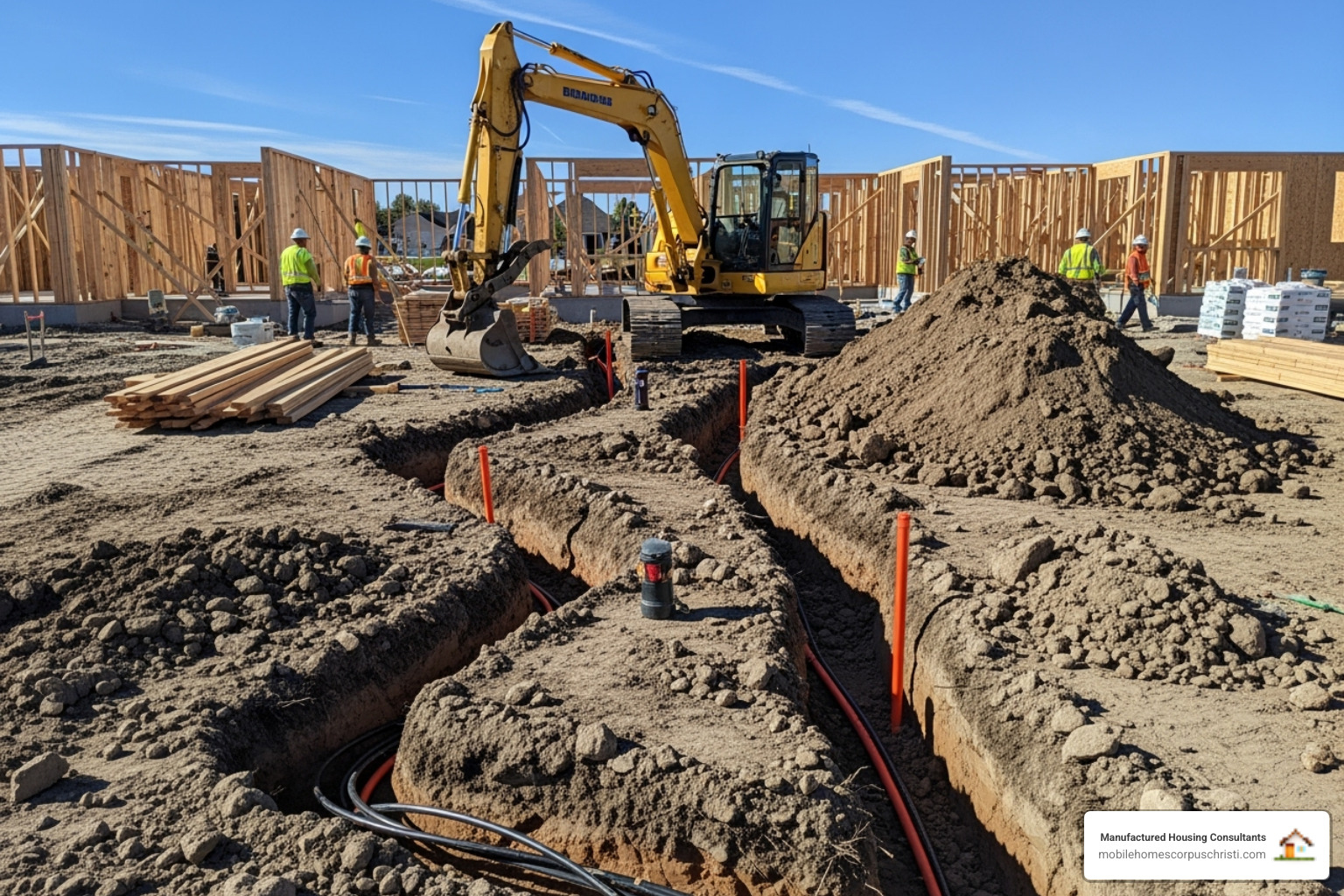
Once your land is graded and excavated, the next step in preparing land to build a house is bringing in utilities. This phase connects your property to water, sewer, and power, making it a truly habitable site.
Connecting to Water and Sewer Systems
Water and sewer are essential. Your options depend on local availability.
-
Water Source: If public water is available, you’ll connect to the municipal line. In rural areas without public access, you’ll need to drill a private well. Well drilling typically costs $5,000 to $15,000, depending on depth and soil conditions.
-
Wastewater System: Connecting to a public sewer system is the simplest option. If unavailable, you’ll need a septic system. A perc test is required first to ensure your soil can handle drainage. Septic system installation costs range from $6,000 to $20,000, varying with soil type and local regulations.
Powering Your Property and Staying Connected
Electricity is needed for both construction and your future home.
-
Electrical Grid: Connecting to the grid involves extending power lines to your property. If your site is far from existing lines, extension costs can be substantial—potentially $10,000 or more.
-
Temporary Power: A temporary power pole is usually required on-site for construction tools and equipment. Coordinate this early.
-
Other Utilities: Plan for natural gas, internet, and cable lines at the same time. Digging one set of trenches for multiple utilities saves money and minimizes site disruption.
Special Considerations for Different Home Types
While the fundamentals of preparing land to build a house are consistent, manufactured and modular homes have unique site requirements. At Manufactured Housing Consultants, we specialize in navigating these needs to ensure your project’s success.
The precision of factory-built homes means your site preparation must be equally precise. Here’s how to prepare your land for each home type.
| Home Type | Foundation Options | Access Requirements | Special Considerations |
|---|---|---|---|
| Manufactured Homes | Slab, runners, or pier systems with skirting | Wide, stable delivery routes for transport trucks | Zoning compliance, utility hookup points designed for manufactured homes |
| Modular Homes | Permanent foundations (basement, crawl space, or slab) | Crane access with stable ground support | Site-specific engineering, precise foundation alignment |
How preparing land to build a house differs for manufactured homes
Manufactured homes are built in a factory and transported to your site, which creates unique site prep needs.
- Foundation Systems: Options include a concrete slab, concrete runners, or a pier and skirting system. The choice depends on local codes and your preference.
- Delivery Access Planning: This is critical. The home arrives on large trucks that need wide, stable roads with gentle turns. The access route must handle significant weight, and any obstacles must be cleared.
- Local Zoning Laws: Some areas have specific placement or aesthetic rules for manufactured homes. Check these regulations early. Our team at manufactured homes installation and delivery has extensive experience with these requirements.
- Utility Connections: Hookup points are pre-designed in the factory, which can streamline the connection process.
Preparing land to build a house for modular construction
Modular homes are built in factory sections and assembled on-site on a permanent foundation.
- Foundation Requirements: A full basement, crawl space, or engineered slab is typical. The foundation must be precisely positioned to align with the factory-built modules.
- Crane Access: A large crane lifts each section into place, requiring ample, stable ground space free of overhead obstacles like power lines.
- Site-Specific Engineering: The foundation must perfectly match the modular sections, so any miscalculation during site prep can cause significant assembly problems.
Whether you choose a manufactured or modular home, we offer the largest selection from 11 top manufacturers. We provide guaranteed lowest prices and specialized financing for all credit situations. Start by finding mobile homes for sale in Corpus Christi to explore your options.
Frequently Asked Questions about Land Preparation
When preparing land to build a house, many questions arise. Here are answers to the most common concerns.
What is a realistic timeline for land preparation?
Most projects take one to two months, but delays are common. Key factors influencing your timeline include:
- Weather: Rain, heat, or cold can halt work for days.
- Permits: Regulatory approvals can take weeks or even months. Start the paperwork as early as possible.
- Contractor Availability: Good crews are often booked in advance, especially during peak season.
- Unexpected Site Conditions: Hitting bedrock or finding underground springs can add weeks to your schedule.
It’s wise to build a buffer period of 20-30% into your timeline. This principle of careful planning, similar to that in tips for safely moving a mobile home, applies directly to land preparation.
What are the most common challenges during land preparation?
Most challenges are preventable with good planning.
- Unexpected Soil Conditions: Clay, sand, or a high water table can create foundation or drainage issues. Solution: Invest in a soil test before you buy to avoid costly surprises like soil replacement.
- Boundary Disputes: Unclear property lines can lead to legal headaches with neighbors. Solution: A professional land survey clearly defines your boundaries and prevents disputes.
- Permitting Delays: Lost paperwork or new requirements can stall your project. Solution: Apply for permits early, be meticulous, and follow up regularly.
- Budget Overruns: Unexpected needs like rock removal or extended utility runs can inflate costs. Solution: Secure detailed quotes and maintain a 10-20% contingency fund.
How much does it cost to prepare land for a house?
The cost varies widely based on your property’s characteristics.
- Basic Clearing & Grading: For lightly covered land, expect $1,500 to $3,000 per acre as a starting point.
- Heavy Clearing: Heavily wooded lots cost more. Professional tree removal can be $250 per large tree, and significant rock removal can double or triple costs.
- Utilities: This is often the biggest expense. A well can cost $5,000-$15,000, a septic system $6,000-$20,000, and power line extensions $10,000 or more.
- Soil Issues: If unsuitable soil must be replaced with engineered fill, it can add tens of thousands to your budget.
- Permit Fees: These range from $1,000 to $25,000 depending on your location.
Total preparation costs can easily reach $15,000 to $50,000 or more. While significant, proper preparation protects your investment. For a broader look at costs, see our guide on how much does it cost to buy & move a mobile home in Corpus Christi?.
Conclusion
Preparing land to build a house is the essential first step in your homeownership journey. From due diligence and permitting to clearing, grading, and utility installation, each phase is critical for a successful build.
While it may be tempting to cut corners, the investment in professional guidance pays dividends. Experts ensure your site meets code, has proper drainage, and provides a stable foundation for generations. This is your best insurance policy against costly future problems.
At Manufactured Housing Consultants, we’ve seen how proper site preparation sets families up for success. We offer the largest selection of new mobile and manufactured homes from 11 top manufacturers, with guaranteed lowest prices and specialized financing. We deliver homes anywhere in Texas because we believe everyone deserves a quality home on solid ground.
Ready to start your journey? Learn more about our expert site preparation services and find how we can help you build your dream from the ground up.